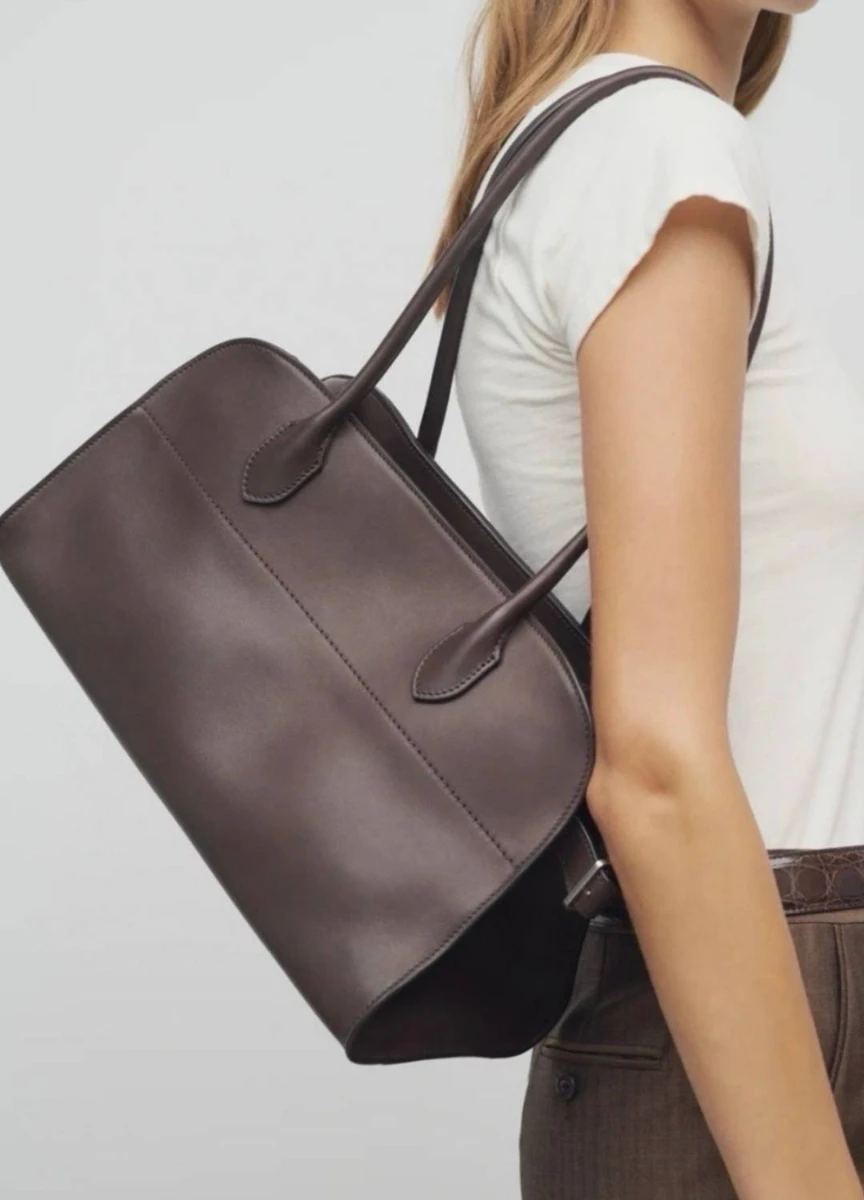
The Era of Long-Handle Shoulder Bags
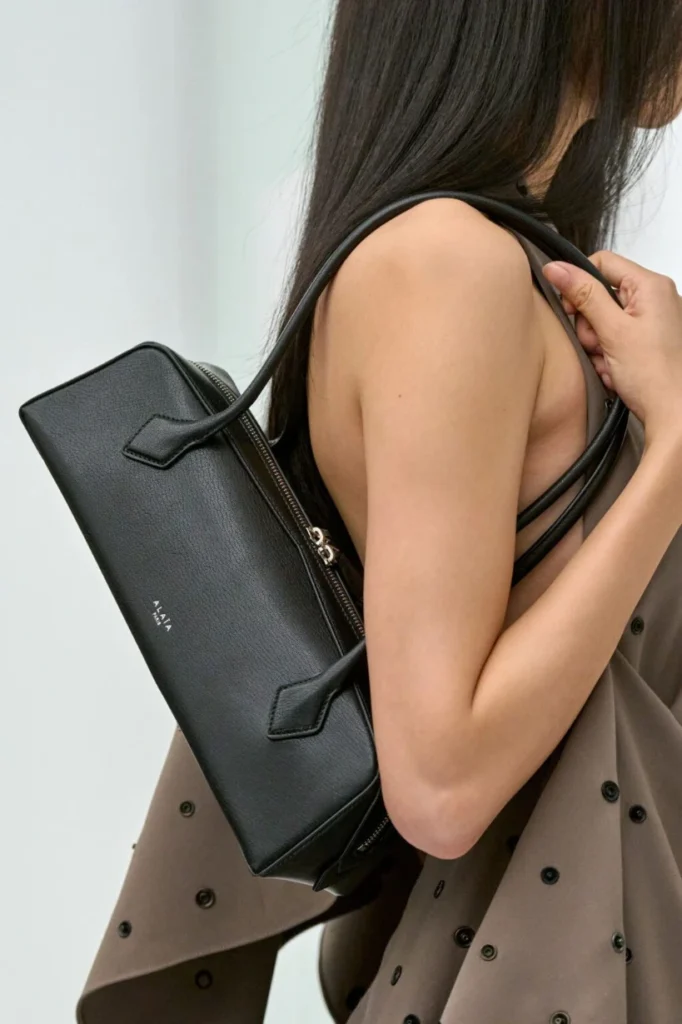
source: alaia.com
Bags haven’t grown dramatically larger in recent seasons.
What’s changed — subtly, but decisively — is the length of their handles.
Shoulder bags that once sat tightly beneath the arm now fall lower. Mid-arm. Sometimes below the hip. Occasionally brushing the upper thigh.
An object that once clung to the torso now moves away from it.
This isn’t a minor styling detail. It’s a structural shift in how the body is framed.
The long-shoulder bag isn’t simply a trend. It’s a recalibration of visual gravity.
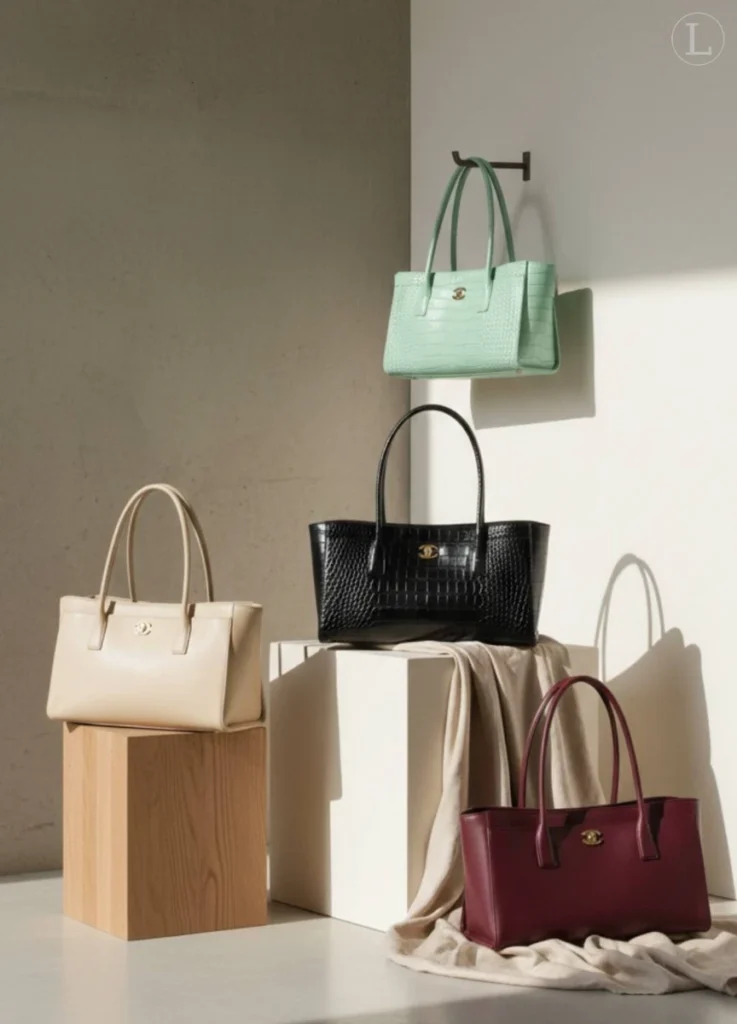
Generated by Lumie
From Upper Body Emphasis to Lowered Visual Weight
For years, shoulder bags functioned as upper-body amplifiers.
Short straps positioned the bag high on the torso. They reinforced the shoulder line. They drew attention to the collarbone and chest.
This aligned with an era of structured tailoring, pronounced shoulders, and upward visual force.
Silhouettes have softened.
Shoulders are less aggressive. Coats are longer. Jackets are less rigid. Waistlines are less imposed.
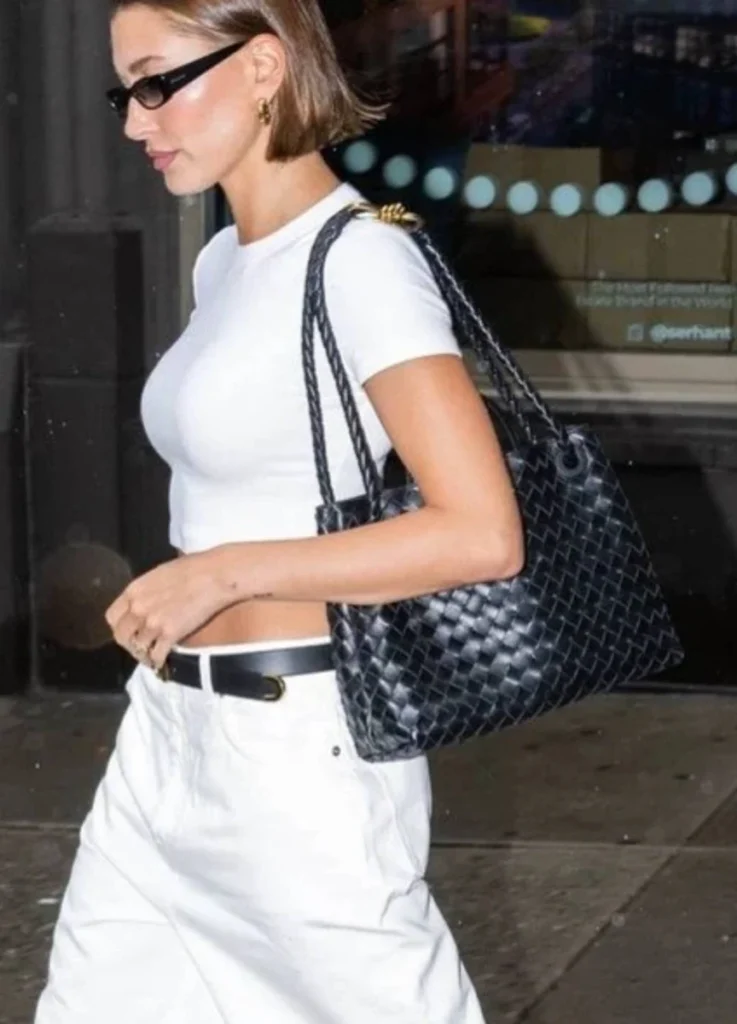
@haileybieber / Instagram
As fashion relaxed its upper-body dominance, the bag followed.
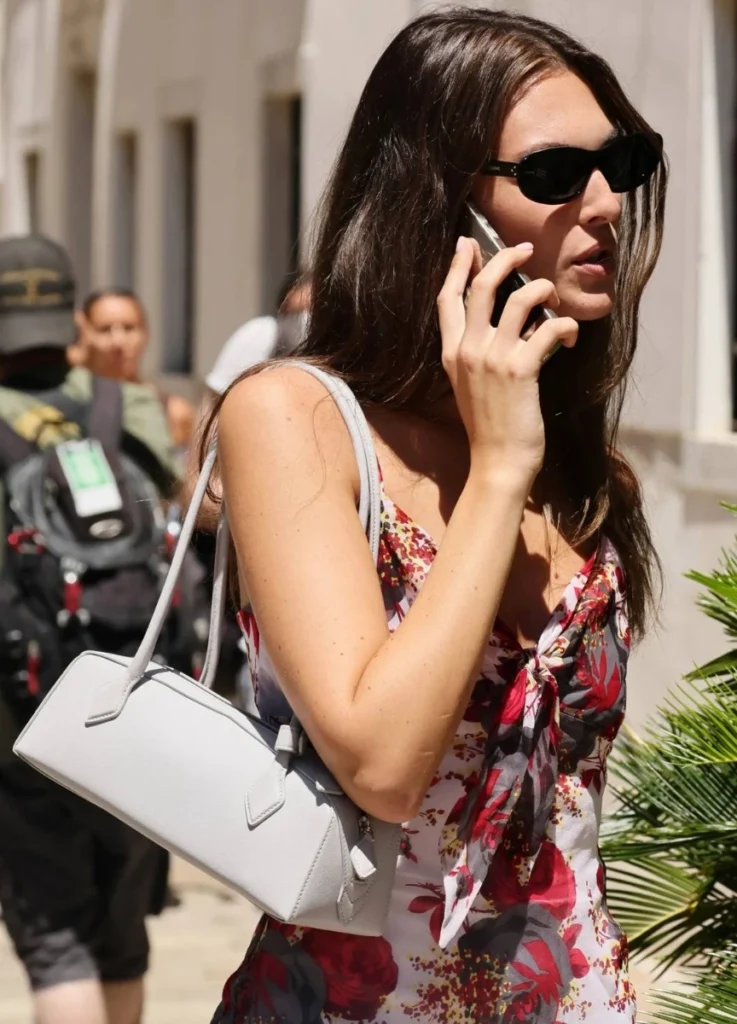
Longer handles lower the bag’s resting point. When the bag drops, the center of visual weight drops with it.
This doesn’t merely change comfort. It changes authority.
The eye no longer travels upward first. It moves downward.
The body is read differently.
@katarinabluu / Instagram
Five Long-Handle Bags Defining the Moment
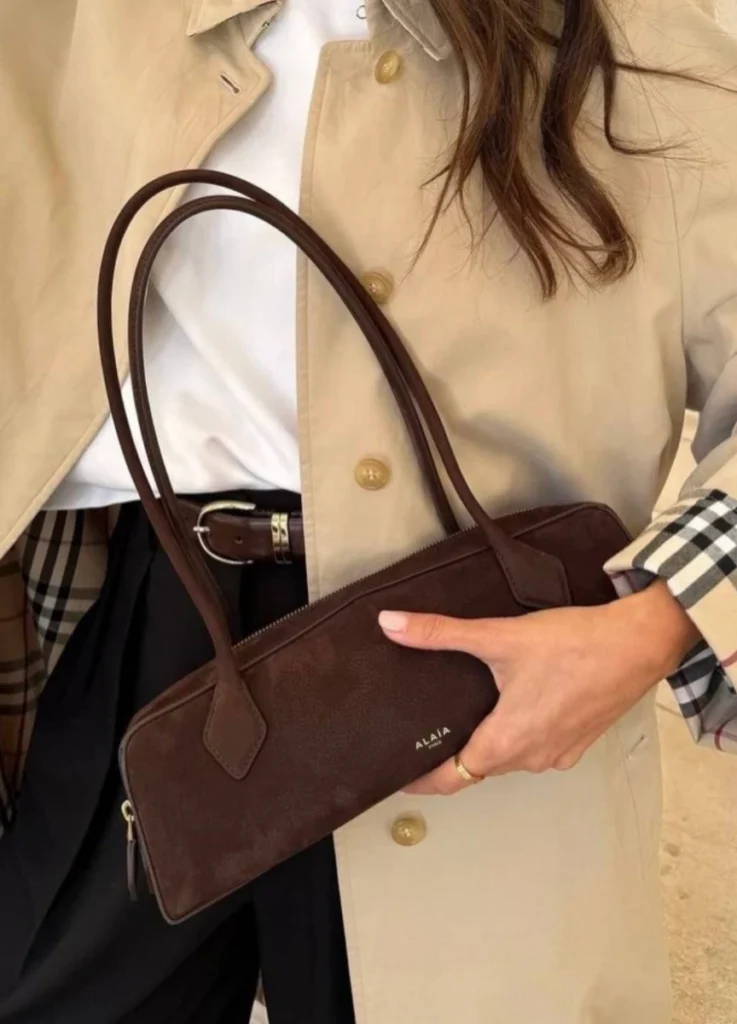
Alaïa | Le Teckel
@naraimports_ / Instagram
The elongated baguette of Alaïa Le Teckel presents the shift in its most literal form.
Its silhouette extends horizontally. Its strap is deliberately long. Its drop sits low.
It doesn’t inflate volume. It extends line.
Worn low, it parallels the body’s vertical axis rather than cutting across it. The bag behaves less like an accessory and more like a linear architectural extension.
source: British Vogue
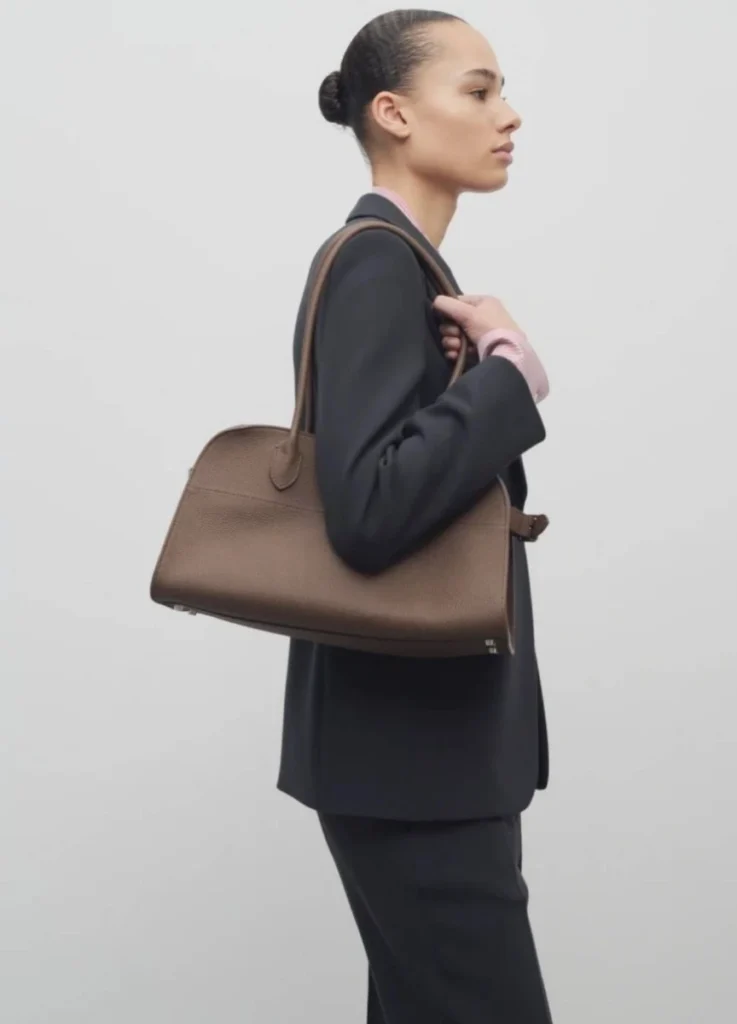
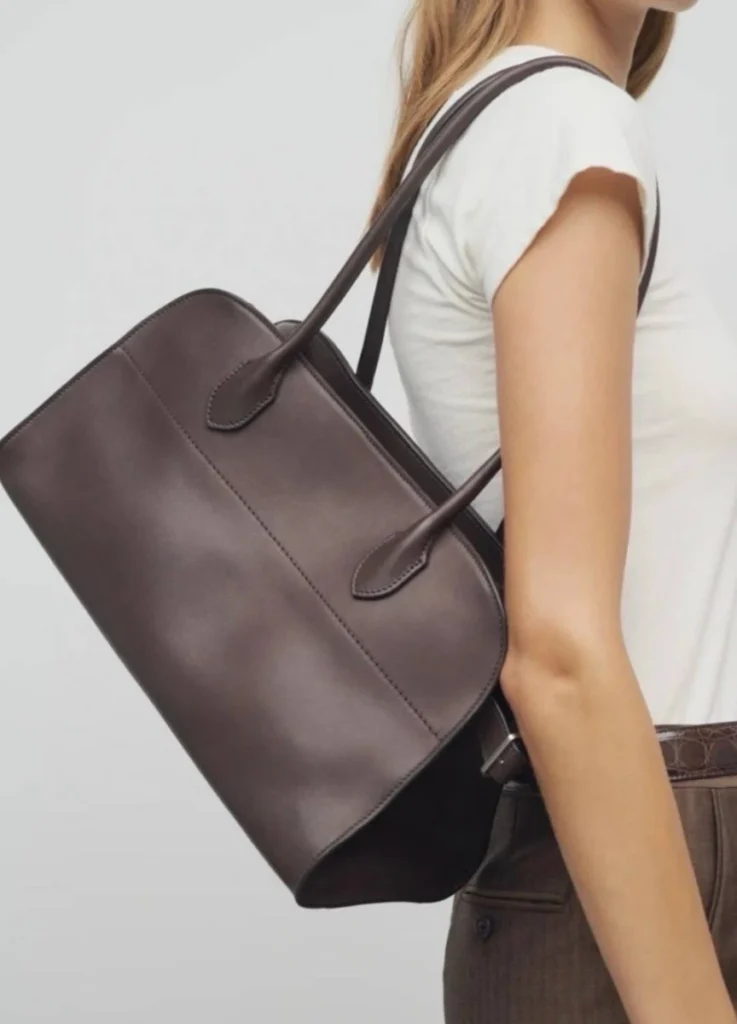
The Row | Margaux Shoulder
Originally a tote symbolizing structured authority, the shoulder iteration of The Row Margaux repositions that authority.
The rectangular form remains disciplined. The leather is soft, but not collapsing. The handle length lowers the bag without destabilizing its geometry.
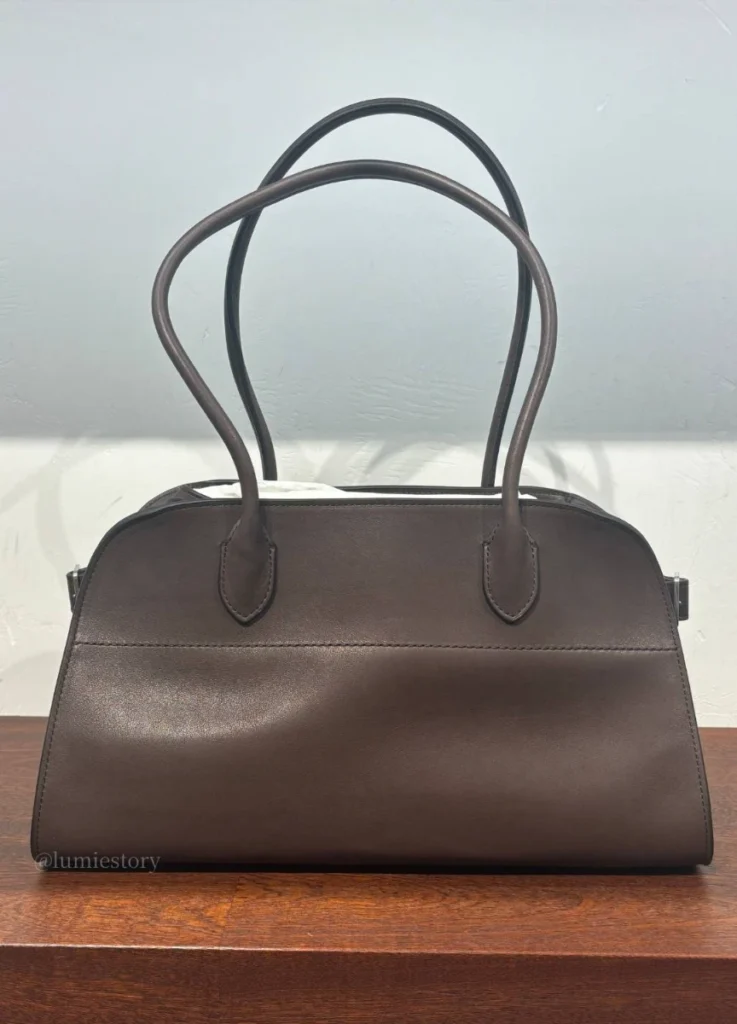
Structure remains. Power is quieted.
This is contemporary luxury’s language — control without assertion.
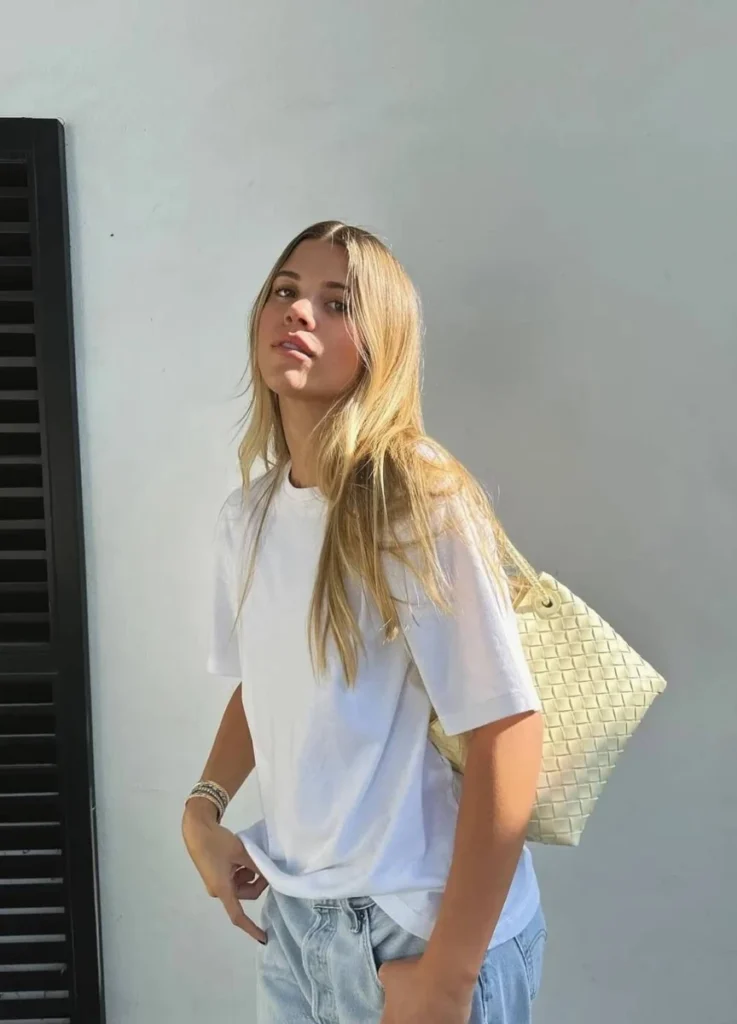
Bottega Veneta | Andiamo
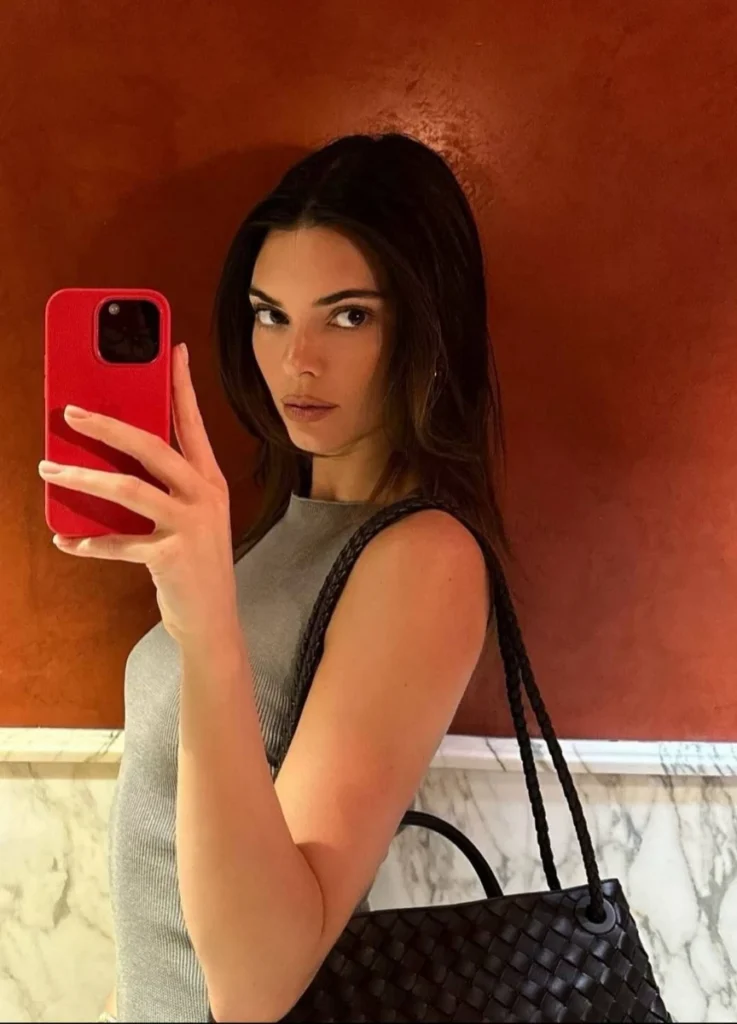
@kendalljenner / Instagram
Bottega Veneta Andiamo carries strong symbolic weight through its woven leather.
In its long-handle versions, symbolism yields to balance.
The trapezoidal body connects naturally to the hip line. Rather than sitting high and rigid, the bag moves with the body.
It doesn’t declare power. It distributes it.
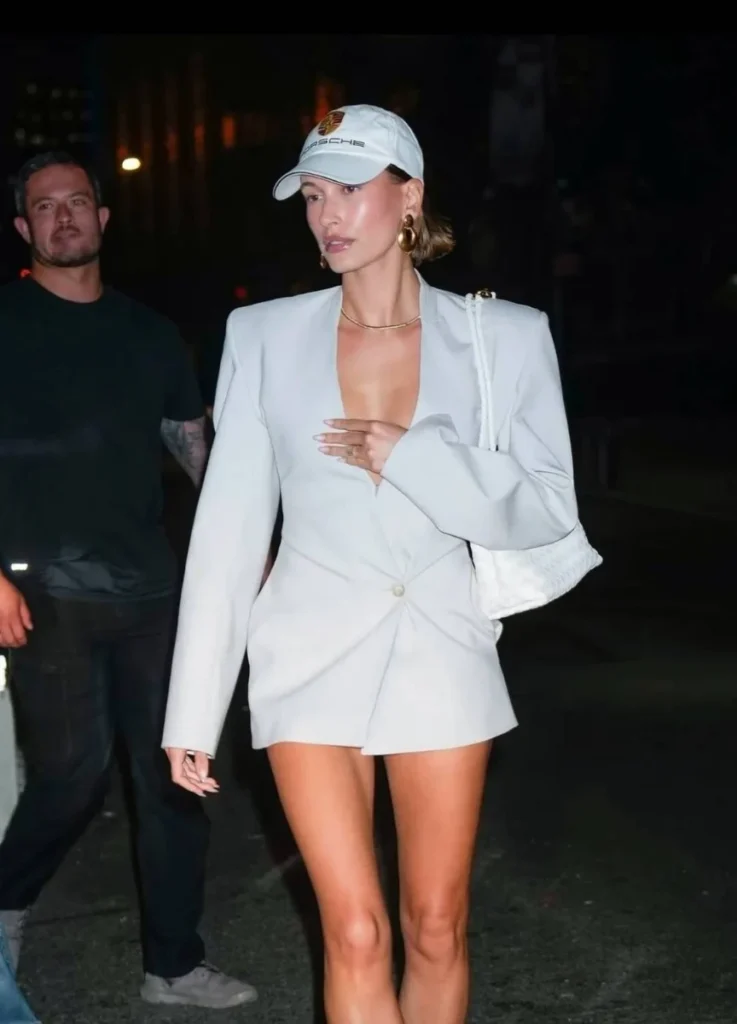
@haileybieber / Instagram
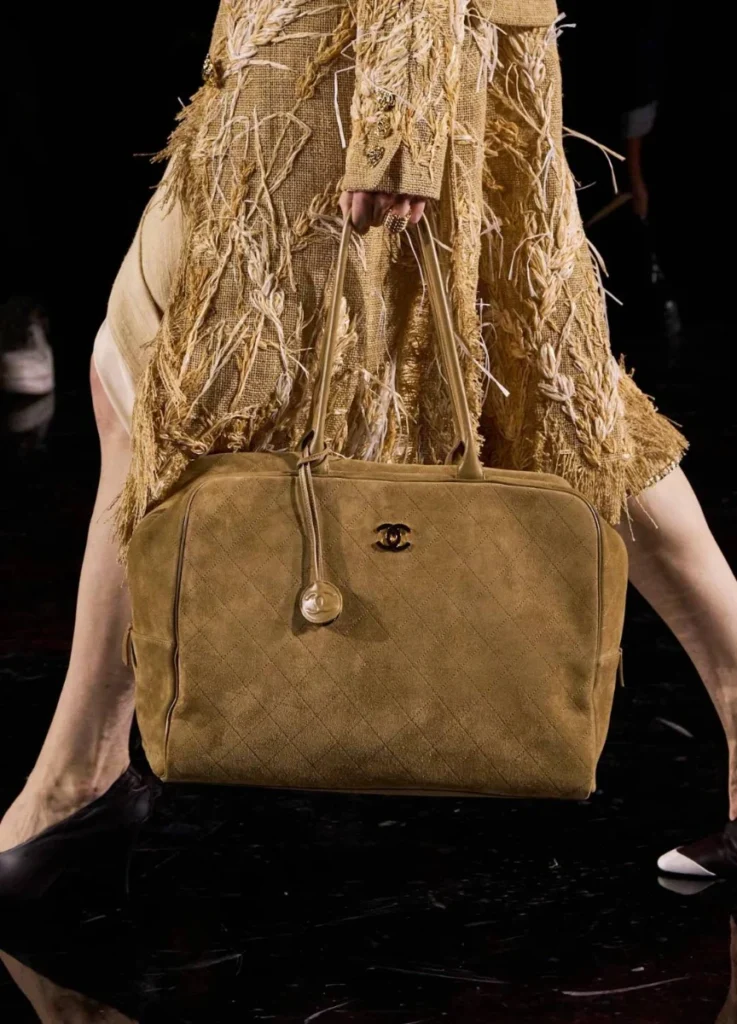
Chanel | SS26 Long-Handle Tote
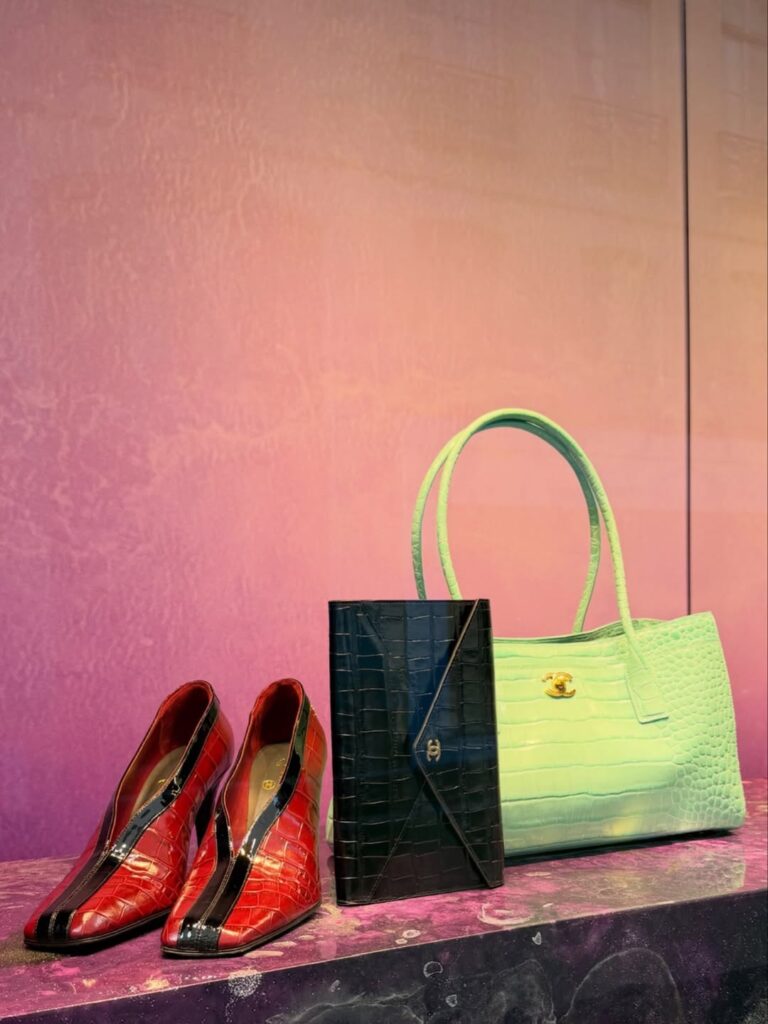
Crocodile Embossed Calfskin & Gold-Tone Metal,
@boutik1 / Instagram
The long-chain tote from Chanel SS26 illustrates repositioning rather than reinvention.
Classic flaps once clung high beneath the arm. The extended chain now allows the bag to fall lower, creating independent volume.
The codes remain intact. The placement shifts.
This isn’t the dismantling of heritage. It’s the relocation of emphasis.
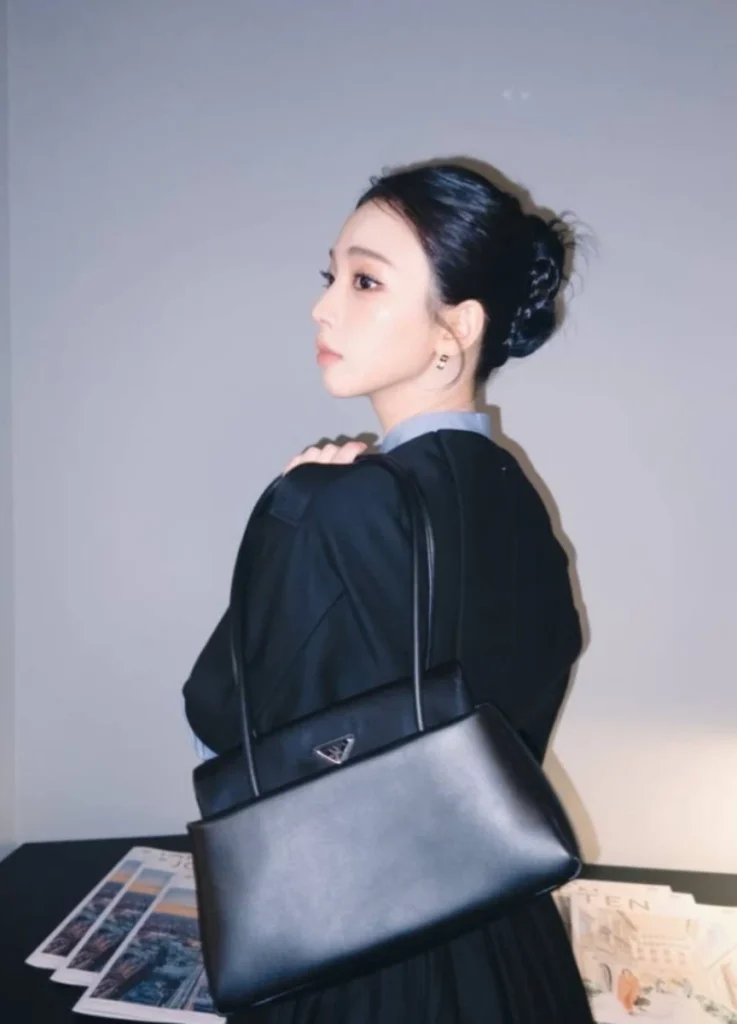
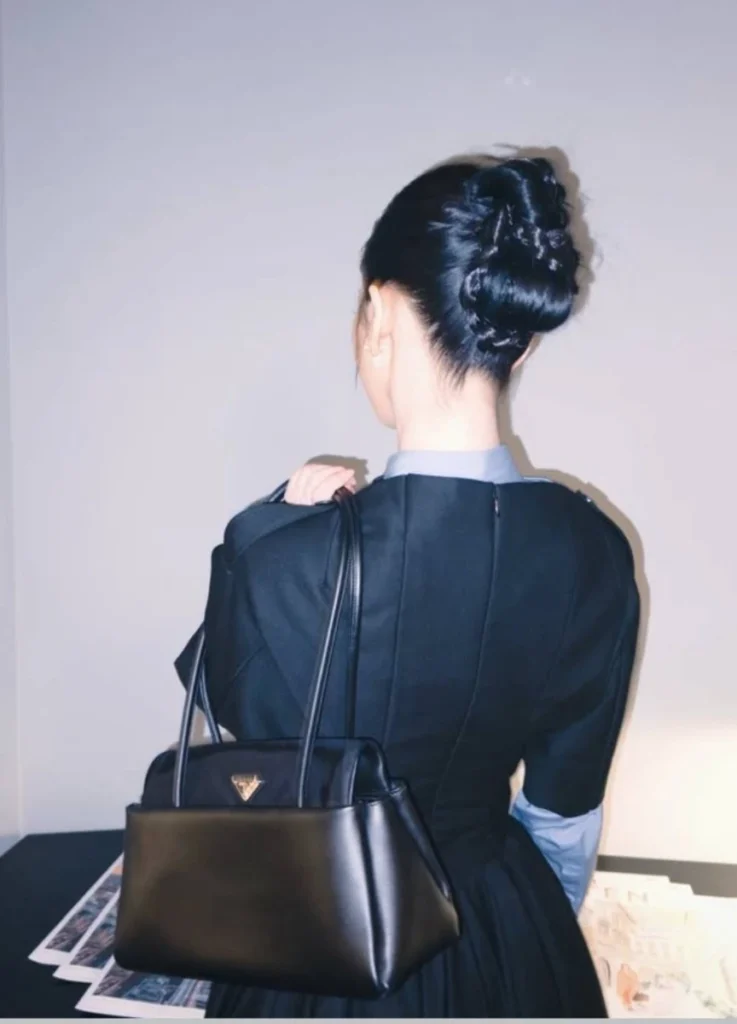
Prada | SS26 Shoulder Bag
The Prada SS26 shoulder bag demonstrates precision within elongation.
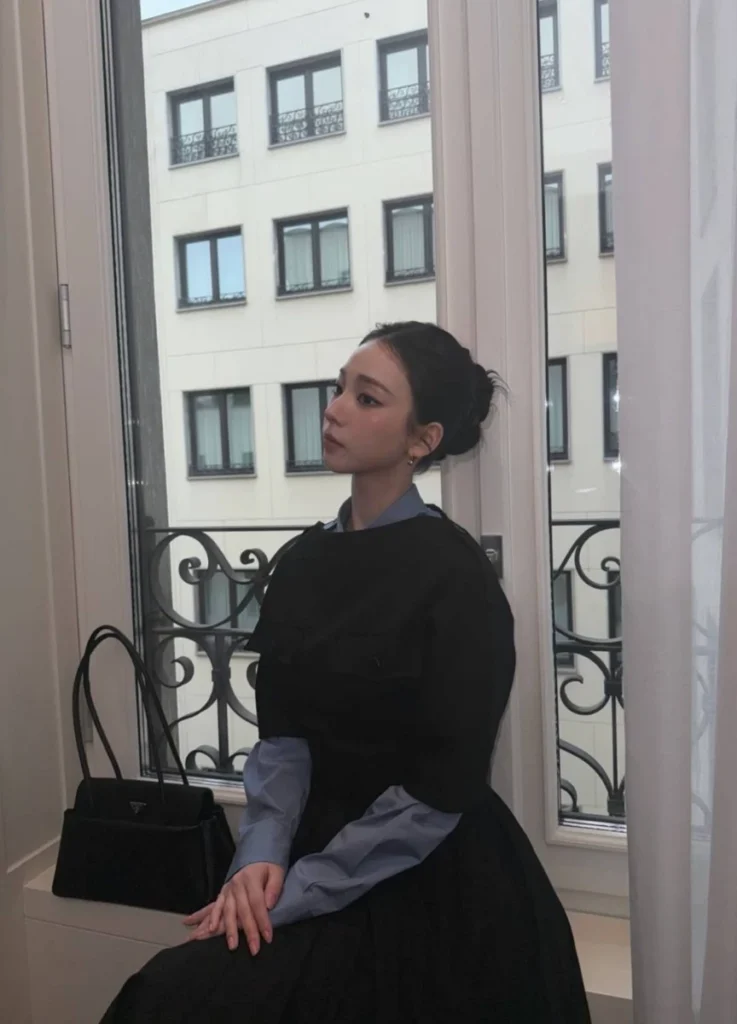
@katarinabluu / Instagram
Its rectangular discipline resists slouch. Its volume is controlled. The handle is extended — but the form doesn’t collapse.
Length increases. Structure holds.
@katarinabluu / Instagram
It Isn’t About Height — It’s About Surface Area
The most common question.
“Doesn’t a long handle overwhelm a shorter frame?”
The answer is incomplete.
Proportion isn’t determined by height alone. It’s determined by surface area relative to drop length.
Three variables matter:
- front-facing horizontal width
- side depth (thickness)
- the horizontal plane the bag creates across the thigh
When a bag falls low and also spans wide, thick, horizontal mass across the upper leg, it interrupts vertical flow.
The leg’s line is cut. The torso appears shorter.
When the bag remains slim in width and controlled in depth — even if the handle is long — the vertical reading stays intact.
The issue isn’t length. It’s uncontrolled mass.
This is the difference between a long strap and a long surface.
@sofiarichiegrainge / Instagram
A Case Study | Why the Margaux Shoulder Works Below the Hip
When I wore The Row Margaux 12 Shoulder, the bag fell below my hip.
By conventional logic, that placement should have disrupted proportion.
It didn’t.
The reason becomes clear when the variables are isolated:
- the front width was measured, not exaggerated
- the depth was restrained
- the vertical body height of the bag was not excessive
- the structure was firm enough to prevent collapse
source: therow.com
Even positioned lower, it didn’t create a thick horizontal block across the thigh.
It functioned as a counterweight instead.
For a frame where the upper body is relatively streamlined and the hip line present, this downward shift stabilizes the silhouette rather than fragmenting it.
The bag doesn’t cut the body. It anchors it.
source: Vogue Runway
When Long Handles Enhance Proportion
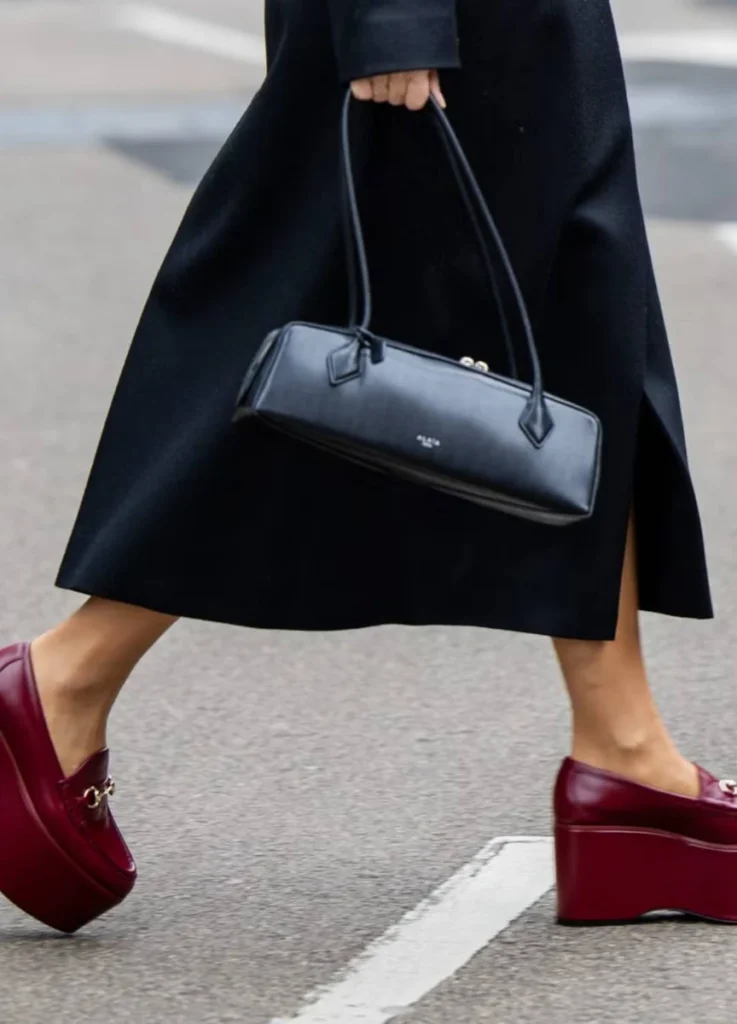
Long handles tend to work well when:
- the upper body is relatively clean and not heavily layered in bulk
- the shoulders aren’t already exaggerated
- the bag body is slim or structurally controlled
- the resting point of the bag aligns near the hip rather than mid-thigh
In these cases, elongation enhances balance.
The bag lowers visual gravity without introducing excessive horizontal mass.
source: hips.hearstapps.com
When They Can Disrupt Proportion
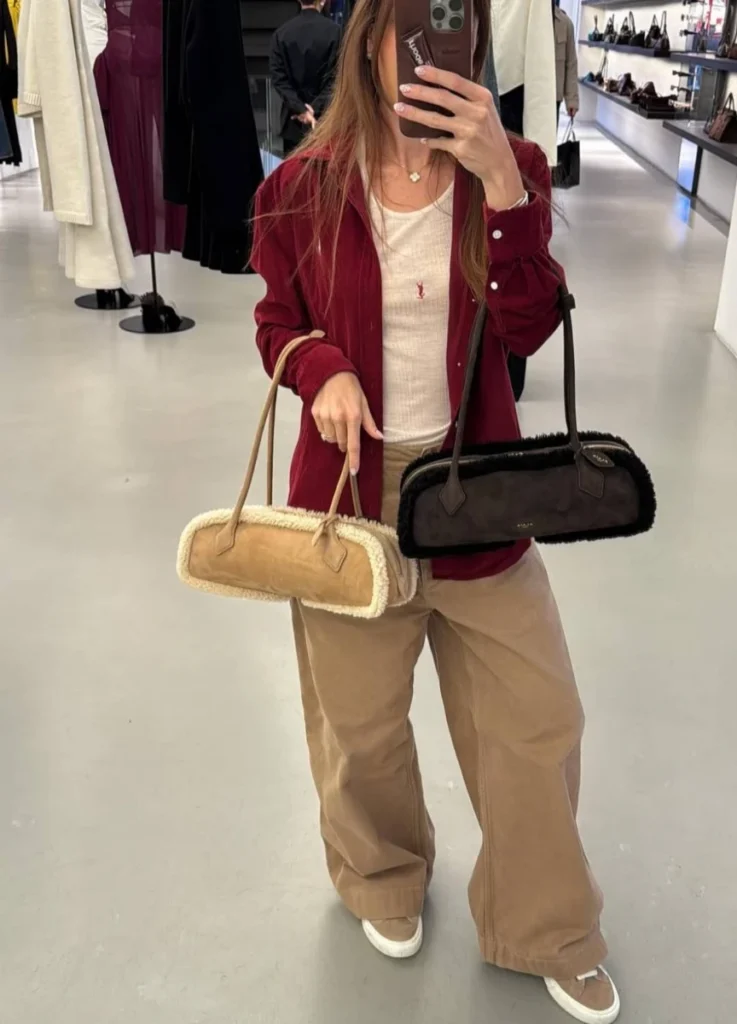
Challenges arise when:
- the bag is both wide and thick
- the drop is extreme relative to body height
- the bag swings away from the body, increasing perceived volume
- soft, unstructured leather collapses into expanded surface area
The issue isn’t length alone. It’s length combined with uncontrolled spread.
@personalshopperldnbr / Instagram
Lowered Centers and Quiet Authority
This shift reads as a form of lowered authority.
Where once power sat on the shoulders, it rests lower.
Where once structure was assertive, it’s moderated.
The long-handle bag reflects this broader aesthetic.
It’s less about declaration. More about balance.
Less about emphasis. More about distribution.
What appears to be a minor design adjustment is, in fact, a recalibration of how the body carries weight.
That’s why long handles feel contemporary. Not because they’re new. But because they reposition where power sits.
The long-shoulder bag isn’t merely a seasonal trend.
It’s a tool for proportion — and a quiet shift in how luxury chooses to stand.
source: therow.com
[ Related Editorials ]