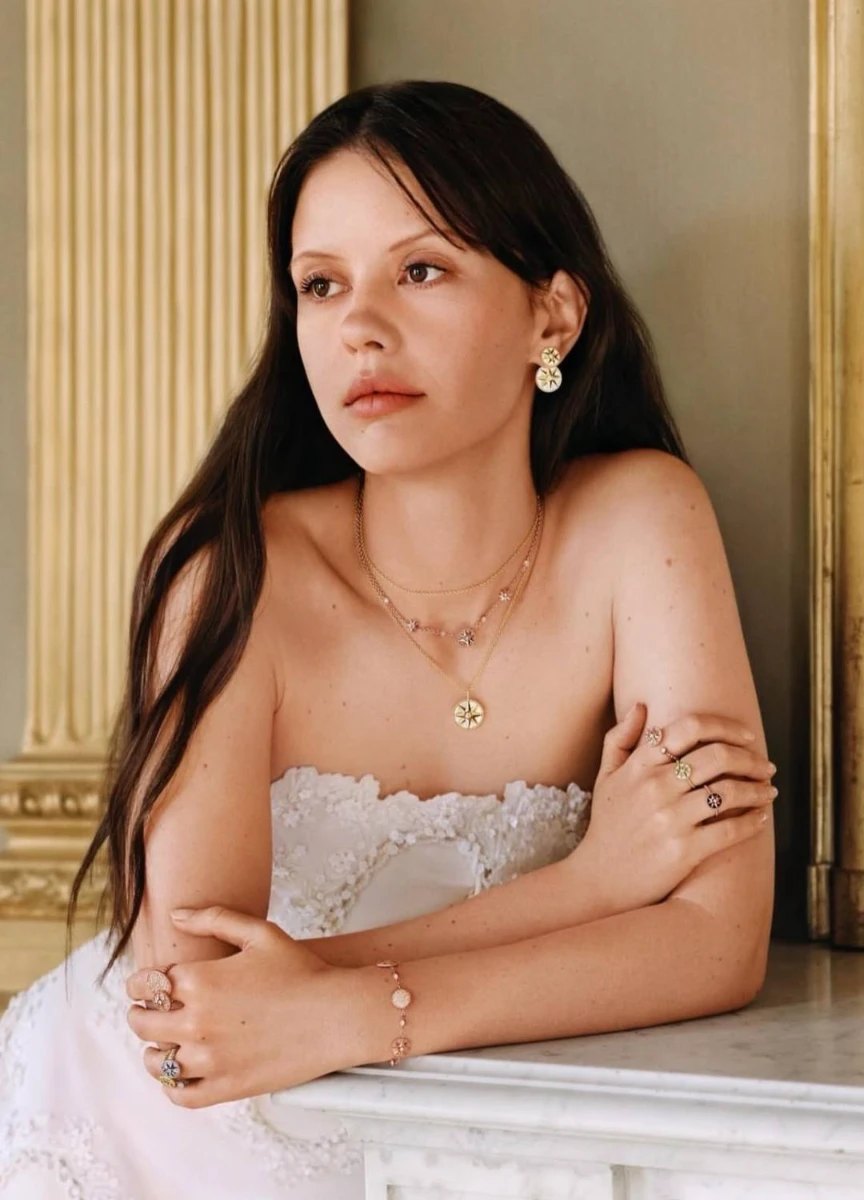
Inside Rose des Vents & Étoile des Vents
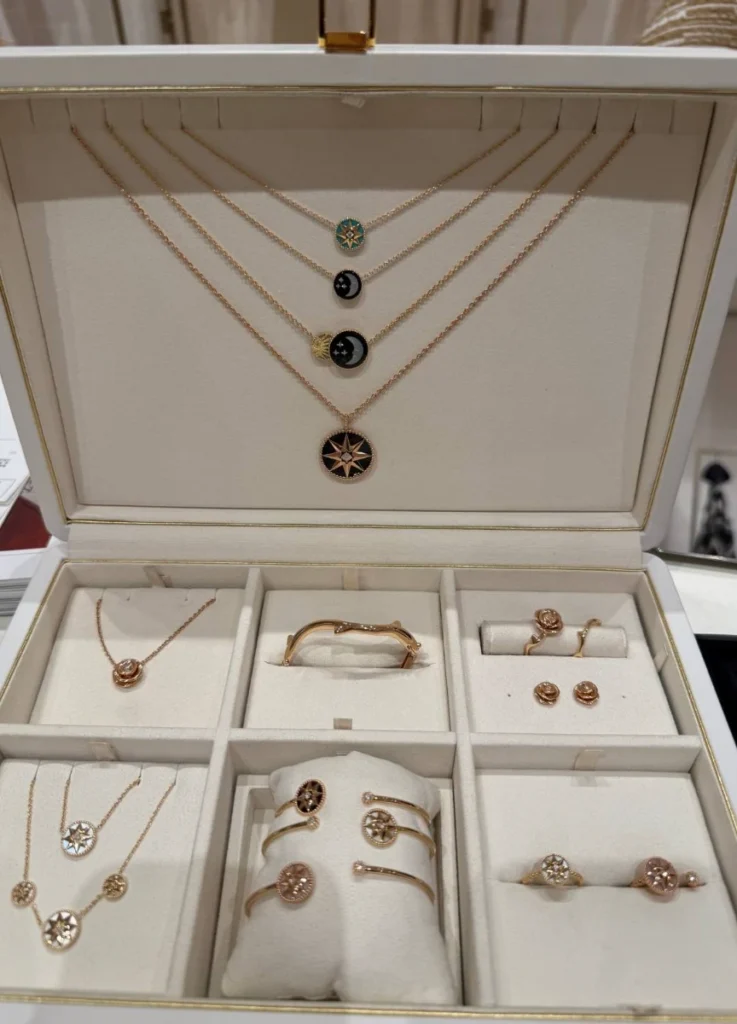
Dior’s Rose des Vents isn’t simply a pretty pendant. It’s jewelry built around orientation — a compass rose that sits on the collarbone, settles on the wrist, and quietly re-centers the body through repeated daily gestures.
It reads like a small, restrained medallion — almost a coin. The design holds a clear symbol. The Compass Rose, a star that once mapped wind and direction.
In an era where taste is consumed quickly and information never stops arriving, Rose des Vents becomes more legible, not less. It doesn’t persuade through sparkle. It persuades through stability.
This is why the collection grows on you. Rose des Vents tends to feel more compelling after a few days than on the first try — once it has entered the rhythm of your movements.
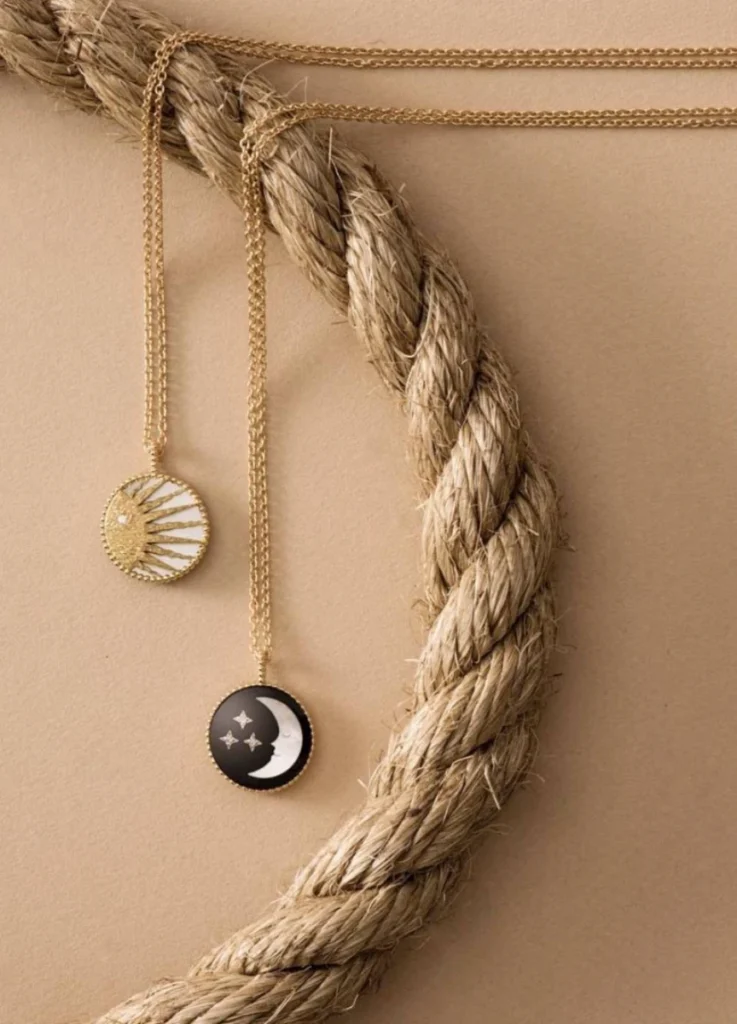
source: dior.com
Rose Céleste, the moon-and-eye line, lingers for a different reason. Less because of what it represents. More because of how it’s made.
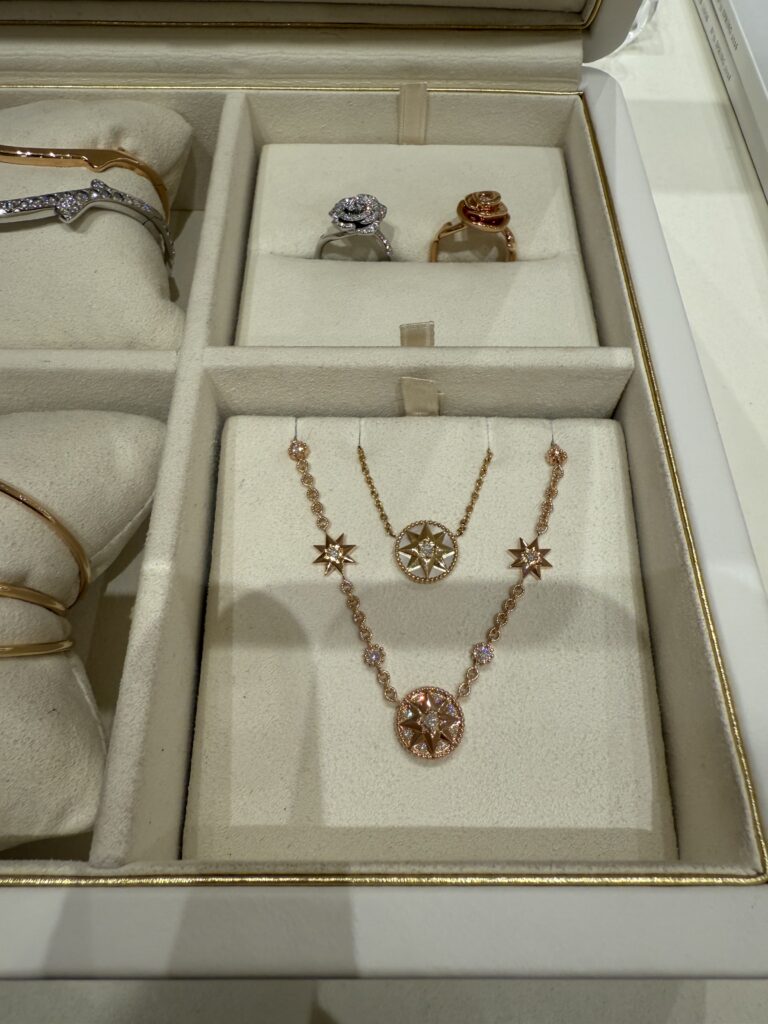
Dior has recently expanded the story with Étoile des Vents — a new direction that shifts emphasis from a single centered symbol to a constellation-like rhythm along the chain.
The collection can be read through two lenses. Meaning, and wearing structure.
Rose des Vents | “Logo-less Dior” with a Symbol You Can Live With
Rose des Vents is one of Dior’s most persuasive interpretations of logo-less luxury.
The pieces are small and neat, designed for repetition rather than announcement. The symbol is unmistakable.
The Compass Rose isn’t decorative excess. It’s a functional emblem. It implies direction, but not in a literal, didactic way. It suggests something more useful — a point you return to.
As fashion accelerates, this kind of design becomes newly valuable. It isn’t trying to be the moment. It’s trying to be a constant.
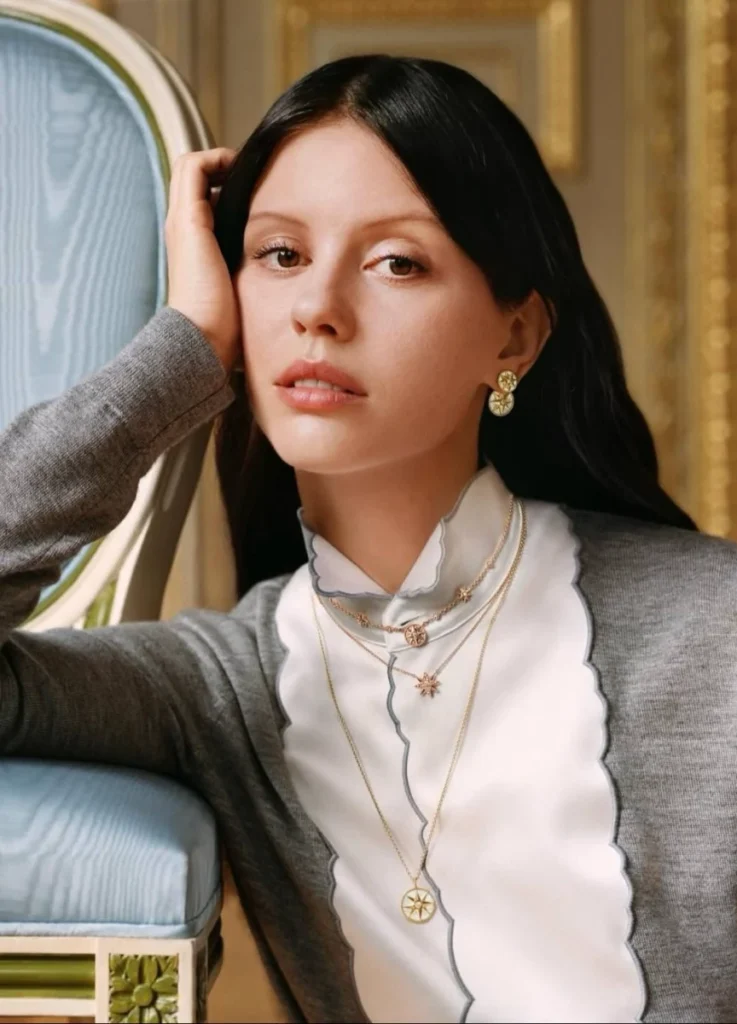
@dior / Instagram
Meaning | A Compass Isn’t an Answer. It’s a Reference Point
Rose des Vents works because the symbolism is clear, but never over-written.
Compass = a sense of orientation
Even when mood shifts and plans change, the idea of having a personal reference point remains steady.
Star = minimal language for decision-making
A star can be dramatic. It’s also simple. In Rose des Vents, the star doesn’t shout. It operates more like a tidy resolution.
Medallion / Coin = a portable belief
Not a large pendant, but a slim form designed for frequent wear. Jewelry that stays close, becoming part of routine rather than occasion.
The true elegance of this line is technical. The ability to keep a symbol small while keeping it unmistakable.
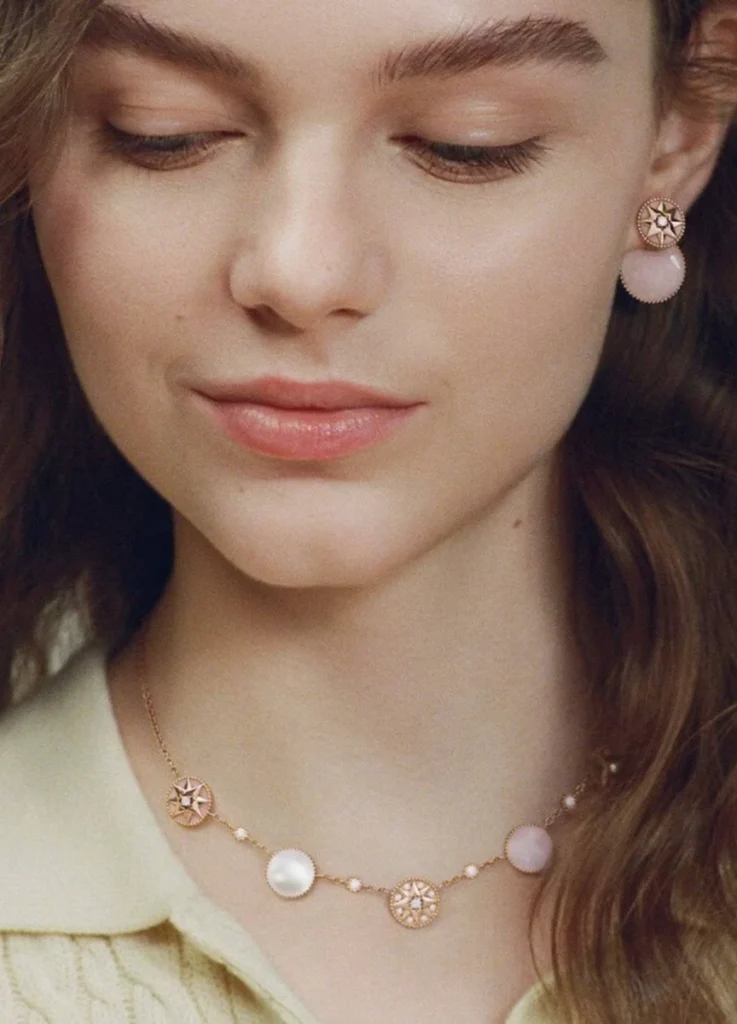
source: dior.com
Why Rose des Vents Layers So Well | The Structure Behind the Ease
Rose des Vents is beautiful as a single piece. Its real strength is layering. That ease isn’t accidental. It’s structural.
A centered design that visually self-aligns
The star sits inside a circle. The eye naturally returns to the center, so even when layered, the look stays composed rather than scattered.
Thin chain and low volume
The pendant isn’t overly thick, and the chain lies close to the skin. It doesn’t compete with necklines. Knitwear, shirts, blazers — everything stays calm because the jewelry keeps a low center of gravity.
Presence through line, not through glare
Even when stones are present, the first impression isn’t sparkle. It’s line and order — the geometry of the star. This is why the styling range is wide. From quiet weekday dressing to more formal silhouettes, the piece carries.
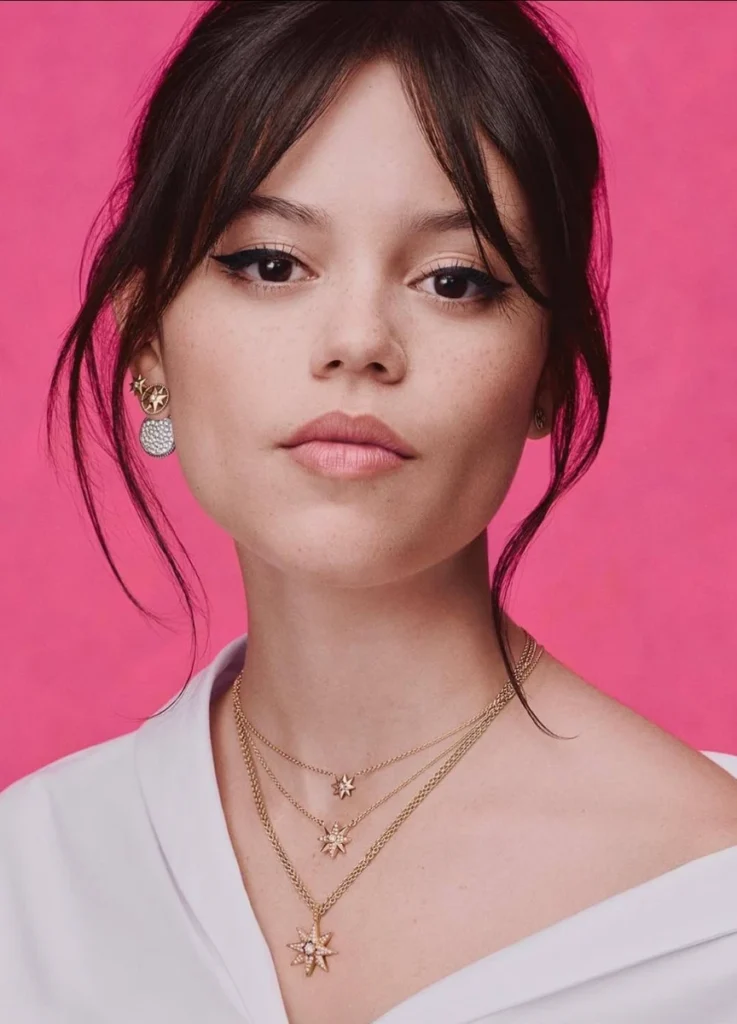
source: dior.com
Rose Céleste | Why the Moon-and-Eye Lingers
Rose Céleste is often described through its motifs — the sun, the moon, the eye. What makes it singular is the risk built into its making.
The eye motif — arguably the emotional center of the design — isn’t completed through a purely mechanical process. It involves hand work. Artisans paint or finish the eye detail by hand.
The eye isn’t merely decoration. It’s expression. It’s balance.
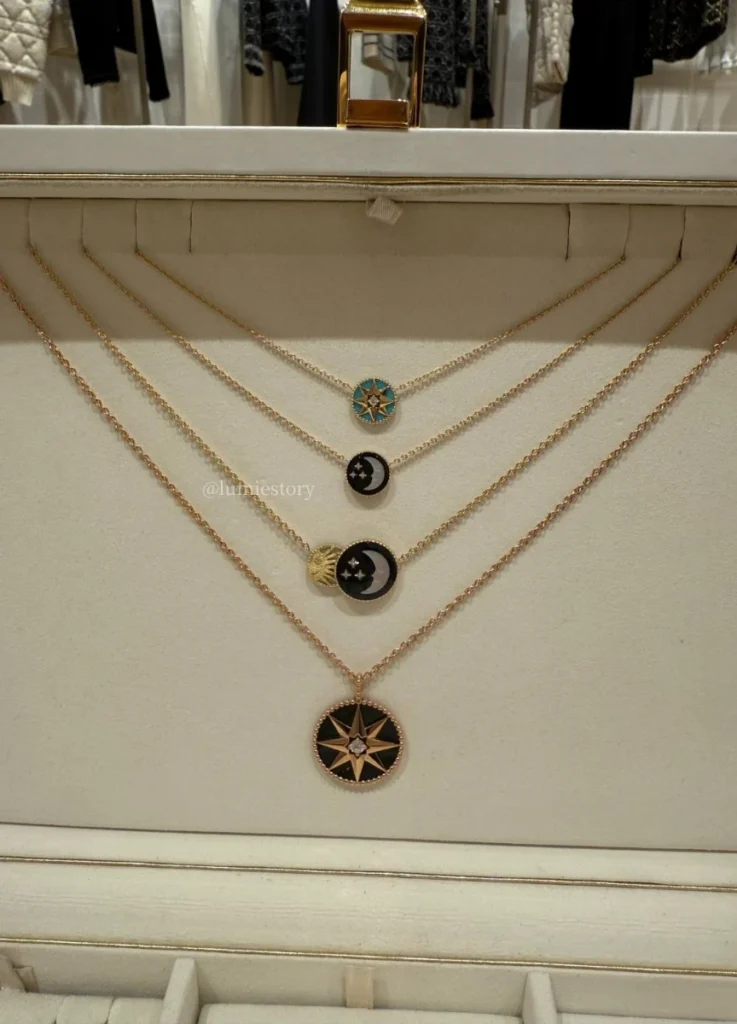
A slight shift in angle changes the face. A minor difference in density changes the entire impression. If the result falls short, it isn’t rationalized — it’s rejected.
Rose Céleste is quietly known as a line where discard rates run higher than one would expect. The standard is unforgiving.
Dior maintains it anyway.
Rose Céleste isn’t designed to impress. It’s designed to remain.
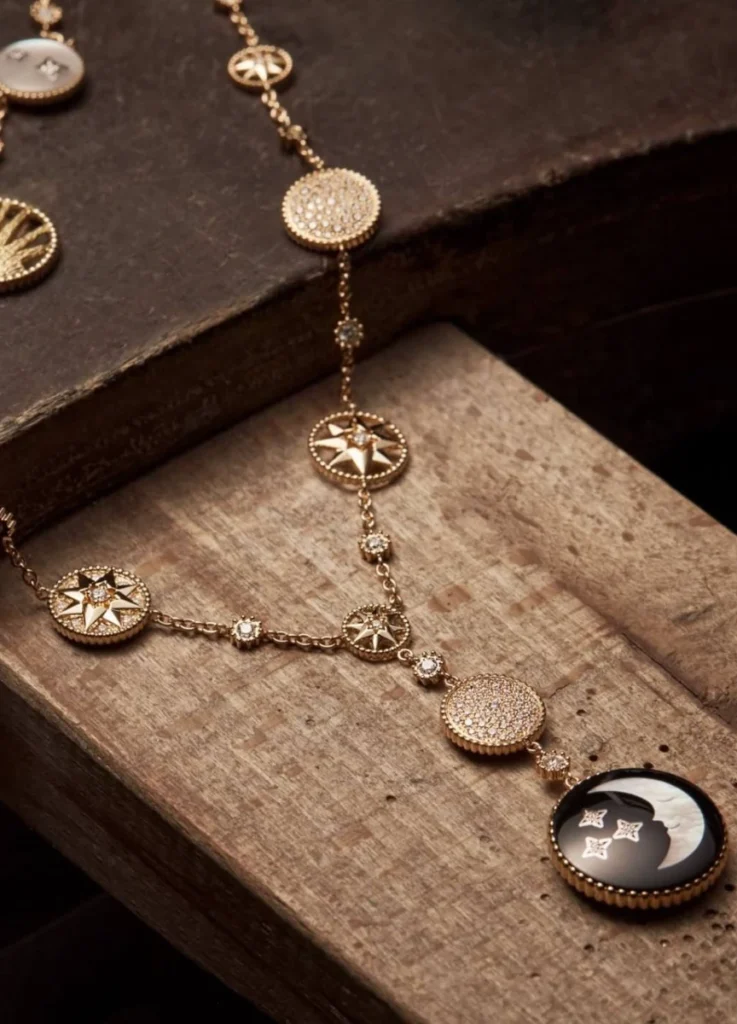
source: dior.com
The symbolic language of Rose Céleste
Moon = protection and recovery
Moonlight is never aggressive. It works slowly. It doesn’t instruct. It settles. Rose Céleste carries that indirect strength.
Eye = not surveillance, but self-possession
This eye isn’t about watching others. It reads more like a mark that prevents the self from slipping away.
A double-faced sensibility
Even when the piece isn’t literally double-sided, it feels like it holds two states. Night and awareness. Softness and clarity. Meaning shifts slightly as you move — one reason it rewards long looking.
Rose Céleste doesn’t aim for flawless brilliance. It leaves space for a human trace. That trace is exactly what gives it weight.
My Preference | The One-Point Céleste Bracelet
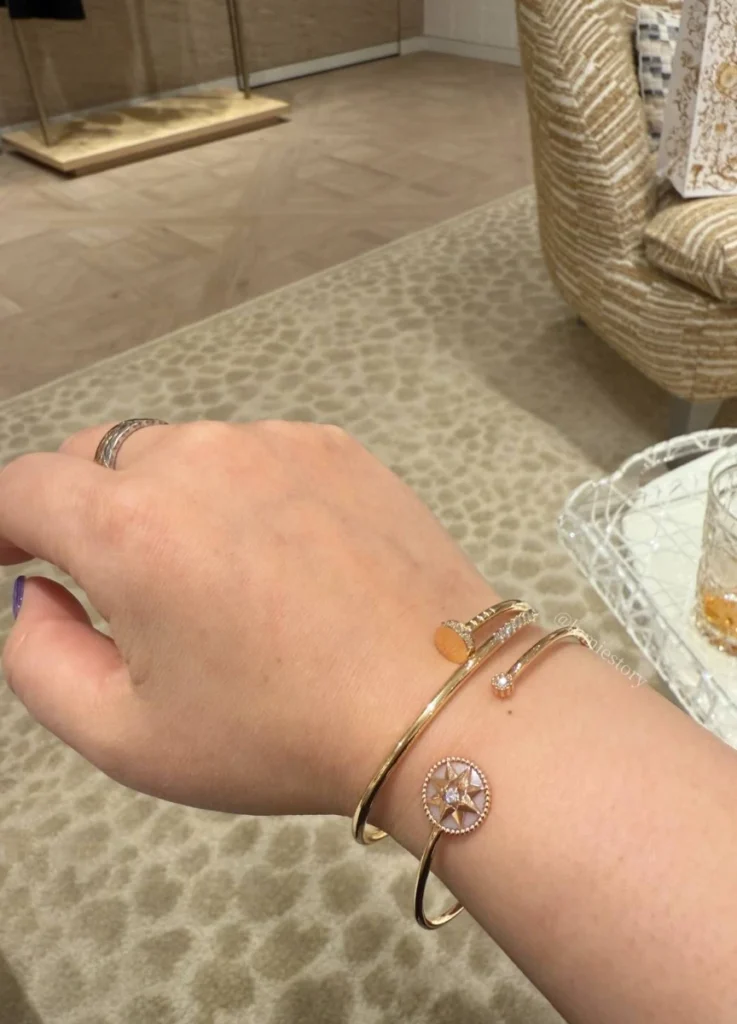
Small, but always seen in motion.
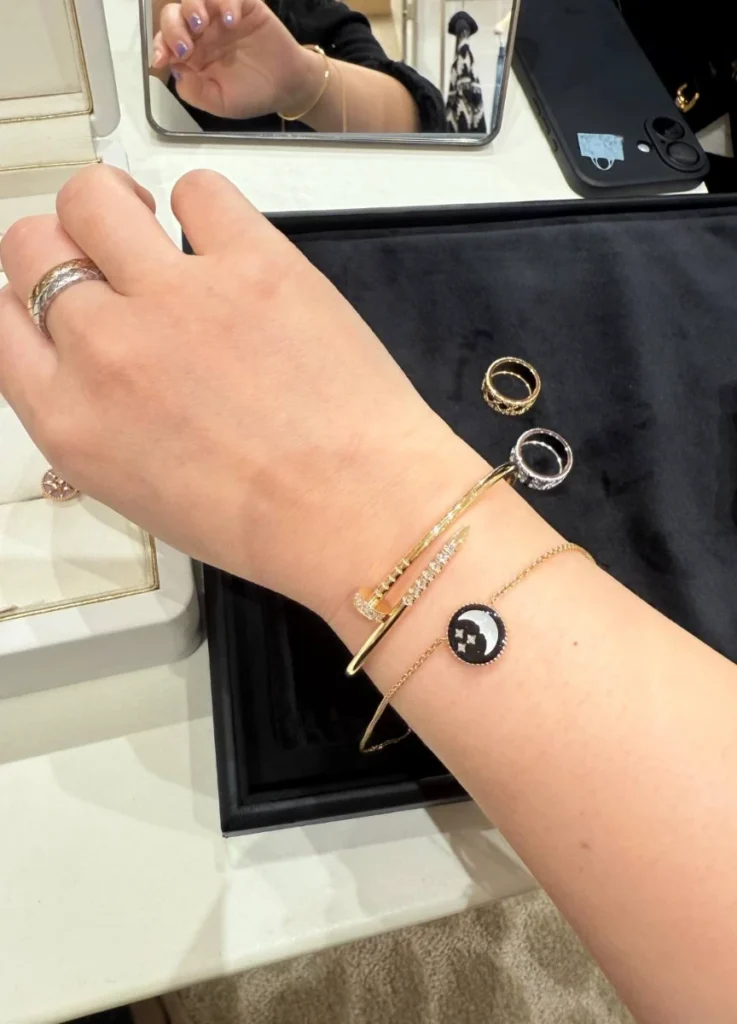
The beauty of a one-point bracelet is simple. It speaks softly, yet appears repeatedly through gesture.
- a modest charm still catches light when you lift your hand
- a thin chain still organizes the wrist because the motif becomes the visual anchor
- it doesn’t require stacking to feel complete
Rose Céleste on the wrist feels less like ornament and more like a mark. A reminder of what kind of day you want to carry.
My Preference | The Open Ring — Why I Recommend It in Both Lines
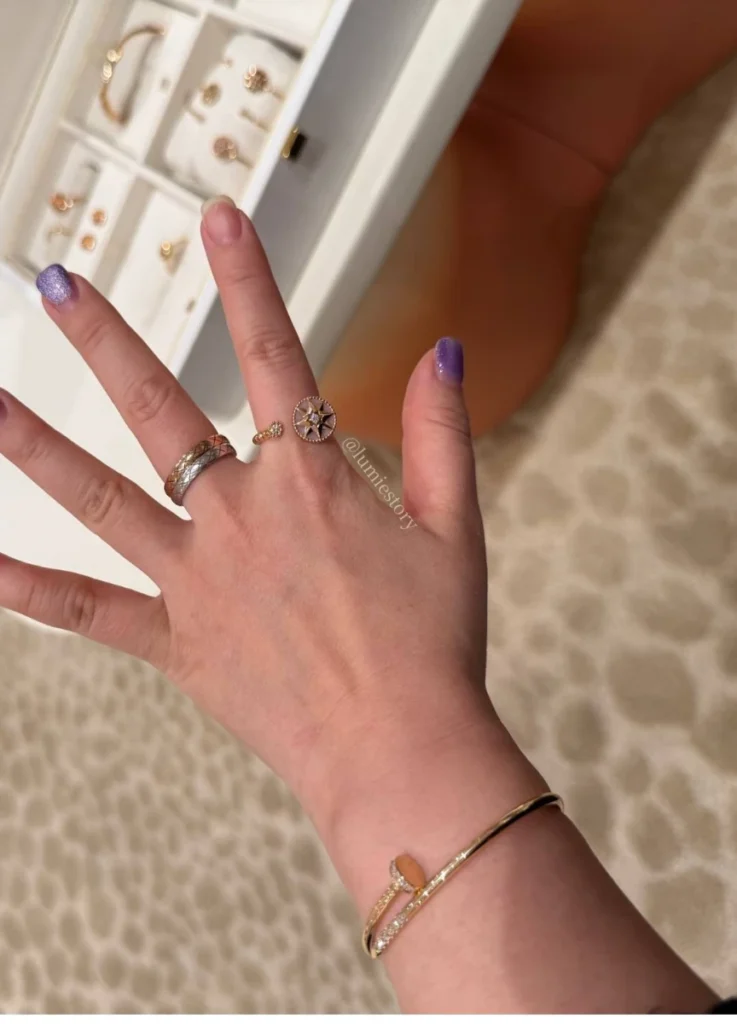
An open ring is less a ring and more a tool that designs the hand.
- it doesn’t fully encircle the finger, so it feels less restrictive
- the motifs placed at both ends create tension between symmetry and asymmetry
- when the hand opens, the motifs move slightly — like small stars making space
Rose des Vents Open Ring | Structural Balance
Geometry leads here. The compass motif provides centered tension. The open construction keeps the form unfinished — deliberately.
It lengthens the finger visually. It avoids pressure at the joints. It holds its shape worn alone.
This ring leans toward intention and direction.
Best on: hands with clear knuckles, minimal nails, matte tones — when jewelry is worn like a sign rather than a decoration.
The New Line | Étoile des Vents
What changes when the star stops being only a center?
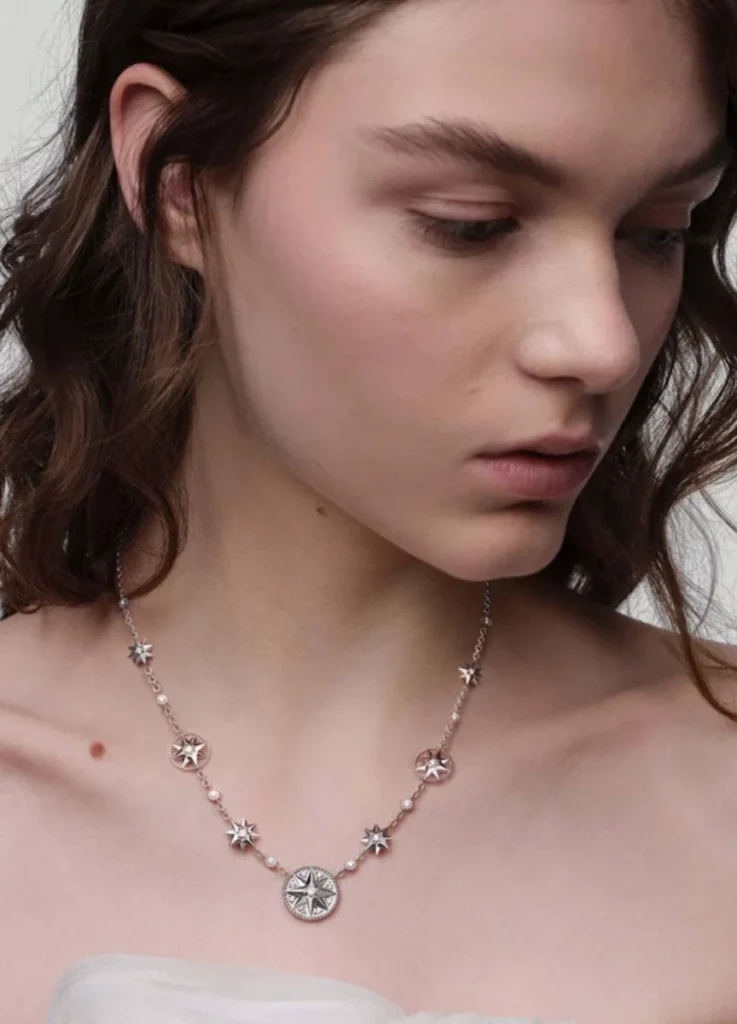
A notable recent addition is Étoile des Vents. If Rose des Vents is about centering, Étoile des Vents is about rhythm.
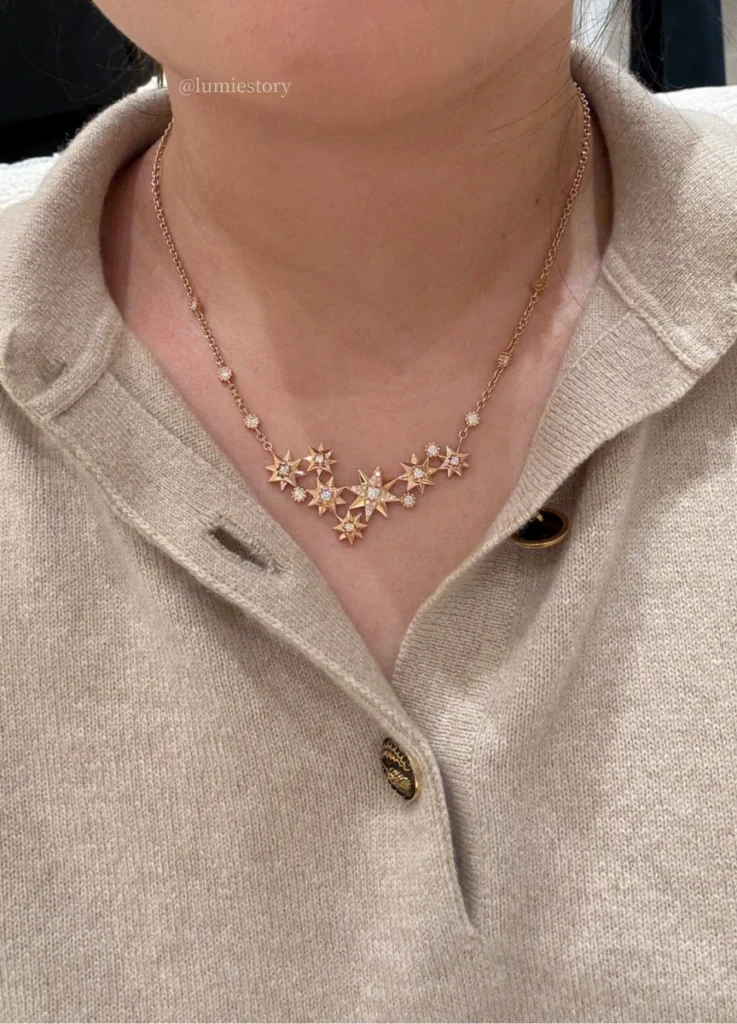
From a centered compass to a constellation-like orbit
Rose des Vents places the star inside a circle. A clear anchor. Étoile des Vents scatters stars along the chain. A sequence.
- Rose des Vents: alignment through a single center
- Étoile des Vents: movement through repeated points
The meaning shifts accordingly. If Rose des Vents is a reference point, Étoile des Vents feels closer to the flow of a day.
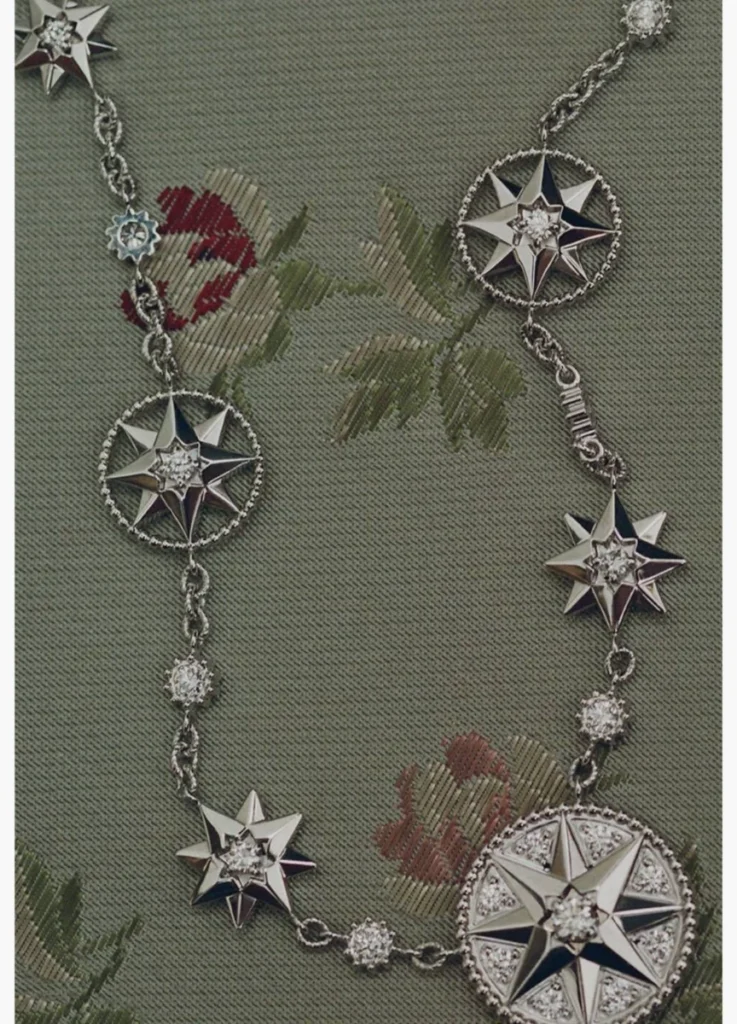
source: dior.com
Visually, the line looks longer and finer
When multiple stars are distributed, the gaze travels rather than stopping. On the neck and wrist, this creates an elegant illusion — a longer, more continuous line.
- on days when your neckline feels short or your upper body feels visually dense, the distributed motif creates air
- on slimmer wrists, the rhythm of smaller stars can feel more precise than a single larger charm
source: dior.com
A different kind of certainty
Rose des Vents is quiet certainty through centering.
Étoile des Vents is quiet certainty through repetition.
Same star. Different tone of voice.
New Pieces | Meaning + Wearing Structure
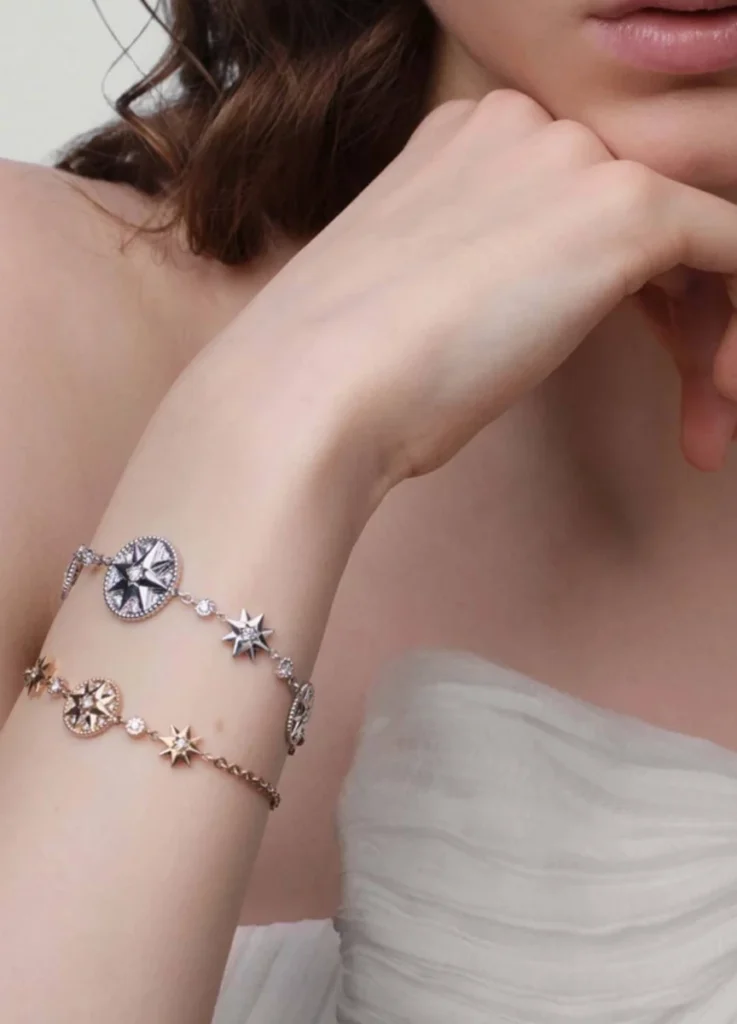
Étoile des Vents Bracelet | Distributed Stars
Meaning: movement mapped as small points. Flow over center.
Wearing: especially elegant on slimmer wrists. Works well with watches because it doesn’t visually collide.
Styling: strongest when only one or two stars peek out from a cuff. Subtle, not staged.
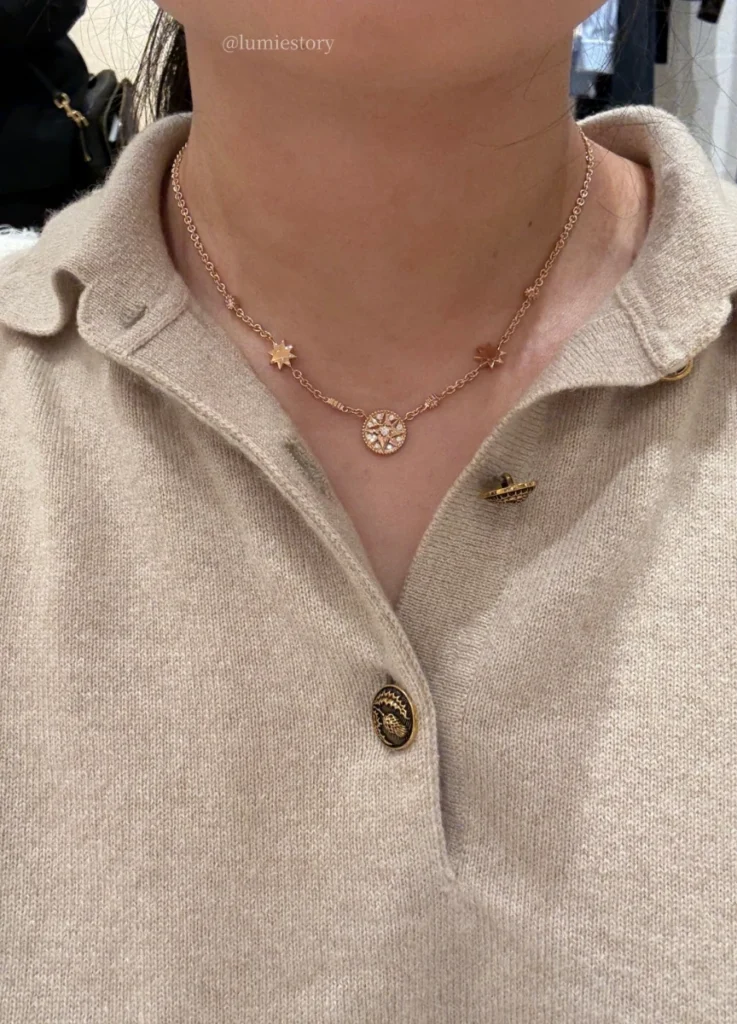
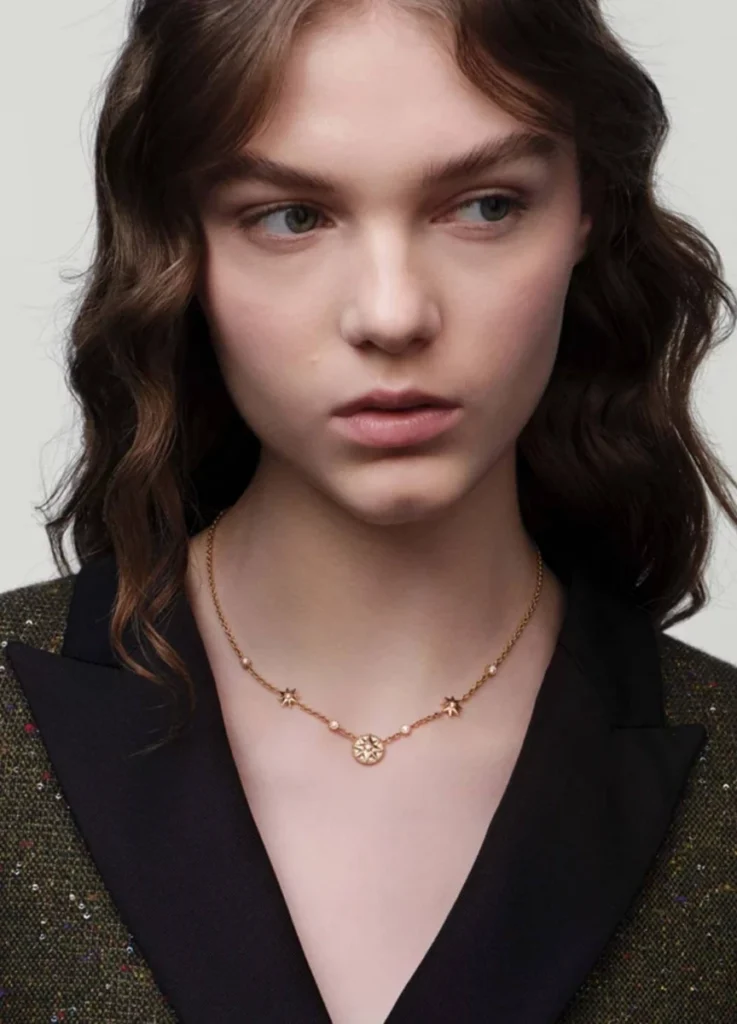
Étoile des Vents Necklace | Center Plus Surrounding Stars
Meaning: a reference point, with additional clues.
Wearing: creates space around the collarbone. Pairs well with round necks and even turtlenecks because volume remains low.
source: dior.com
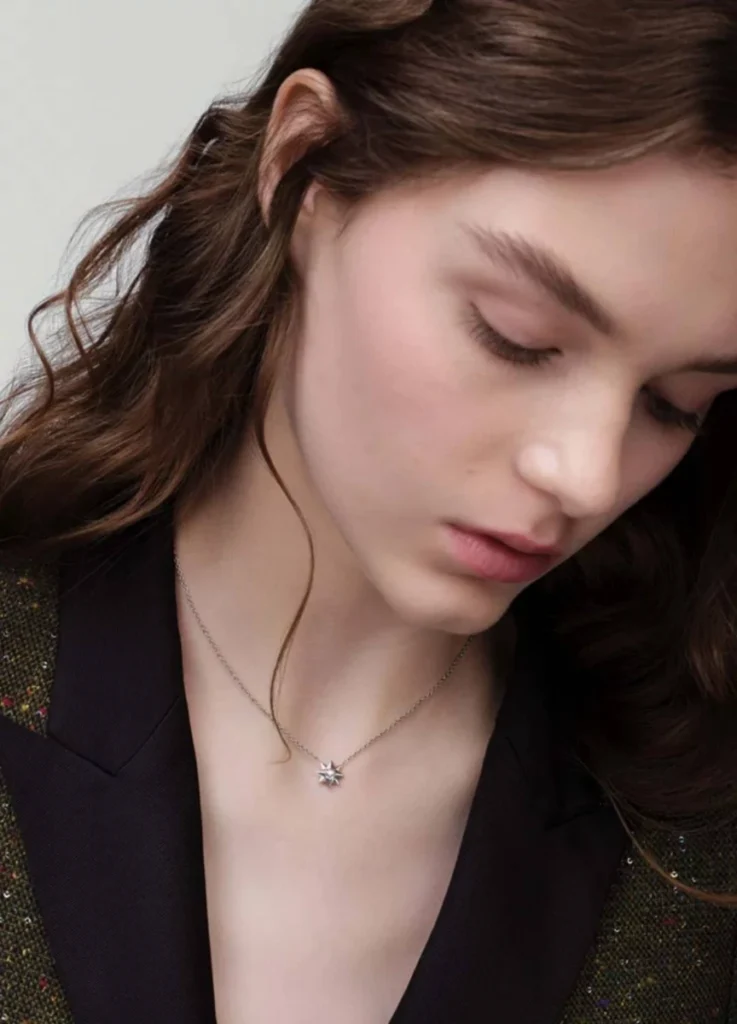
Rose des Vents Classic | Necklace and Bracelet
Meaning: return, alignment, a point you come back to.
Wearing: strongest with structured clothing — blazers, coats, clean silhouettes — where the central geometry can do its work.
source: dior.com
Rose Céleste | Necklace and Bracelet
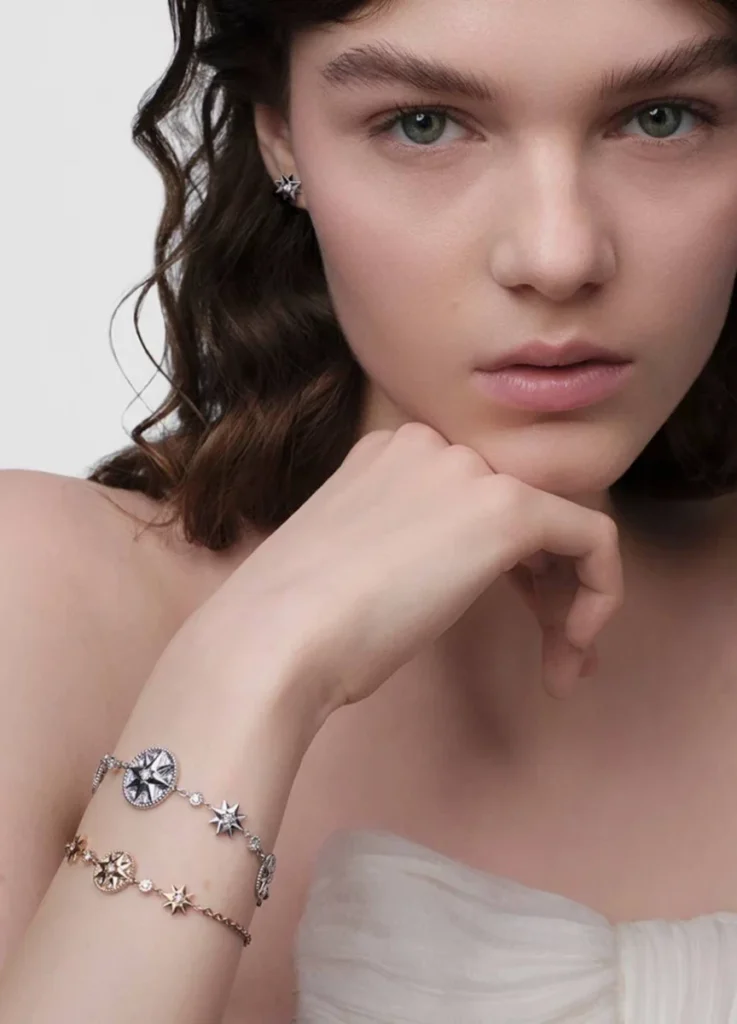
source: dior.com
Meaning: protection, recovery, lingering.
Wearing: many wearers find Rose Céleste stays with them more on the wrist than at the neck. The wrist is where story repeats through movement.
source: dior.com
Body Structure Notes | What Tends to Work
If jewelry feels difficult to match on certain days, begin with the body’s visual conditions.
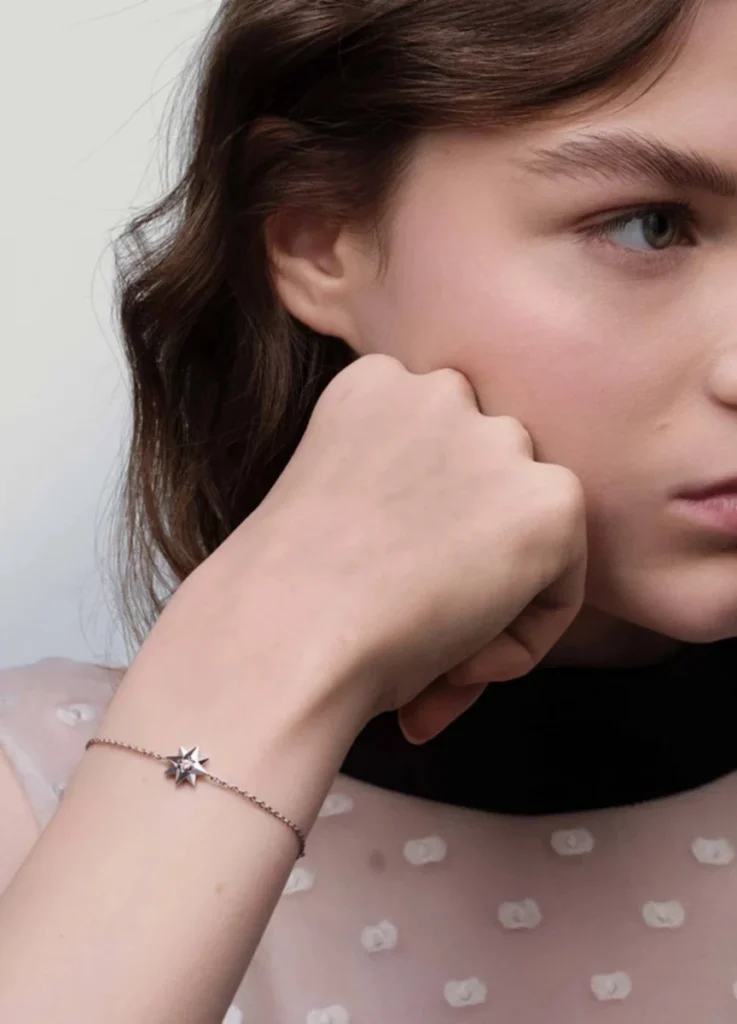
A. Slim wrists (14-15cm) and shorter arms
- Bracelet: Étoile des Vents for length. Rose Céleste one-point for clean anchoring.
- With a watch: keep the bracelet single and light. Étoile des Vents is especially clean alongside a watch.
B. Smaller hands or shorter fingers
- Ring: open rings (both lines) create space and visually lengthen the finger.
- Avoid: thick bands plus large front-facing motifs, which can shorten the hand.
source: dior.com
C. Shorter neck or visually dense upper body
- Necklace: Étoile des Vents first. Rose des Vents in smaller scale second.
- Length: avoid chokers. Let the piece sit slightly below the collarbone to create breathing room.
D. Fuller shoulders or heavy winter layers
- Necklace: Rose des Vents (centering) restores balance.
- Bracelet: distributed stars retain delicacy even under volume.
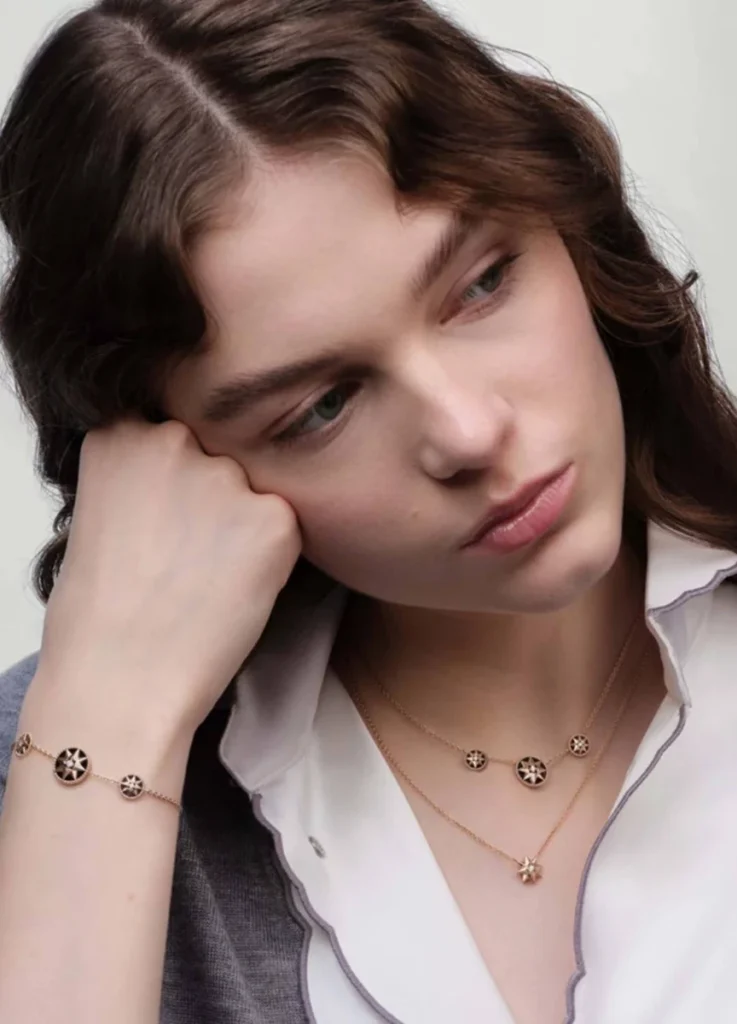
source: dior.com
Body-to-Piece Quick Reference
| Body Feature | Recommended Piece |
|---|---|
| Slim wrist | Multi-motif bracelet (Étoile des Vents) |
| Defined wristbone | Single Rose des Vents bracelet |
| Slim and long collarbone | Rose Céleste necklace |
| Visually full upper body | Mini Rose des Vents necklace |
| Long fingers | Rose des Vents ring (worn alone) |
| Pronounced finger joints | Bracelet preferred over ring |
Selection Checklist
| Question | Yes → | If No → | Key Note |
|---|---|---|---|
| Slim wrist (14–15cm) | Étoile des Vents bracelet | Rose Céleste one-point | Distribution vs center |
| Neckline reads short | Étoile des Vents necklace | Smaller Rose des Vents | Stars elongate neck |
| Prefer meaning | Rose Céleste | Rose des Vents | Céleste = deeper residue |
| Daily piece | Rose des Vents classic | Étoile des Vents | Anchors as reference |
| Short fingers | Open ring | Thin band ring | Extends the hand |
| Layer watch often | Étoile or thin chain | Large pendant | Avoid collision |
| Photographic presence | Rose des Vents | Rose Céleste | Impact vs memory |
Direction, After-Feeling, and the Star That Learned to Move
Rose des Vents is not a trend. It is orientation—a way to re-align quietly.
Rose Céleste is not a statement. It is after-feeling—a trace that stays.
And Étoile des Vents reads like a thoughtful bridge between them:
instead of fixing a single center, it disperses the star into a rhythm that follows the body through the day.
Quiet things that keep returning to the eye tend to last.
And in my experience, this collection shines most—without insisting—on the wrist and at the fingertips.
Featured Image via @dior / Instagram
All images unless otherwise credited: © Lumie Story
[ Related Editorials ]