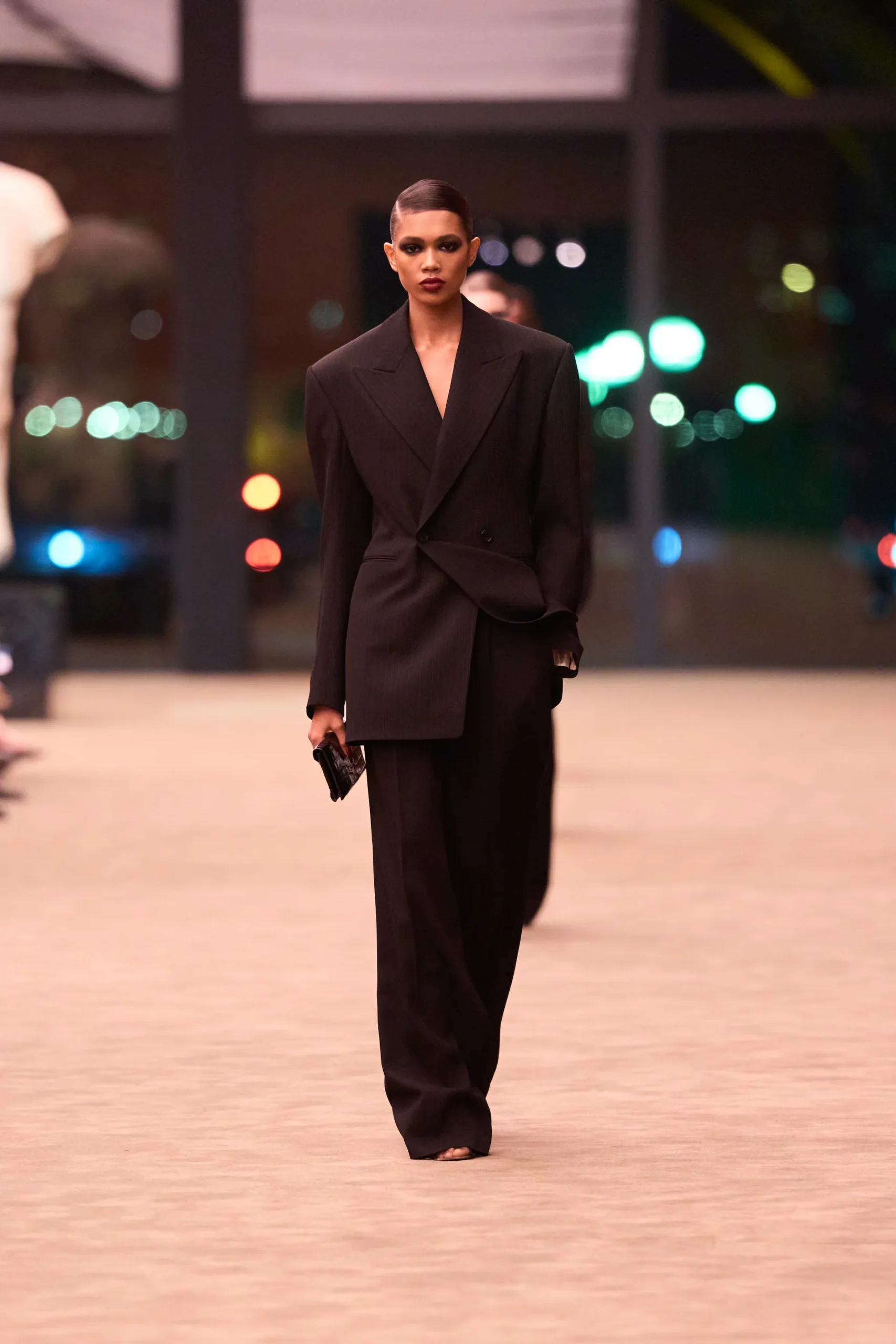
Inside Saint Laurent Fall/Winter 2026
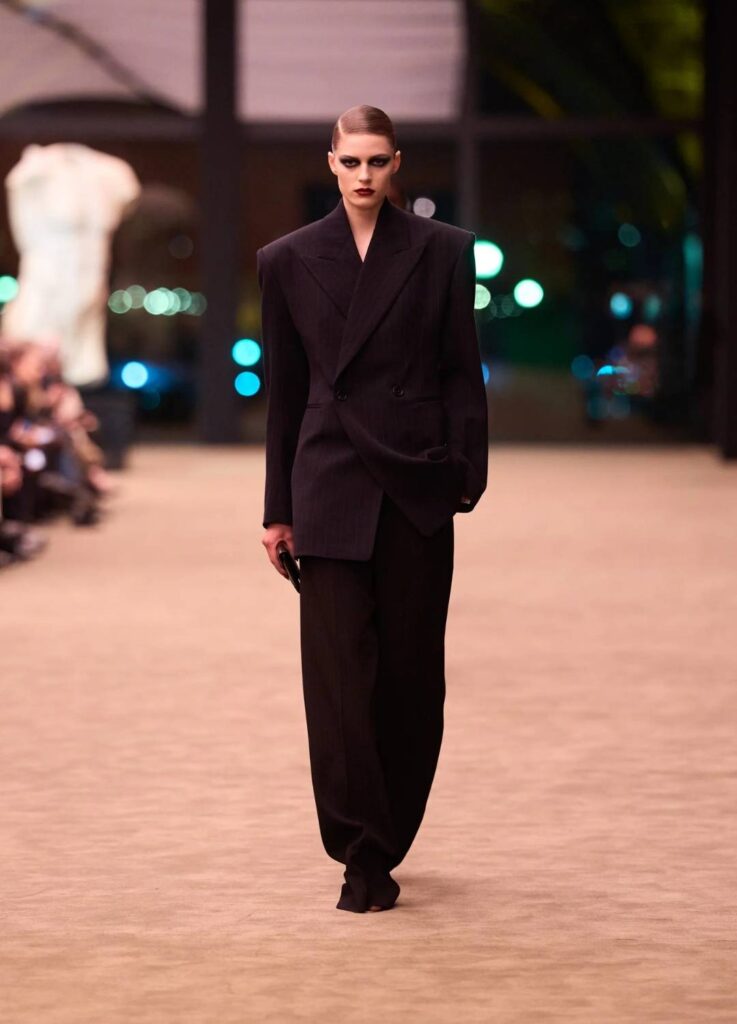
Few garments in fashion history carry the symbolic weight of Le Smoking, the tuxedo suit Yves Saint Laurent introduced in 1966.
When it first appeared, the idea of women wearing a tuxedo was more than a stylistic gesture. It was a cultural disruption. At a time when tailoring belonged almost exclusively to menswear, Saint Laurent redefined power dressing by translating the tuxedo into a distinctly feminine language.
Sixty years later, Anthony Vaccarello returns to this emblematic garment for the Saint Laurent Fall/Winter 2026 collection.
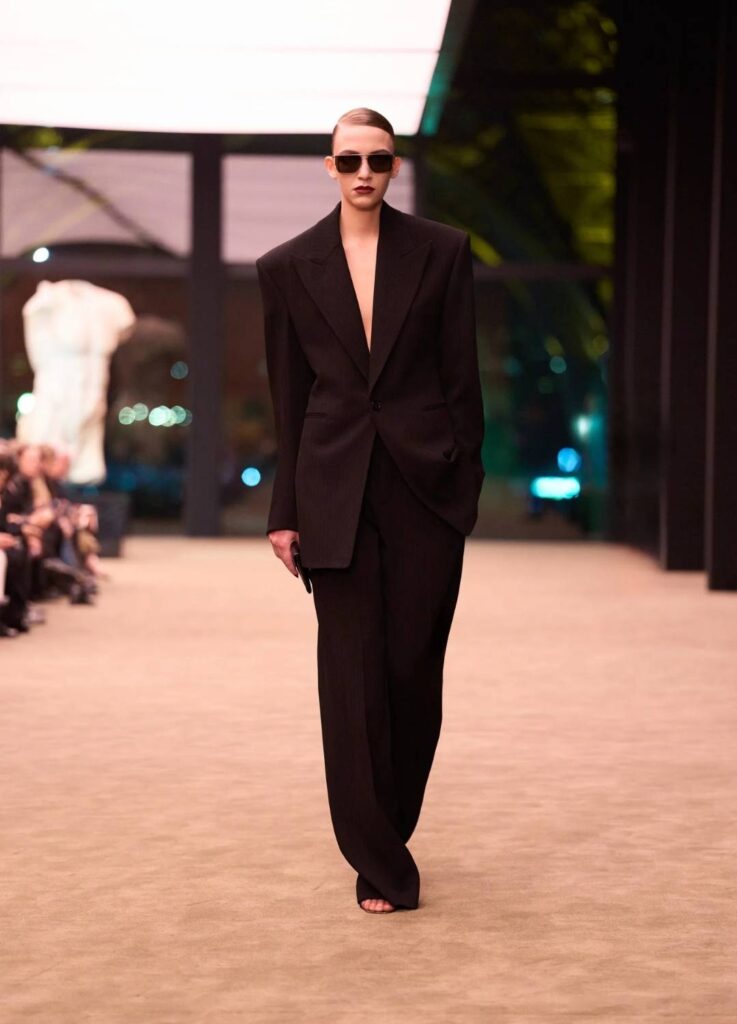
The result is not a simple archival tribute. Instead, the collection stages a visual dialogue between two opposing forces that have long defined the house: strict tailoring and unapologetic sensuality.
Black tuxedo suits open the runway, while sheer lace dresses appear throughout the show, creating a deliberate tension between control and exposure. That tension ultimately becomes the central narrative of the season.
Season Context
Revisiting the Tuxedo After Six Decades
The Fall 2026 collection arrives at a historically meaningful moment: the 60th anniversary of Le Smoking.
Vaccarello’s decision to center the collection around tuxedo tailoring therefore feels deliberate rather than nostalgic.
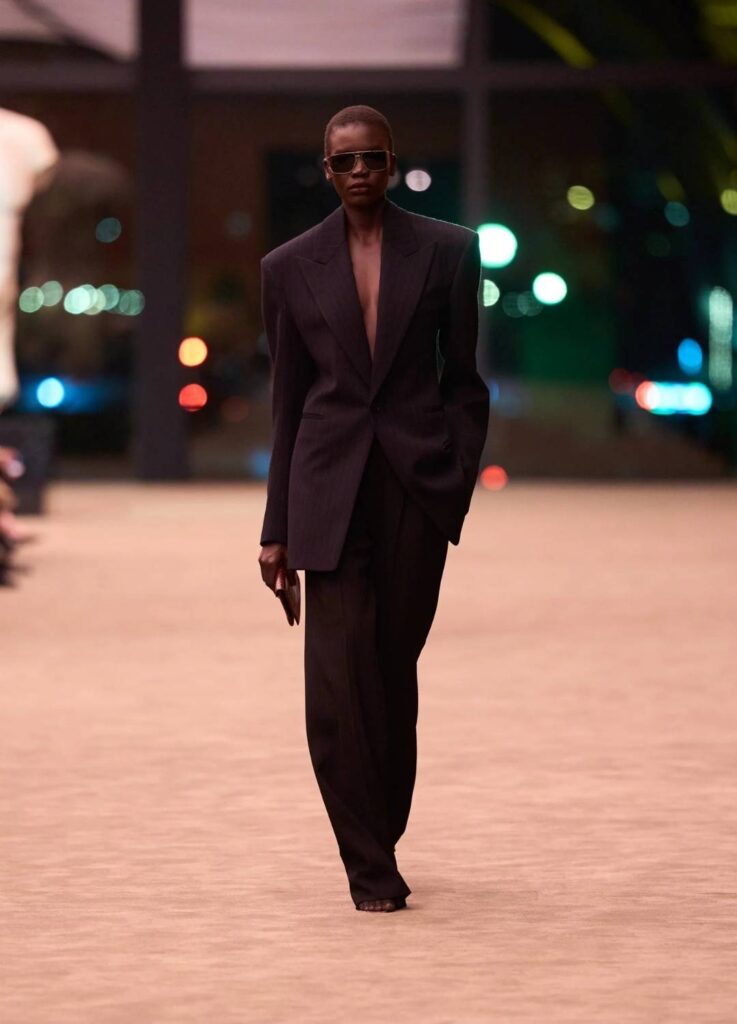
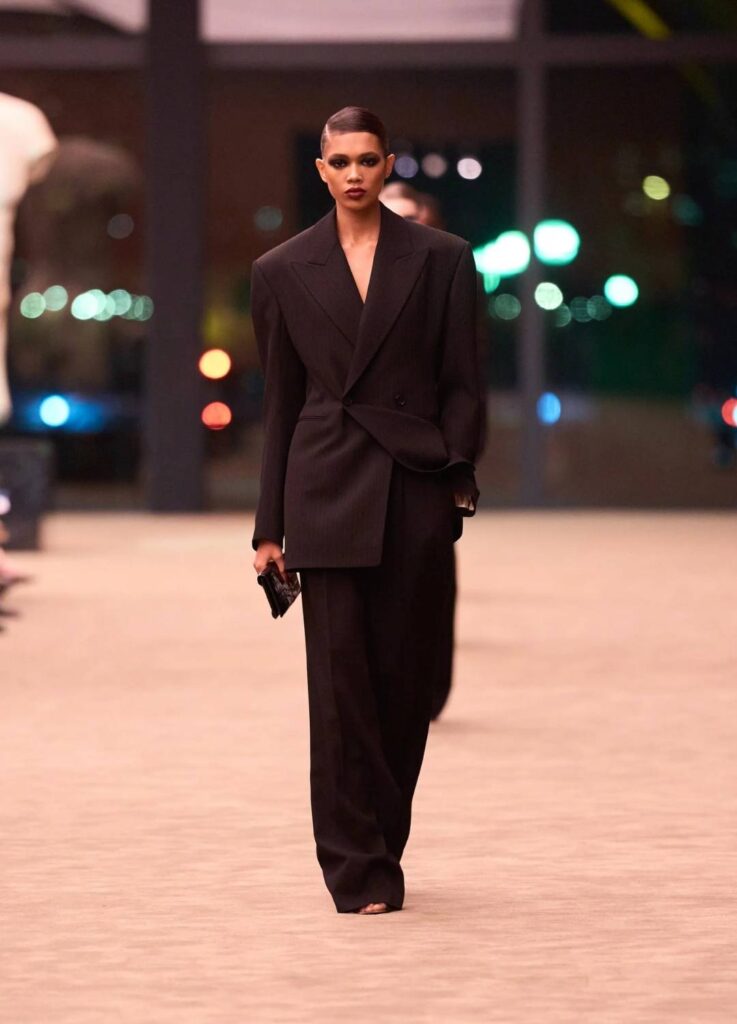
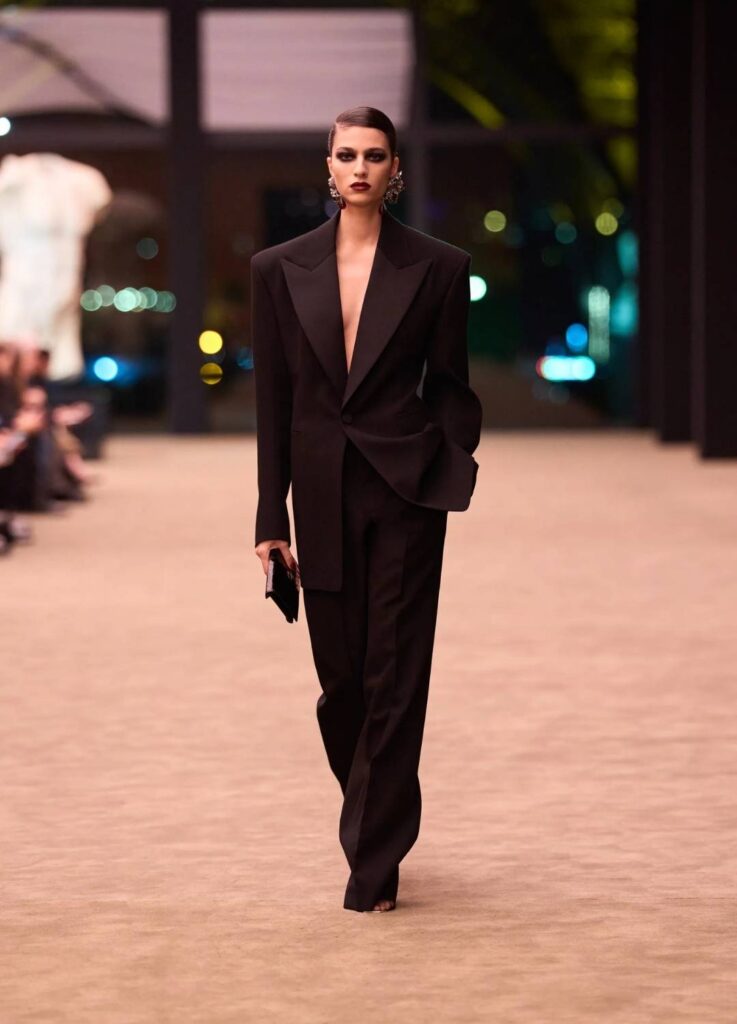
The show opens with a sequence of sharply cut black tuxedo suits. Jackets plunge deeply at the chest, worn without shirts beneath, while elongated trousers fall almost to the floor. The message is unmistakable: Saint Laurent’s most recognizable visual language is returning to the forefront.
In previous seasons, Vaccarello explored dramatic eveningwear silhouettes—oversized gowns, sculptural shapes, and theatrical volume. This season marks a noticeable shift back toward tailoring.
Rather than presenting another spectacle-driven runway, Fall 2026 reads almost like a structural reset, bringing the house back to its foundational codes.
Silhouette
Masculine Tailoring Reinterpreted
Although the tuxedo is the collection’s starting point, the suits themselves are not traditional reproductions.
Vaccarello borrows several construction elements from recent Saint Laurent menswear collections, most notably sloping shoulders that soften the traditional tailoring line. At the same time, the internal structure of the jackets feels lighter than expected.
Many of the suits appear almost unlined, allowing the fabric to move freely around the body rather than imposing rigid shape.
This combination creates a hybrid silhouette that merges two distinct approaches:
- the architectural discipline of masculine tailoring
- the fluidity typically associated with womenswear
Jackets extend longer than classic tuxedo proportions, and trousers stretch downward in elongated lines that reinforce Saint Laurent’s signature long-and-lean silhouette.
The result feels less like power dressing and more like controlled elegance, where structure remains present but never restrictive.
Materials and Color
Darkness, Texture, and Skin
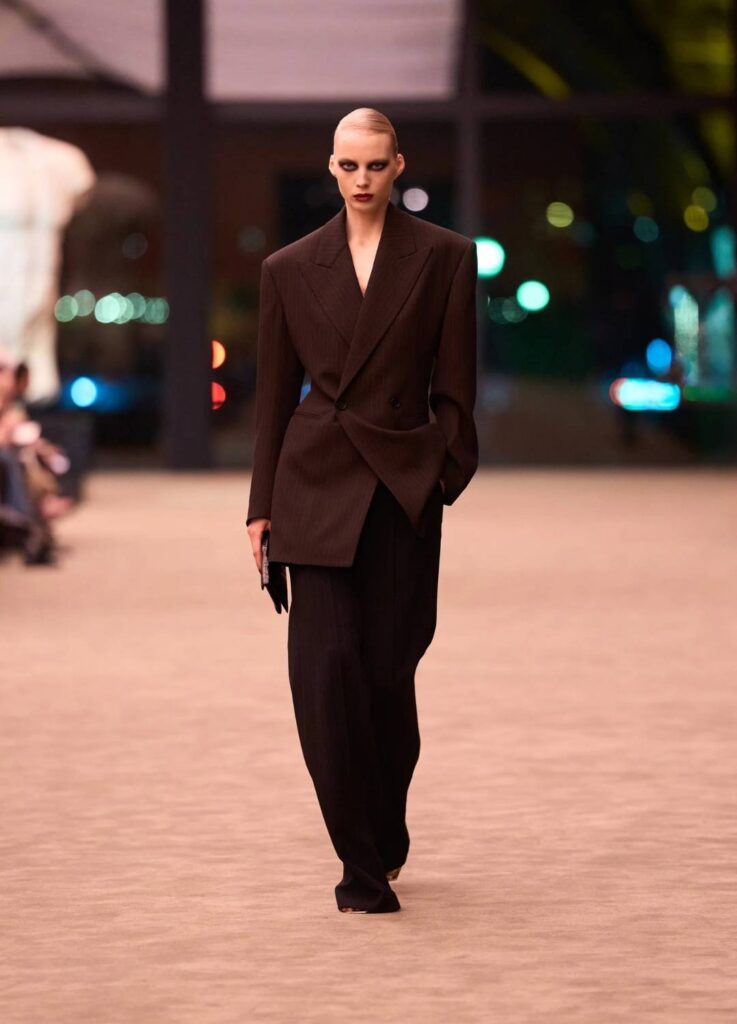
The palette remains intentionally restrained.
Most looks revolve around deep tones such as:
- black
- brown
- burgundy
- amber
These darker colors create a cinematic atmosphere across the runway. Yet the materials used introduce an unexpected layer of complexity.
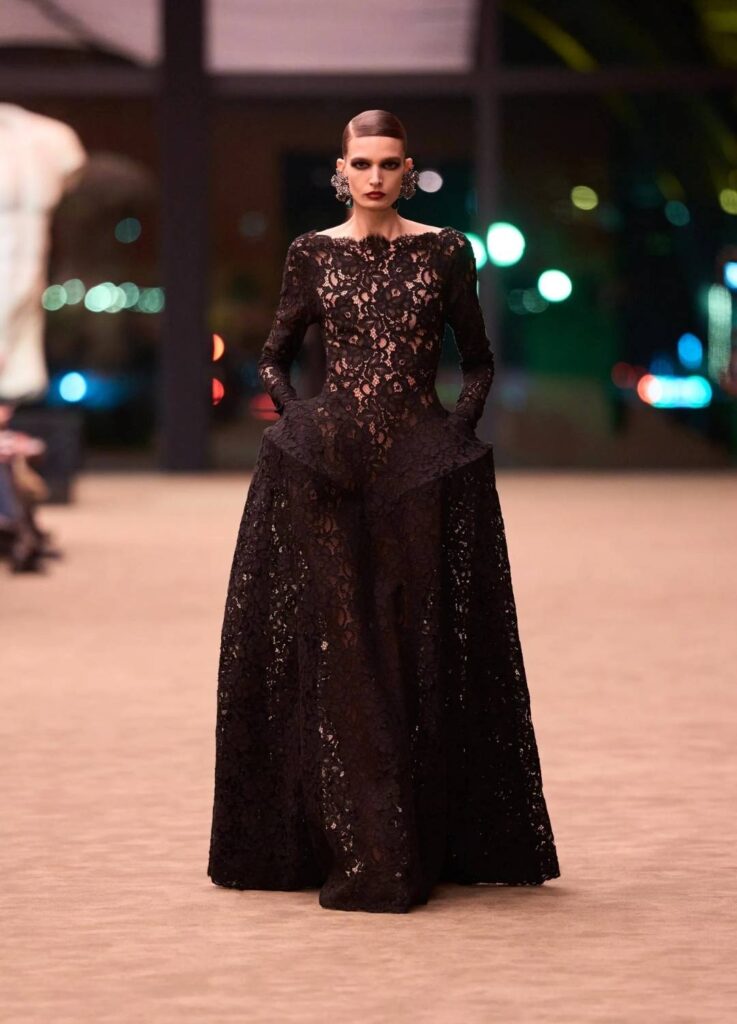
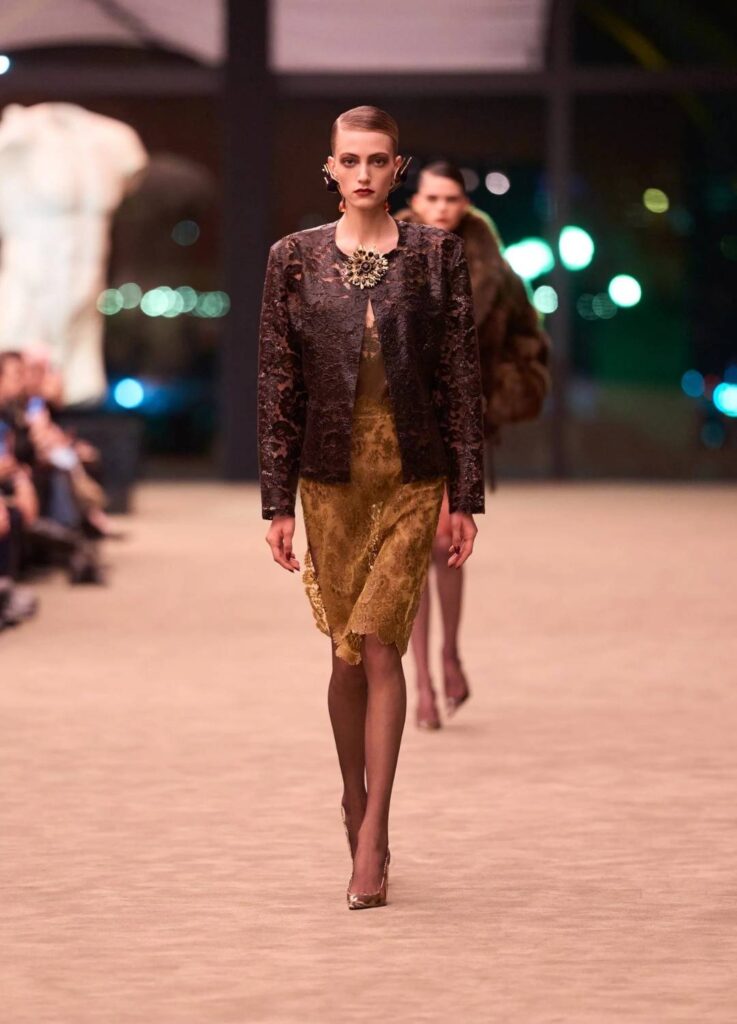
Midway through the show, tailoring gradually gives way to a series of lingerie-inspired garments:
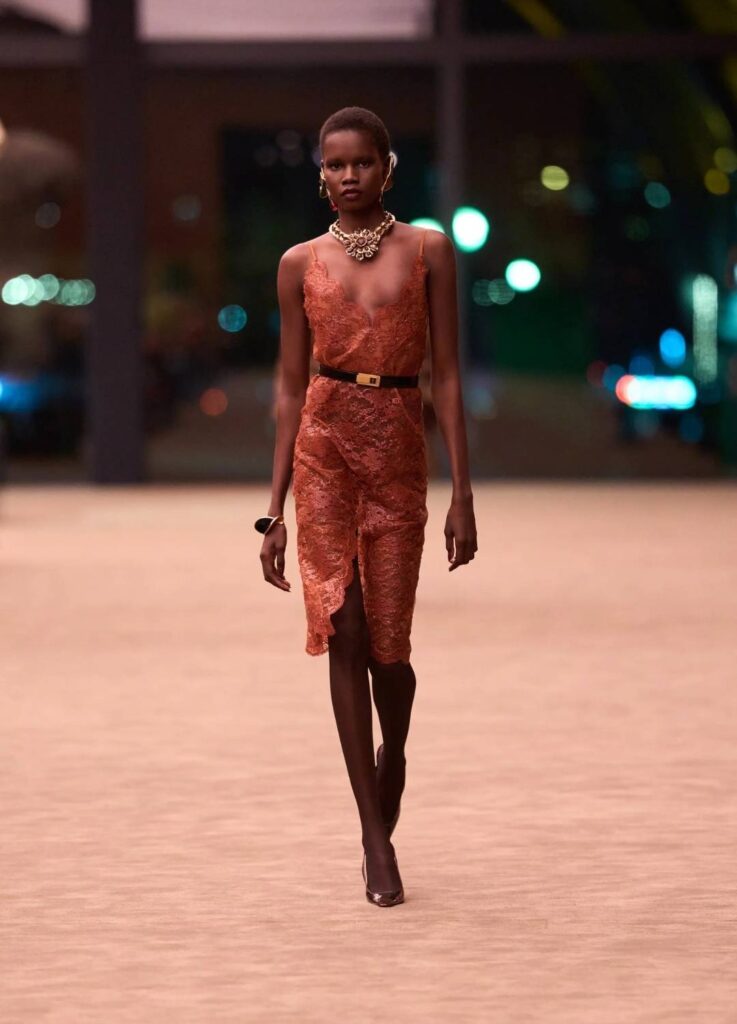
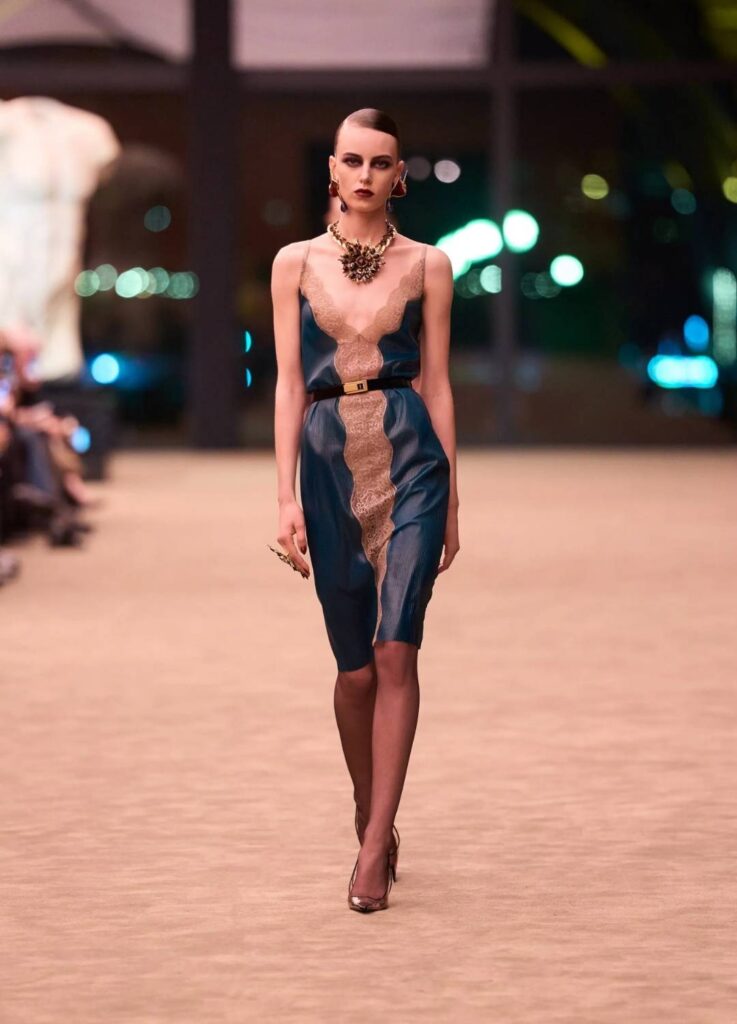
- sheer lace slip dresses
- transparent body dresses
- silicone-coated lace textures
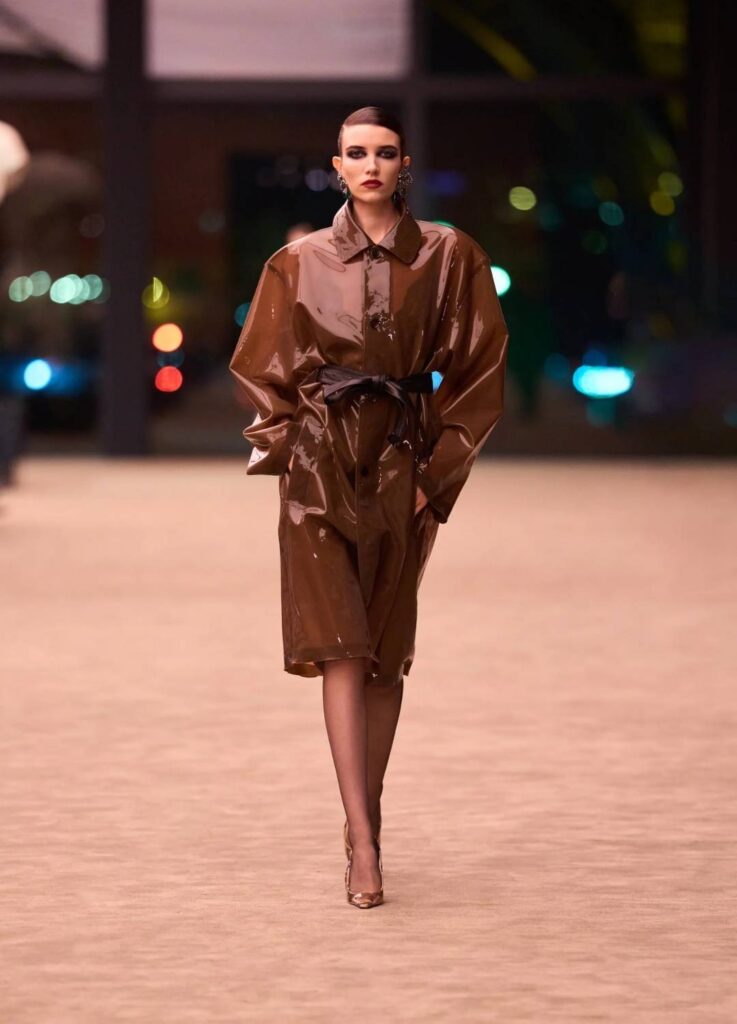
- high-shine raincoats
These pieces transform the mood of the collection.
Rather than reading as romantic lace, the dresses evoke the provocative Saint Laurent imagery often associated with Helmut Newton photography. The connection becomes even clearer through the styling choices.
Hair is slicked tightly against the head with gel, while makeup emphasizes smoky eyes and dark red lips—visual references reminiscent of Saint Laurent’s advertising campaigns from the late 1970s and 1980s.
The effect is deliberate: a world where elegance and eroticism exist side by side.
Five Key Looks
Several looks capture the essence of the collection particularly well.
1. The Opening Black Tuxedo Suit
A modern interpretation of Le Smoking. The plunging jacket and elongated trousers immediately establish the collection’s direction.
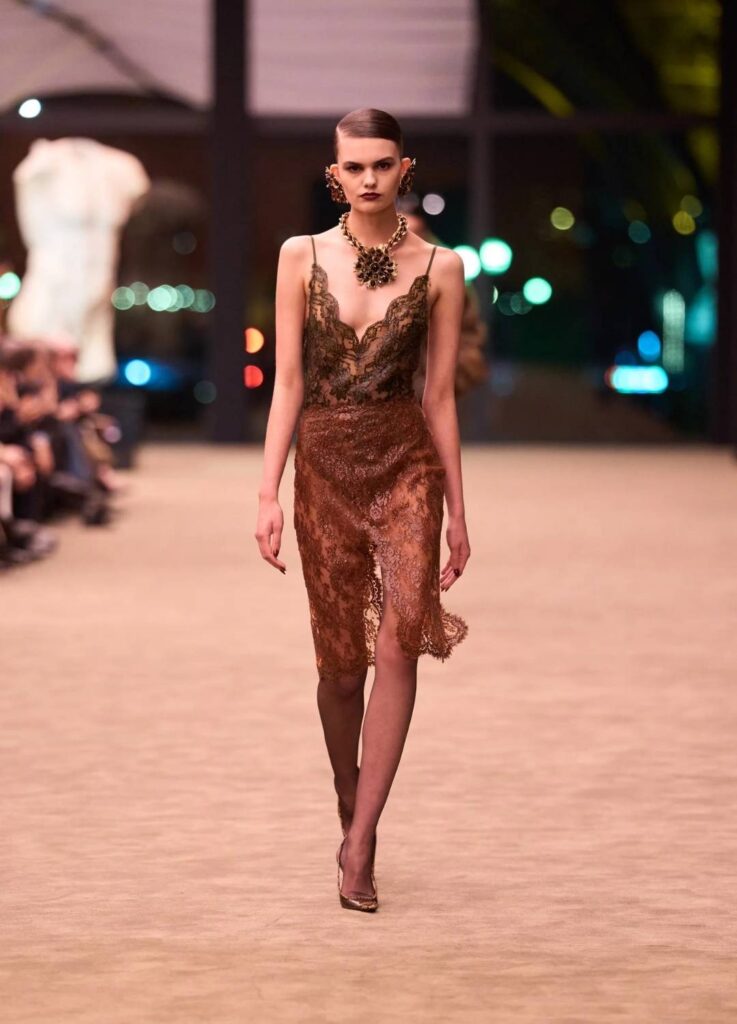
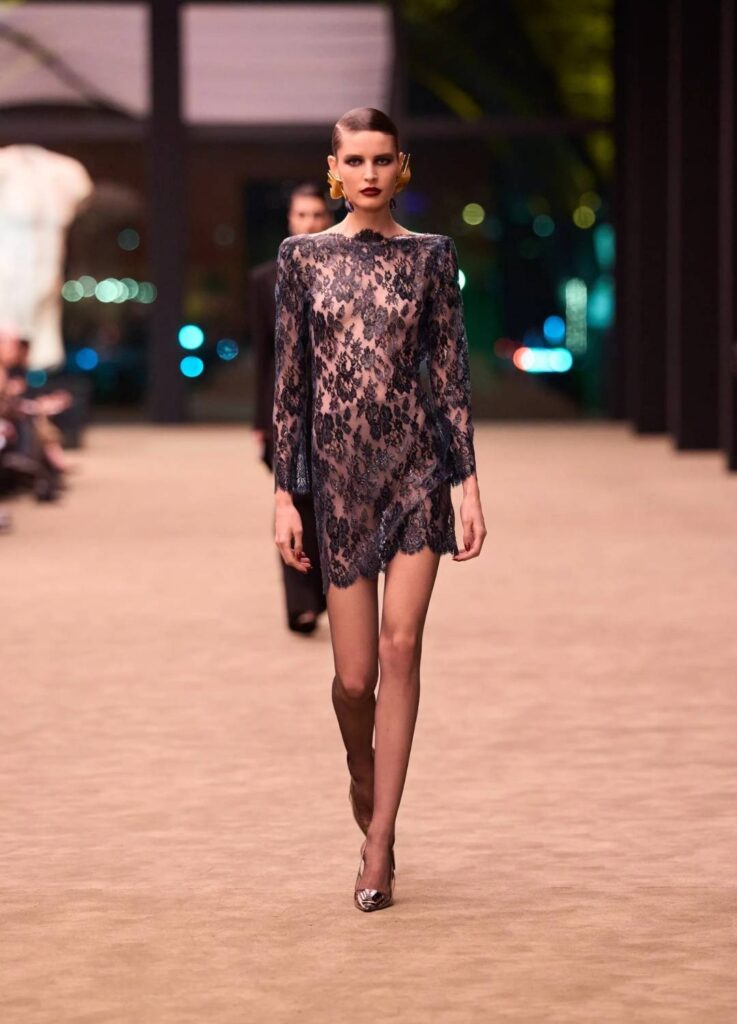
2. Sheer Lace Body Dress
One of the most provocative garments in the show. Nearly transparent lace reveals the body underneath, emphasizing Saint Laurent’s sensual heritage.
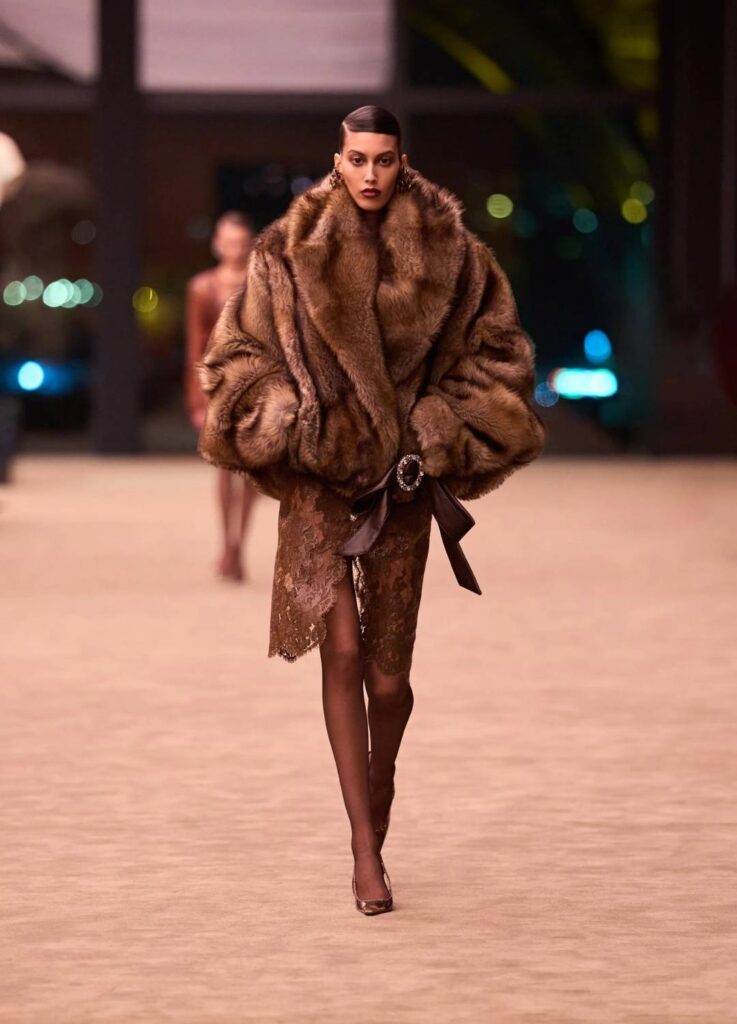
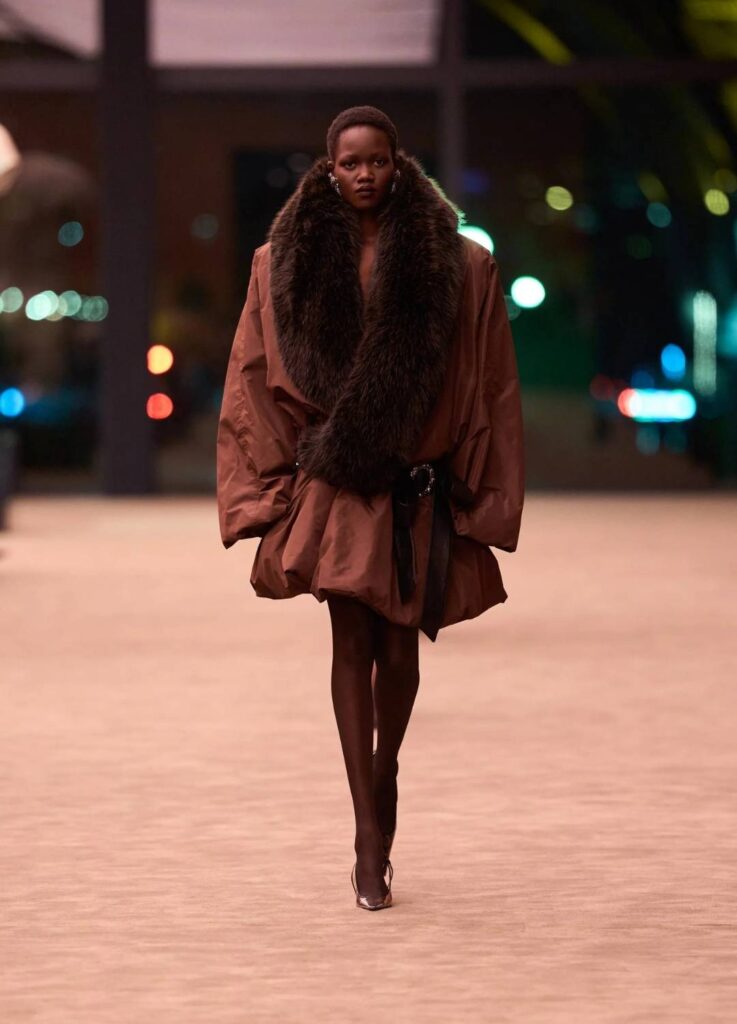
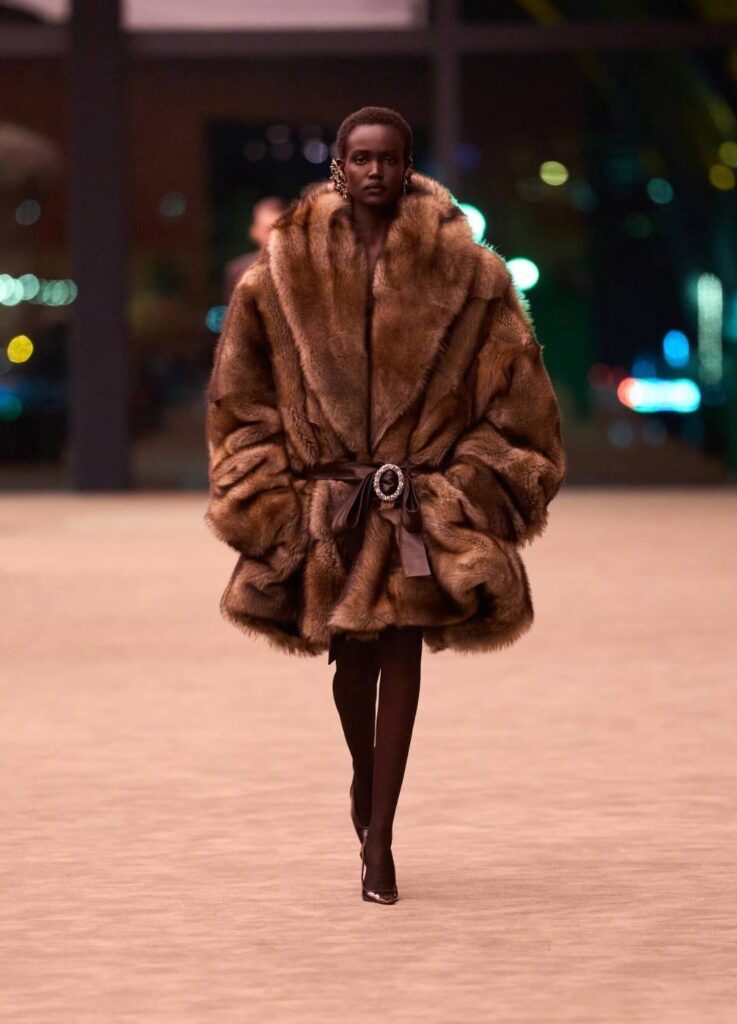
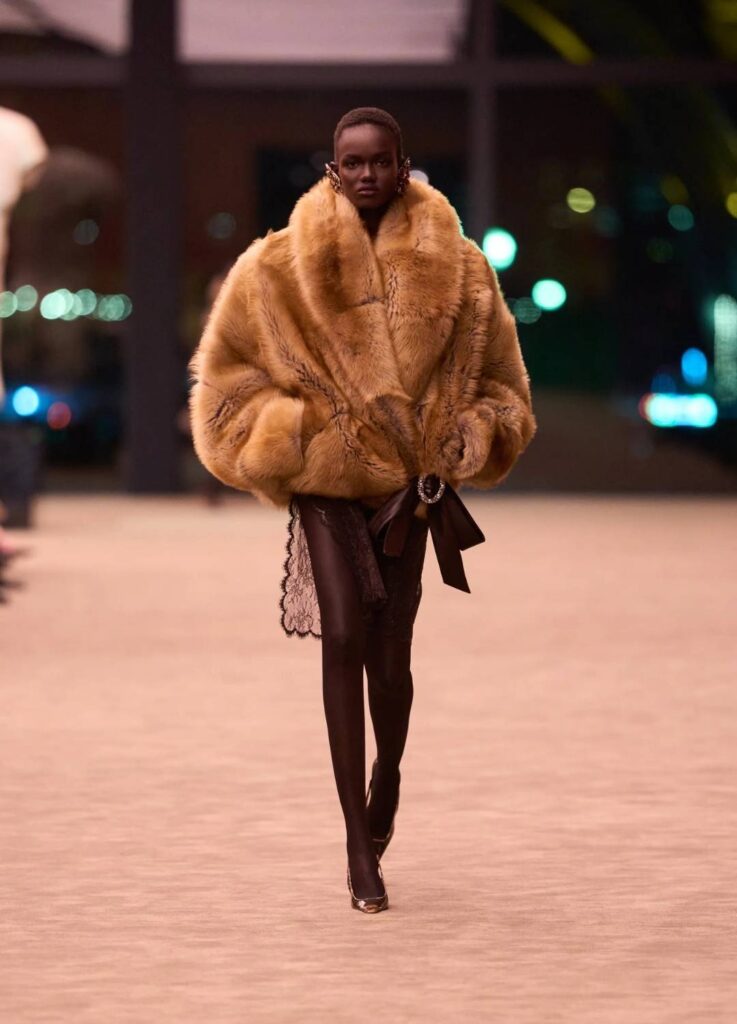
3. Oversized Brown Fur Coat
A dramatic outerwear piece that introduces exaggerated volume and visual weight into the otherwise slim silhouette language.
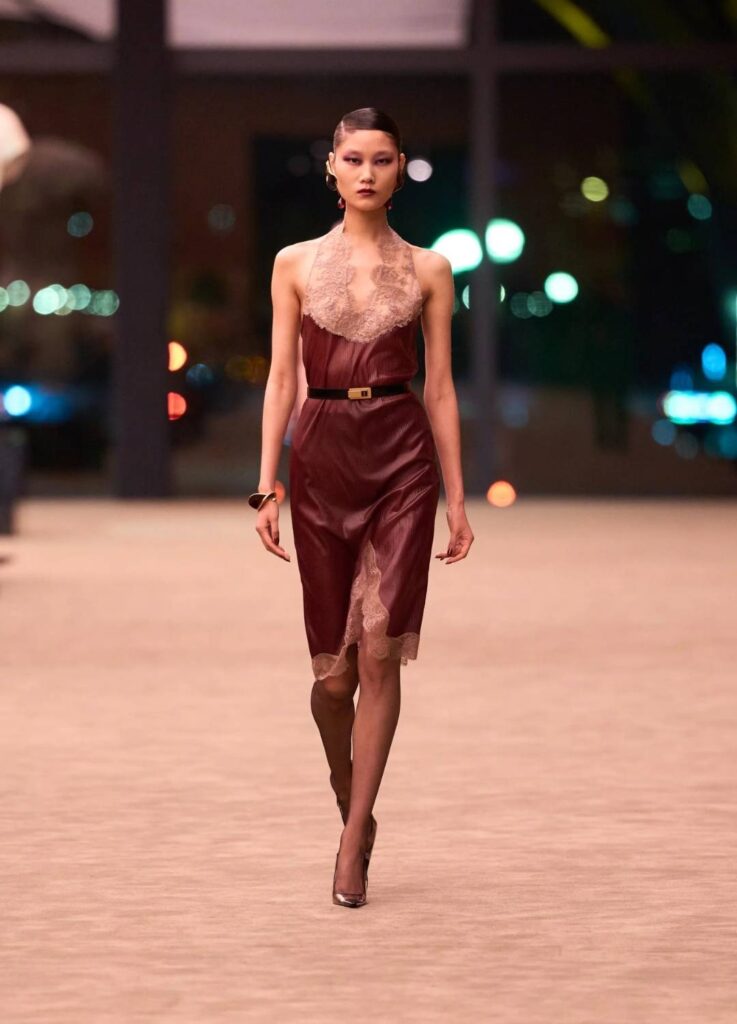
4. Burgundy Lingerie Dress
A lace-and-satin combination that perfectly reflects the season’s color palette and material contrasts.
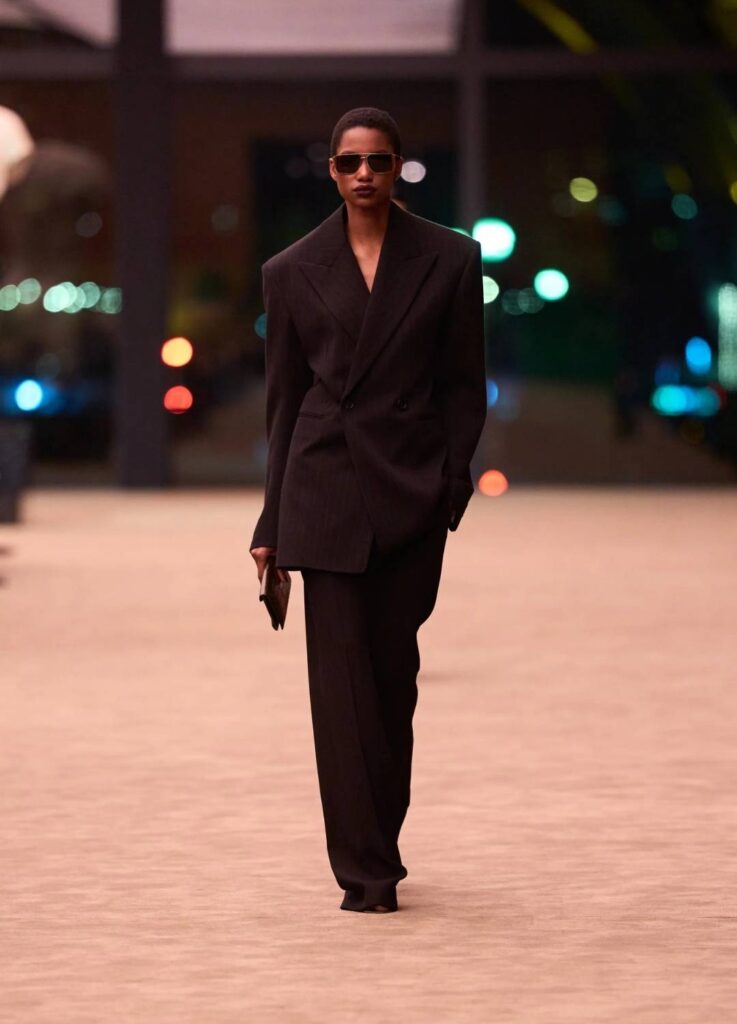
5. Black Tailored Suit
A quieter look that grounds the collection in reality. It demonstrates how Saint Laurent’s tailoring remains central to the brand’s commercial success.
Together, these looks illustrate the dual structure of the collection: tailoring as foundation, sensuality as disruption.
Retail Translation
Runway Drama vs. Commercial Reality
While the runway includes numerous lingerie dresses and sheer lace constructions, the commercial core of Saint Laurent continues to revolve around tailoring.
Several pieces shown on the runway are likely to translate directly into retail:
- black tuxedo suits
- long-line jackets
- slim trousers
- belted coats
Saint Laurent has consistently reported strong demand for tailored pieces in recent seasons. Vaccarello understands this dynamic well.
As a result, the Fall 2026 collection maintains a careful balance between editorial spectacle and retail practicality.
The lace dresses generate visual impact and press coverage, while the tailoring reinforces the brand’s dependable revenue structure.
Body Proportion Analysis
The Silhouette Saint Laurent Assumes
Like many Saint Laurent collections under Vaccarello, Fall 2026 favors a specific body type.
The garments are most naturally suited to silhouettes characterized by:
- long legs
- narrow hips
- slender frames
The tuxedo suits elongate the body vertically, while the lace dresses reveal the body’s shape almost entirely. As a result, the garments leave little room for structural camouflage.
This emphasis on lean proportions reflects the aesthetic lineage of the house rather than a universal design philosophy.
Industry Context
The Return of Fashion’s Sexual Charge
Another interesting dimension of this collection lies in its broader industry context.
Over the past several years, fashion has been dominated by the language of quiet luxury and restrained minimalism. Brands focused on understatement, subtle fabrics, and discreet silhouettes.
Yet during the Fall/Winter 2026 season, several houses appear to be moving in the opposite direction.
Saint Laurent’s lingerie dresses, along with similar explorations across Paris and Milan, suggest that fashion may be rediscovering sexuality as a central aesthetic driver.
Rather than hiding the body, designers are once again placing it at the center of the narrative.
Strategic Implications
Reinforcing the Saint Laurent Identity
Saint Laurent’s current strategy remains remarkably consistent.
The house continues to reinforce three visual pillars:
- powerful tailoring
- overt sensuality
- archival references to the 1970s and 1980s
Rather than reinventing itself every season, Saint Laurent under Vaccarello prefers clarity over disruption.
This approach strengthens brand identity while maintaining continuity across collections.
Final Assessment
Saint Laurent Fall/Winter 2026 does not attempt to reinvent the house.
Instead, it revisits one of its most defining garments.
The tuxedo suit and the lace dress—two images that seem almost contradictory—exist side by side throughout the collection.
One represents discipline.
The other, exposure.
Between these two forces, the identity of Saint Laurent continues to take shape.
And sixty years after Yves Saint Laurent first introduced Le Smoking, the tension between power and seduction still defines the house.
All images referenced in this post are drawn from Vogue Runway.
[ Related Editorials ]