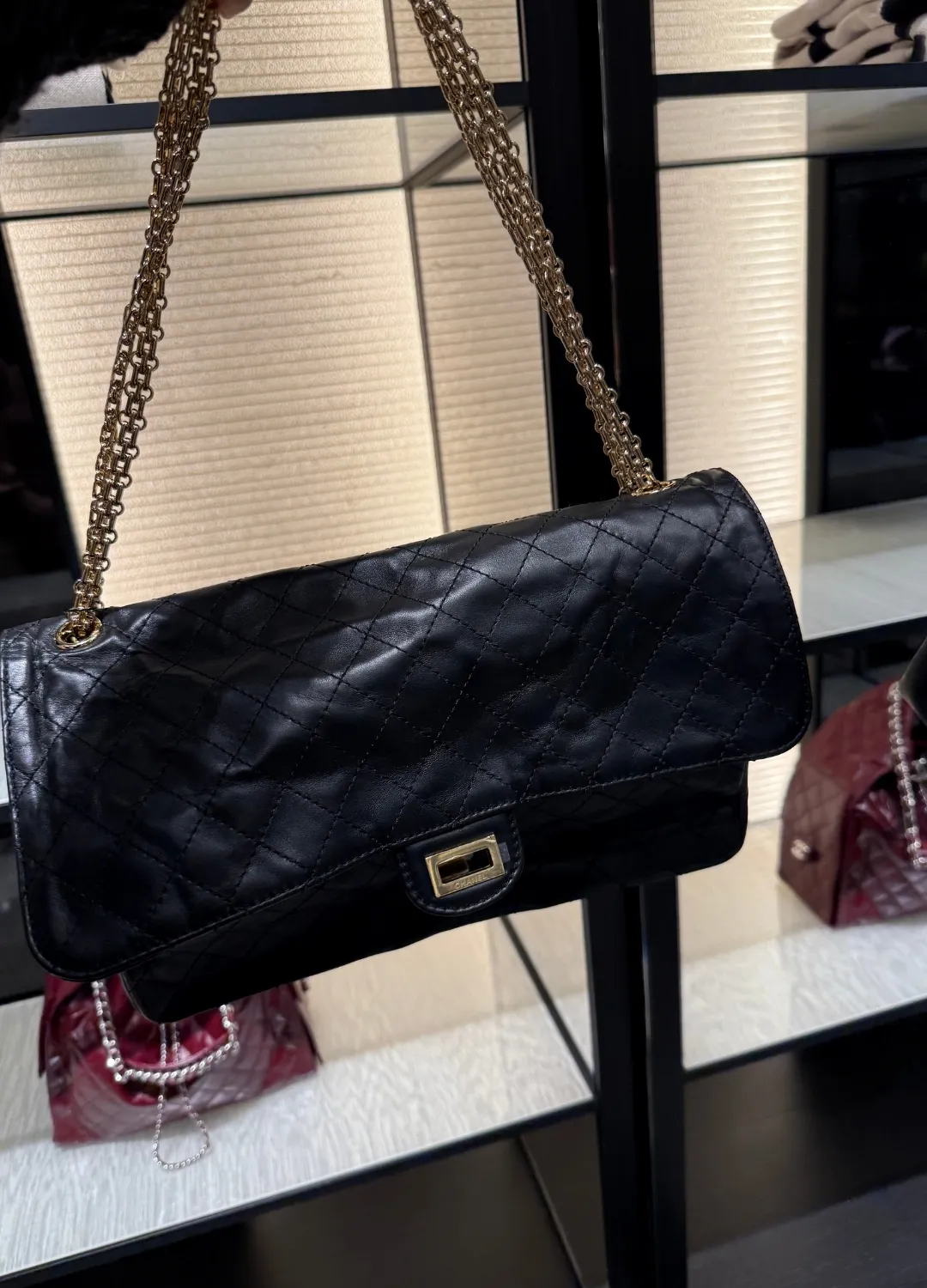
Chanel 2.55 Handbag : When a House Icon Moves from Structure to State
Chanel’s 2.55 has maintained an almost unchanged structure for decades. Flat flap, even diamond quilting, a clear box-like volume. The bag has always existed as a completed form — order, control, discipline, and a very particular kind of Parisian certainty embedded in every surface.
For decades, that certainty was visible in every part of the object. The flap lay flat. The quilting remained even and legible. The volume held its box-like clarity. The chain traced a familiar line. Even when the bag softened with wear, the design itself still began from a premise of completion. The 2.55 was conceived as a finished form.
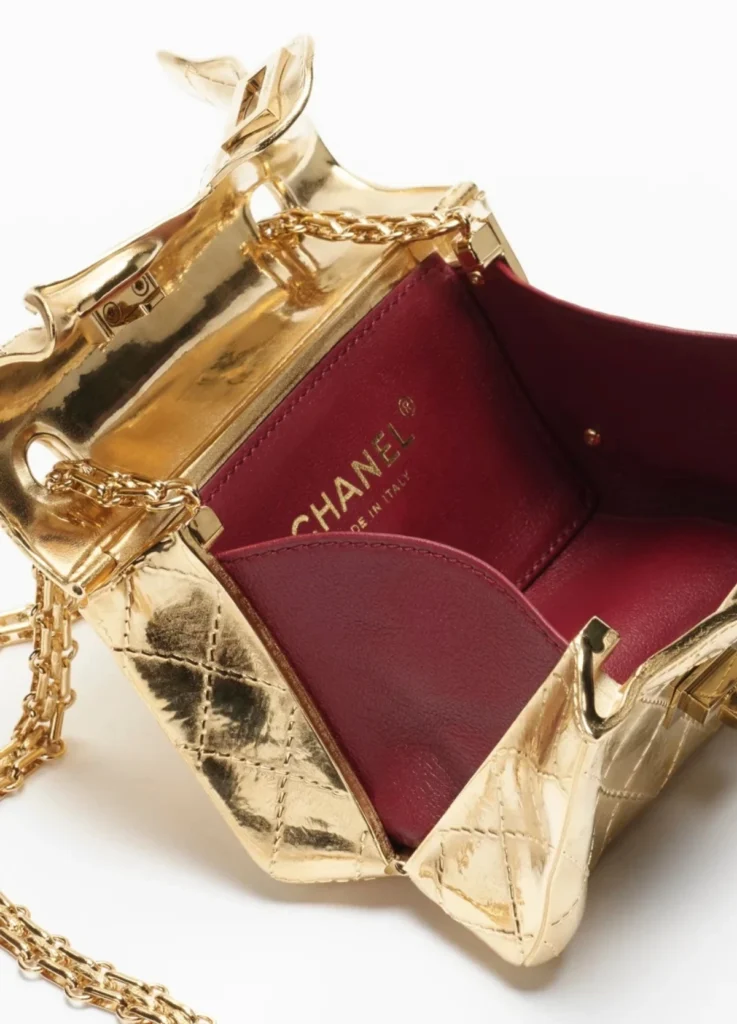
Small Evening Bag
Gold-Tone Metal Gold
source: Chanel.com
Spring/Summer 2026 changes that.
What Matthieu Blazy has done to the 2.55 goes beyond seasonal refresh or decorative adjustment. He has altered how the bag is read. The real shift happens at the level of ontology: the bag no longer begins as structure. It begins as condition. It appears touched, handled, folded, slightly unsettled — as though time has already passed through it before it ever reaches the wearer.
The new 2.55 presents age as a design language, not as a consequence.
That distinction changes everything.
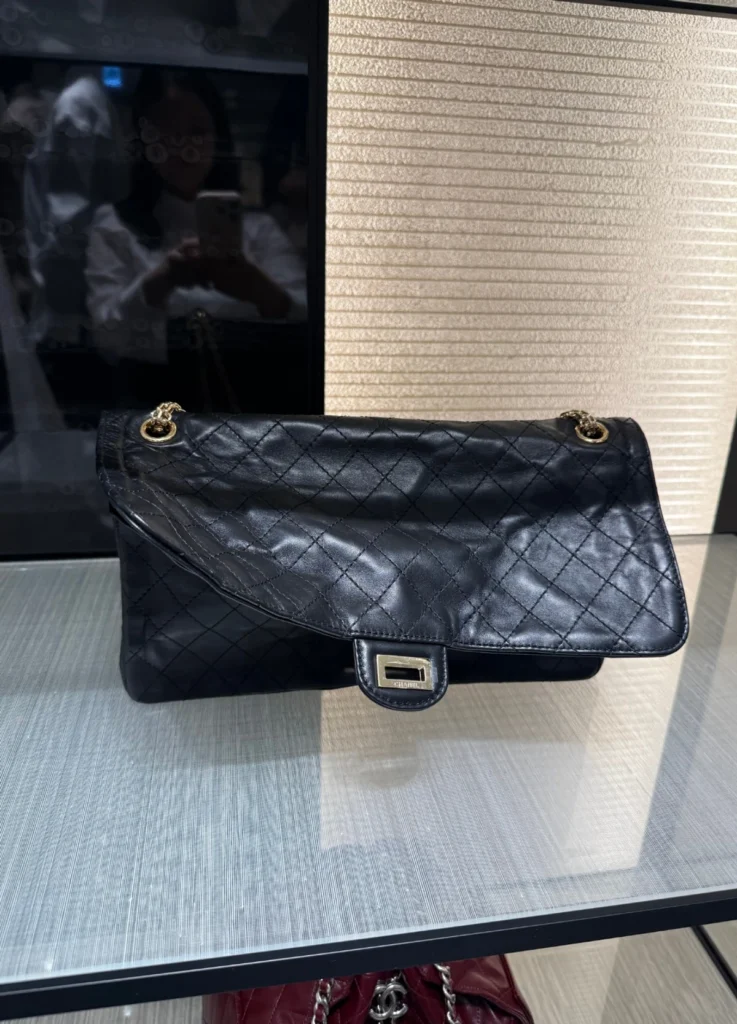
2.55 Handbag
Lambskin & Gold-Tone Metal Black
A Handbag Once Defined by Completion
The classic 2.55 has always depended on a precise relationship between surface and form. The surface supported the architecture. Quilting clarified the body. The flap reinforced proportion. Hardware completed the composition. The bag was read first as shape, then as material.
Spring/Summer 2026 reverses that sequence.
Here, the eye begins with surface behavior: wrinkled lambskin, creased leather, softened planes, and a flap that no longer insists on perfect flatness. The bag looks as though it has been pressed, handled, bent, and lived with. Disturbed in a controlled way.
Wear is built into the object’s first impression. Fashion language often reaches too quickly for words like lived-in, worn, or touched by time. Usually those phrases remain at the level of styling — they describe mood, they position a collection emotionally. Here, they become actual behavior.
A 2.55 interrupted mid-life.
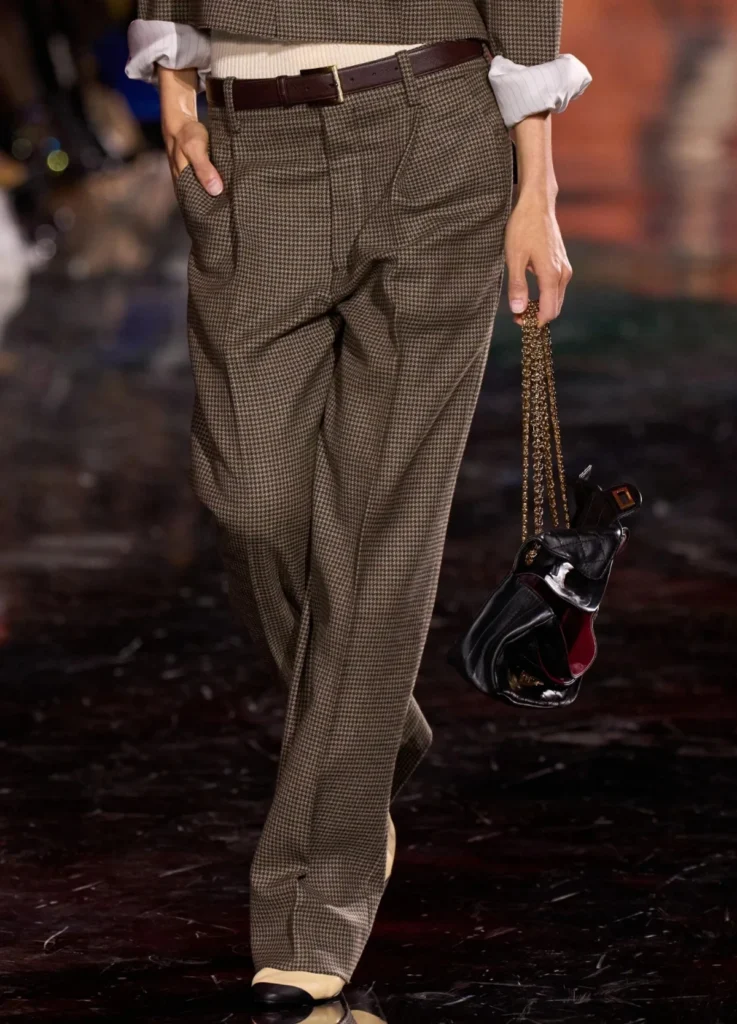
2.55 Handbag
Lambskin & Gold-Tone Metal Black
source: Vogue Runway
The most radical change: the bag can be moved
The difference shows in the hand.
This new 2.55 has a kind of mobility that earlier versions rarely allowed. The flap folds with greater ease. The body can be pressed and released. The silhouette shifts, loses its outline momentarily, then recovers.
Historically, the 2.55 has not belonged to the family of bags that invite physical reinterpretation. Its flexibility was limited — at most, a modest give in the base over time. The visual identity remained disciplined. The structure led. The material followed.
In Spring/Summer 2026, the opposite tension appears. The bag allows the wearer to register its instability directly. Its beauty is partly located in that instability.
Blazy has expanded what was once minor, almost incidental flexibility into a governing aesthetic principle. The old 2.55 could soften. The new one negotiates softness as part of its identity.
A bag whose state of partial movement has been designed from the beginning.
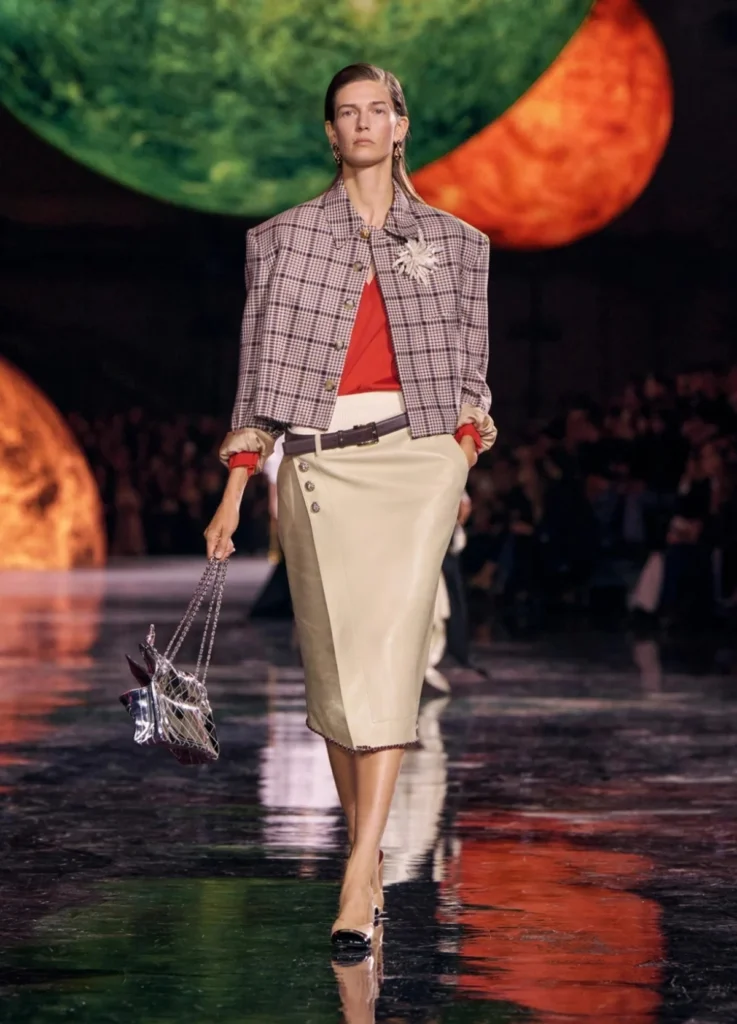
2.55 Handbag
source: Vogue Runway
The paradox at the center: a fluid exterior with a firmer core
One of the most striking aspects of seeing it in person is the internal resistance. Though the outside looks unsettled, the inside feels more rigid than expected — in some ways more rigid than a conventional 2.55. There is real weight. The impression is of a reinforced interior architecture: a frame that holds, a structural axis that bears load, a hidden system preventing the bag from fully giving way.
Outside, it flows. Inside, it holds.
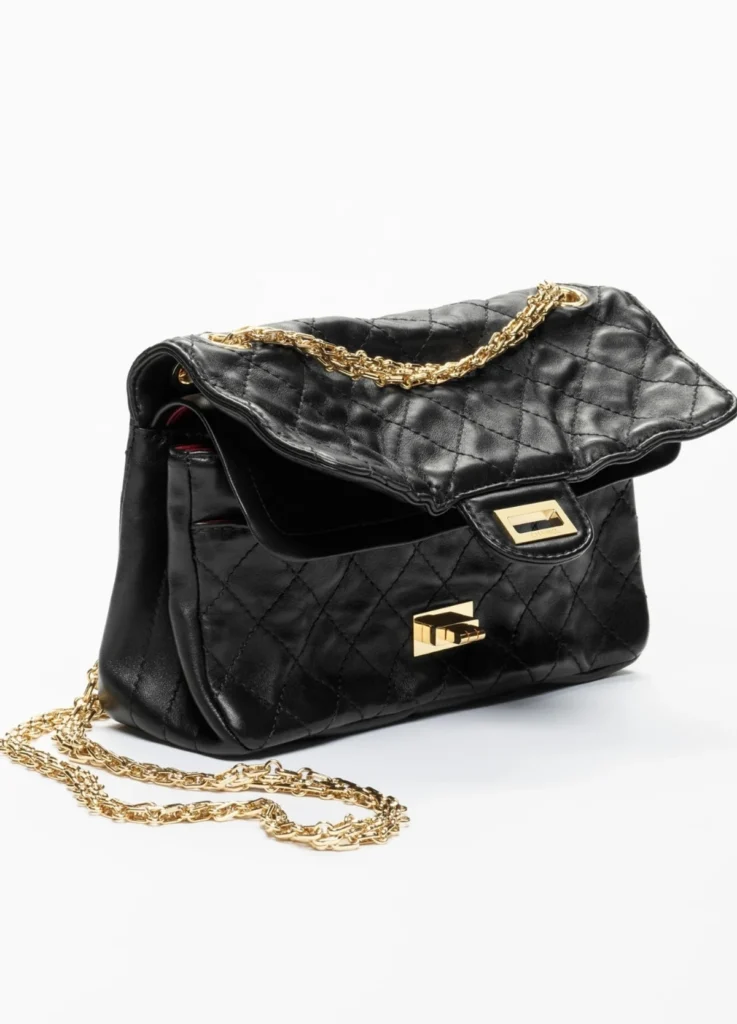
Chanel Spring Summer 2026
2.55 Handbag
Lambskin & Gold-Tone Metal Black
source: Chanel.com
The bag never reads as merely distressed. Distressed design is easy — it relies on surface suggestion, pretends a history without building one. Blazy’s version constructs the appearance of disruption over a base of control. The bag looks altered by time, but that effect is stabilized from within.
That internal firmness prevents the design from drifting into sentimentality. Without a stronger core, the concept could have become too picturesque, too nostalgic, too dependent on the romance of age. The firmness underneath gives the bag tension. It keeps the object from dissolving into softness.
A managed contradiction between visible looseness and concealed discipline.
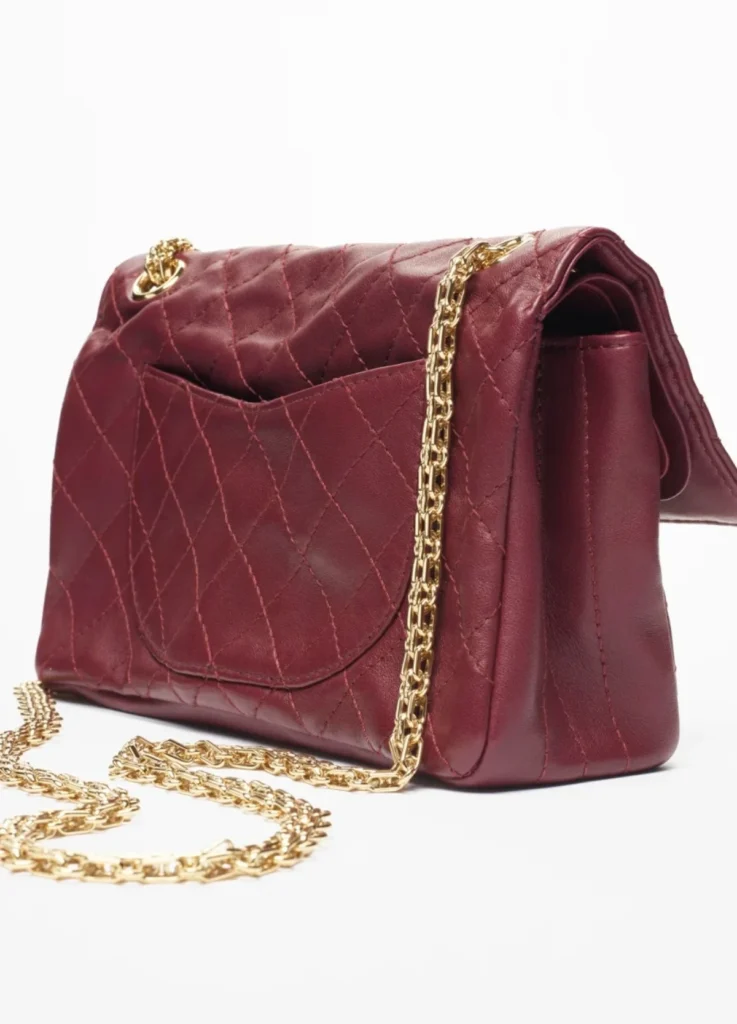
2.55 Handbag
Lambskin & Gold-Tone Metal, Dark Burgundy
source: Chanel.com
Quilting no longer explains the bag
No element reveals the shift more clearly than the quilting.
Traditionally, quilting at Chanel has served as a syntax of order. The diamond pattern stabilizes the eye, creates measurable rhythm, articulates the surface as something governed. The quilting functions as a diagram of control.
In the new version, quilting has ceased to be explanatory.
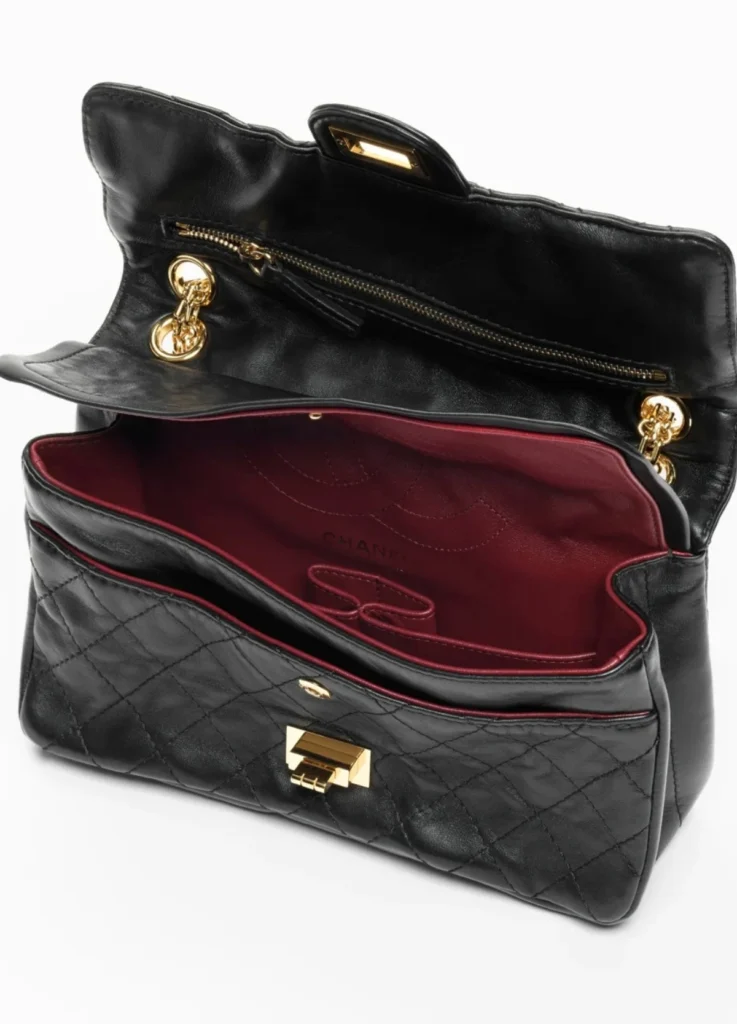
Chanel Spring Summer 2026
2.55 Handbag
Lambskin & Gold-Tone Metal Black
source: Chanel.com
The diamonds are less even. The pressure across the surface does not read as uniformly distributed. The stitching no longer presents itself as a clean visual grid. Instead, the quilting behaves more like topography — texture rather than pattern, event rather than rule.
Once quilting stops clarifying the architecture, the bag is no longer primarily perceived as form. It is perceived as surface condition.
A pattern asks to be recognized. A texture asks to be felt. The older 2.55 offered legibility. The new one offers atmosphere.
For Chanel, a meaningful departure. The house has long depended on repetition, recognizability, and visual codes that carry authority through consistency. Here, one of those codes has been loosened — the quilting remains present, yet it behaves differently. It no longer says, “This is the structure.” It says, “This is what the structure has been through.”
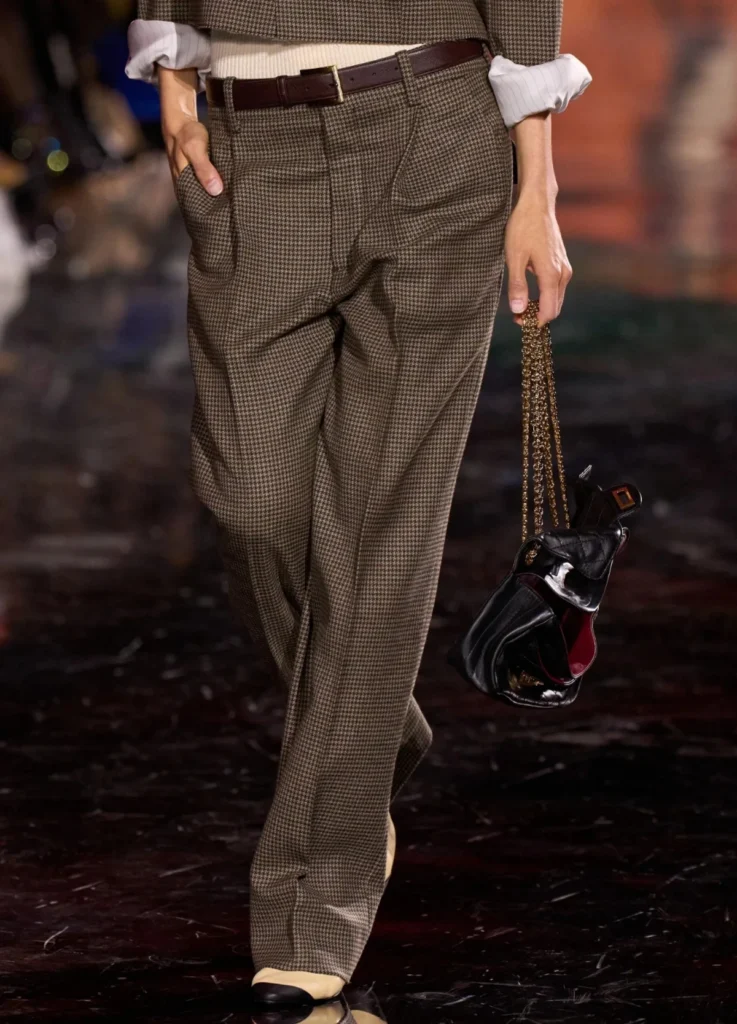
Chanel Spring Summer 2026
2.55 Handbag
Lambskin & Gold-Tone Metal Black
source: Vogue Runway
The chain as visual counterweight
If the leather gives the bag its density, the chain prevents that density from becoming oppressive.
This season’s chain feels lighter in tone — less saturated, closer to a pale champagne gold than the deeper yellow gold of a more classical Chanel register.
The body of the bag is visually heavy. Wrinkled lambskin absorbs light. Softened quilting thickens the surface reading. The volume falls downward. The whole object can register as a mass.
The chain interrupts that mass.
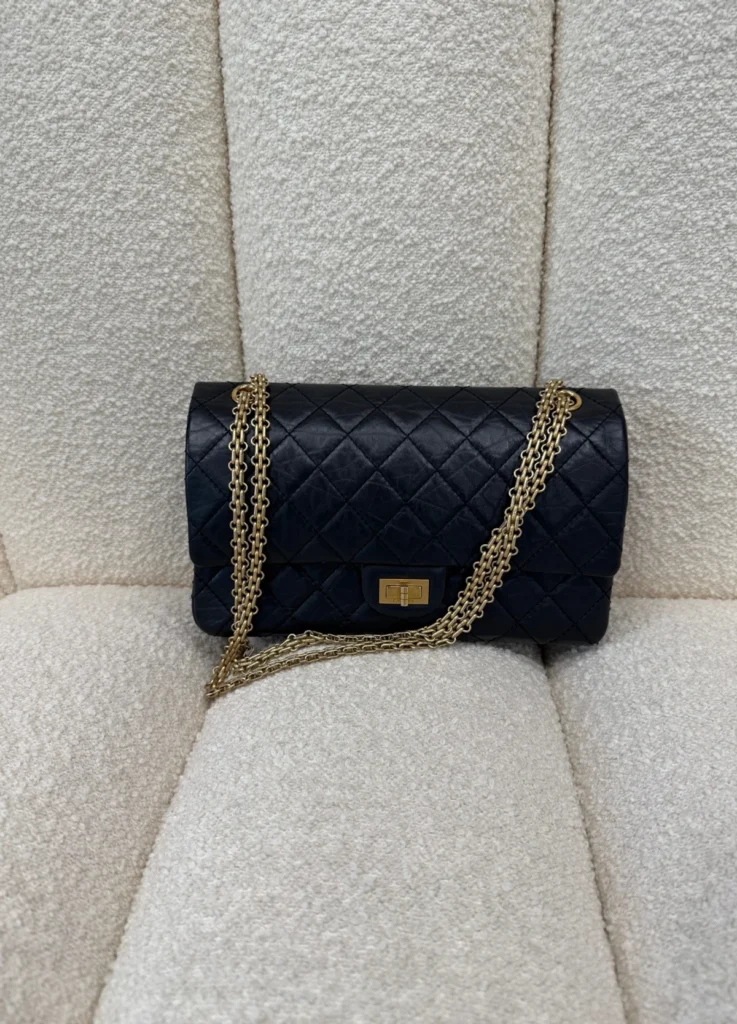
Aged Calfskin & Gold-Tone Metal, Black
Against a dark, creased body, the brighter metal rises as a cleaner line. It lifts the eye upward, breaks the gravitational pull of the bag’s lower center. The object feels less burdened, more contemporary.
Hardware managing perception.
The champagne gold introduces dryness, lightness, and a cleaner modern note. In older Chanel vocabulary, a richer yellow gold reinforces heritage — density, warmth, continuity with the house’s established codes. The paler champagne tone shifts the mood. Still unmistakably luxurious, but it does not drag the design backward. It does not overstate memory. It keeps the bag in the present.
The chain calibrates the bag’s time signature. The bag may look touched by time. The chain keeps it from feeling antique.
The thinnest intervention in the design, and one of the smartest.
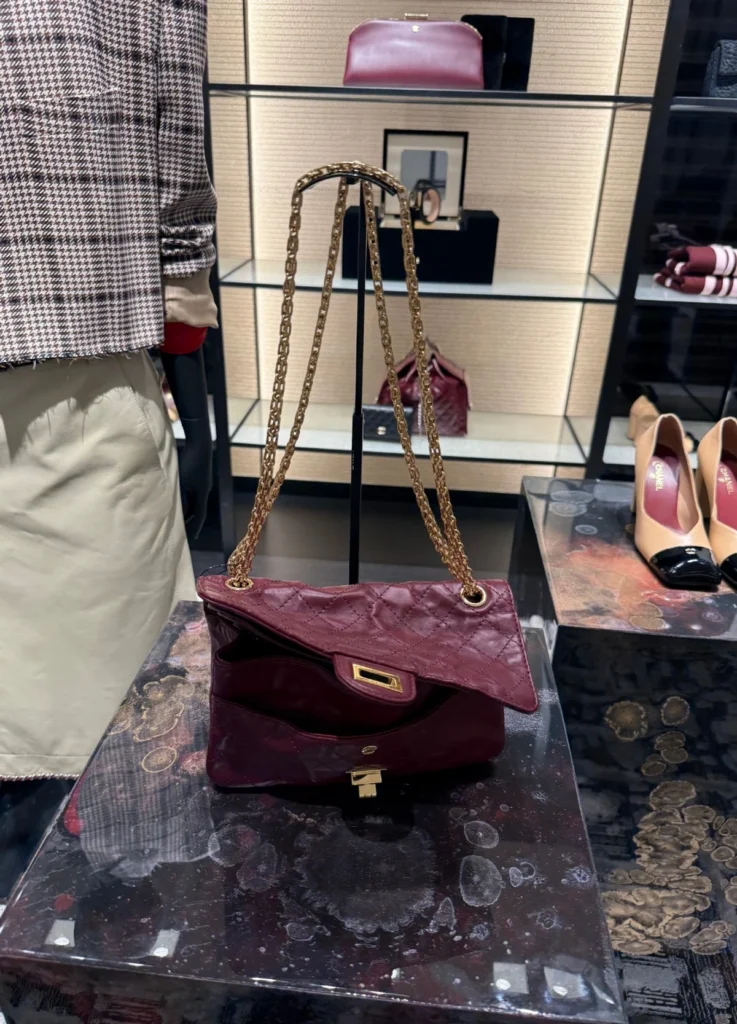
2.55 Handbag
Lambskin & Gold-Tone Metal, Dark Burgundy
Color as a theory of existence
The Spring/Summer 2026 2.55 becomes even more interesting when color is considered as structure rather than styling.
Blazy divides the bag into two modes of being. In the larger, more foundational versions, black and burgundy dominate. In the smaller sizes, gold and silver come forward. (Brown variations exist in the lineup, but in boutiques the narrative is built around black and burgundy.)
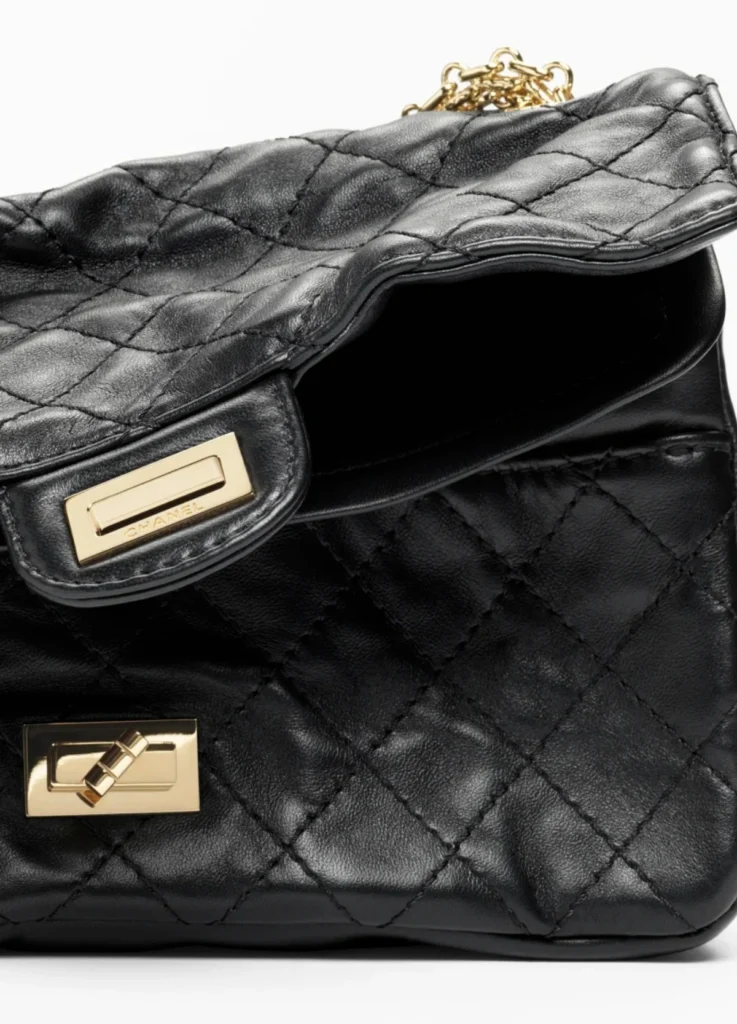
Chanel Spring Summer 2026
2.55 Handbag
Lambskin & Gold-Tone Metal Black
source: Chanel.com
Black and Burgundy — Colors That Reveal State
These colors absorb rather than reflect. They allow wrinkles, dents, creases, and uneven quilting to register with greater subtlety. They support the idea of state. They make the bag look as though it has already entered time.
Black has the power to suppress structural explanation. It erases edges, lowers contrast, and lets the surface become mood before it becomes outline.
Burgundy does something more complex. It preserves depth while adding memory. It changes under light. It carries warmth without brightness. Perhaps more than any other color in this group, the ideal tone for showing a form altered by use.
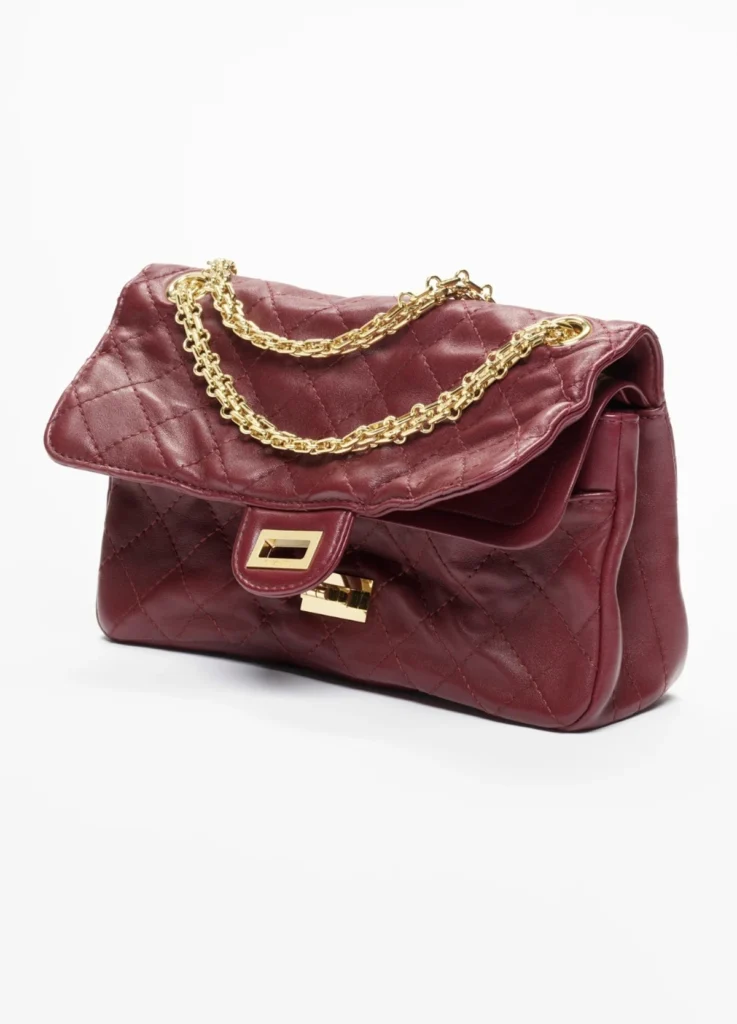
2.55 Handbag
Lambskin & Gold-Tone Metal, Dark Burgundy
source: Chanel.com
Burgundy also carries specific Chanel resonance. It has existed within the brand’s interior codes: apartment tones, linings, the language of hidden richness rather than frontal declaration. A color associated with interior life rather than display. To bring that sensibility onto the outside of the bag is a meaningful move — taking what had been coded as inward and making it visible.
The alignment with Blazy’s own color language reinforces the choice. From his Bottega Veneta work through to now, he has consistently favored deep, low-reflective shades — black, deep brown, burgundy — colors that let material speak through density rather than brightness.
At Chanel, these two codes converge. Chanel’s burgundy: interior, time, memory. Blazy’s burgundy: state, wear, surface change. The overlap makes burgundy function as more than a color — it becomes a surface where time becomes visible.
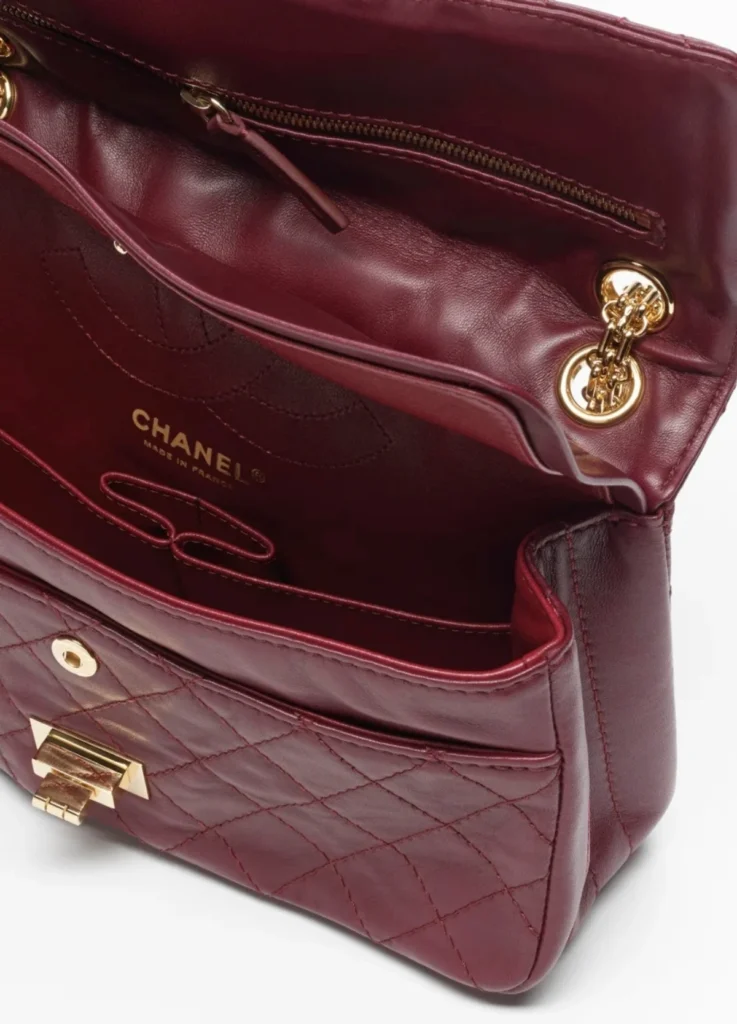
2.55 Handbag
Lambskin & Gold-Tone Metal, Dark Burgundy
source: Chanel.com
Gold and Silver — Colors That Restore Form
In the smaller sizes, metallic color returns the design to objecthood. Reflective surfaces expose irregularity rather than absorbing it. Distorted quilting, softened flaps, compressed volume — all more visible under metallic light.
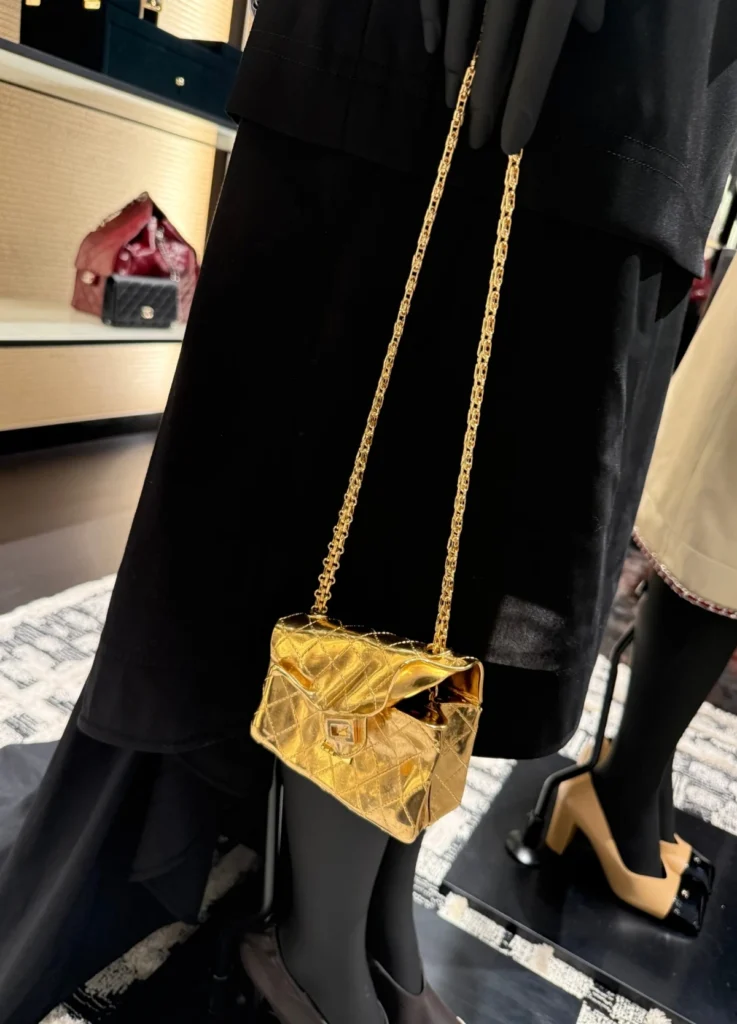
Small Evening Bag
Gold-Tone Metal Gold
Where black and burgundy allow the bag to be experienced as condition, gold and silver make it legible again as form.
The smaller metallic versions do not read as vintage. They read as stylized, almost fabricated. Less memory, more artifice. Less mass, more object.
The Division
The separation is sharp and deliberate:
Large bags in black and burgundy → emotion and time Small bags in gold and silver → sculpture and object
The same design, read in two entirely different ways. Without this separation, the concept of “disrupted form” applied uniformly across all sizes would risk making the bag look merely disheveled. By splitting the chromatic strategy, Blazy ensures the same 2.55 can exist as a time-marked object or as a constructed artifact, depending on the frame.
Color here determines how the design exists — not preference, but mode of being.
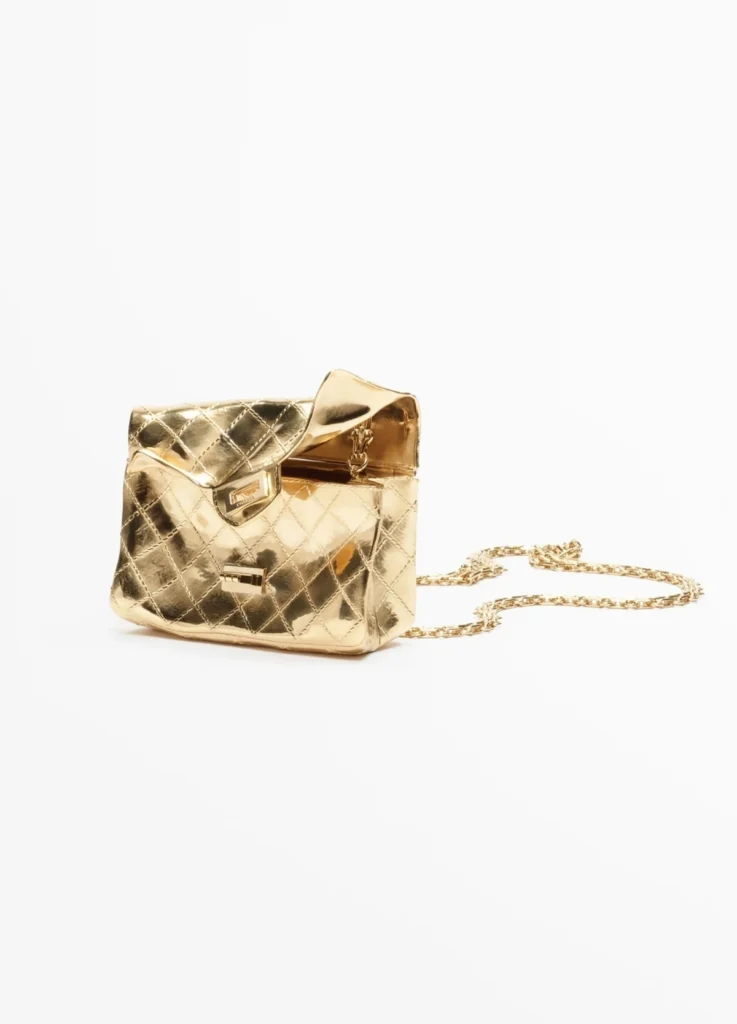
Small Evening Bag
Gold-Tone Metal Gold
source: Chanel.com
Fashion press, house mythology, and the object itself
The fashion press has responded with a familiar vocabulary: imperfect luxury, emotional patina, second life object. Those phrases capture the atmosphere around the bag. What they often miss is the precision of the mechanism.
The new 2.55 is compelling because it stages imperfection over underlying discipline. The looseness has been measured. The softened body has been engineered. The apparent vulnerability has been stabilized.
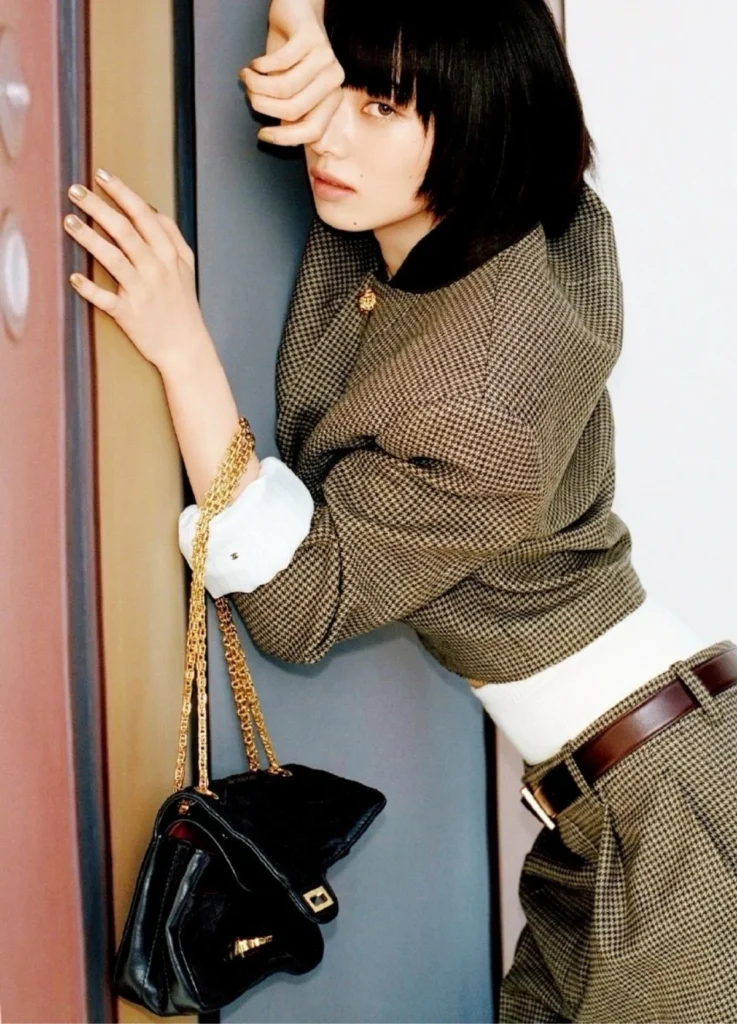
Chanel Spring Summer 2026
2.55 Handbag
Lambskin & Gold-Tone Metal Black
@konichan7 / Instagram
Reactions divide accordingly.
Some see a rare moment in which Chanel has genuinely disturbed one of its own sacred forms — intellectually alive, willing to move beyond preservation. The bag sits effectively against the collection’s broader rhythm: if ready-to-wear carries weight, density, and material emphasis, then a bag that appears slightly released while remaining internally structured creates a useful counterpoint.
Others remain unconvinced. A new object carrying the visual codes of age without actual age. A luxury bag arriving already looking transformed. The emotional proposition versus the cost.
The discomfort is built into the design. The 2.55 asks the buyer to accept that newness is no longer the highest value. For many luxury consumers, a difficult shift. The traditional pleasure of buying a new Chanel bag has always included crispness, certainty, the visual charge of pristine completion. Blazy’s version refuses part of that pleasure and offers another: complexity, ambiguity, and the sense that the object has already entered life.
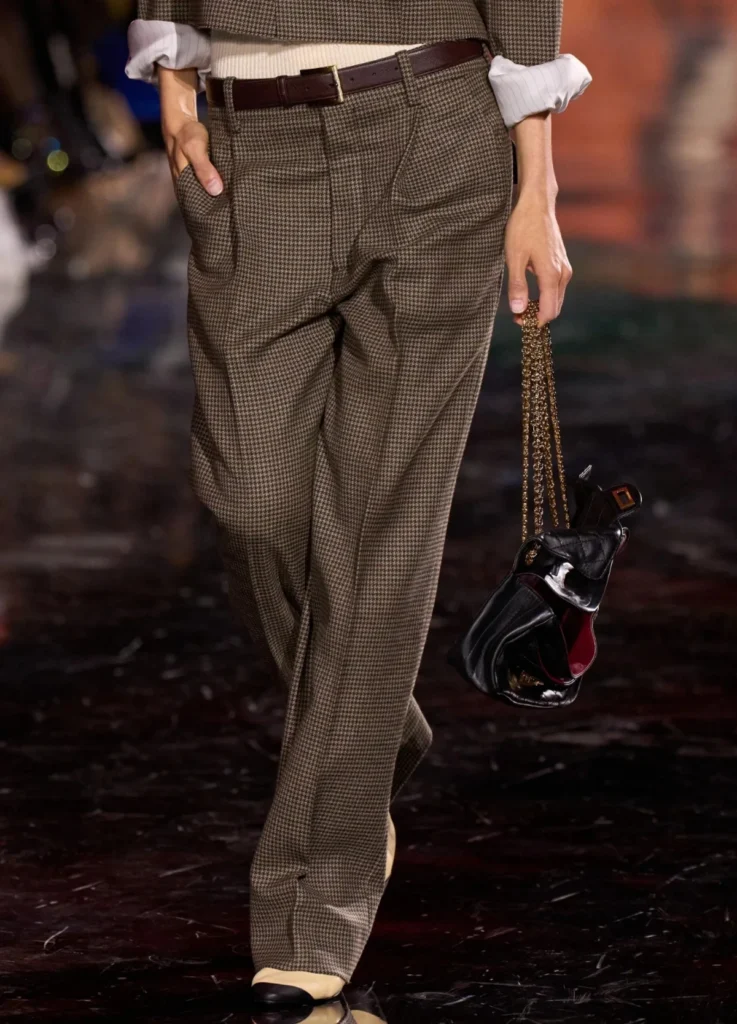
2.55 Handbag
Lambskin & Gold-Tone Metal Black
source: Vogue Runway
How it behaves on the body
The bag is more selective in wear than it first appears.
Its center of gravity sits low. The volume drops. The form does not remain perfectly upright. The chain lifts from above while the body settles below.
On a smaller body or a shorter upper torso, the bag announces itself before the wearer does. Because the silhouette reads as a weighted mass rather than a crisp contour, it can dominate more quickly than a classic 2.55 in a similar size would.
On a longer frame, or on a body with enough vertical line to absorb the bag’s lower pull, the design works better. The tension between suspended chain and downward body has room to breathe. The bag appears less intrusive, more intentional — part of the silhouette rather than an interruption within it.
Petite wearers can carry it. But the bag asks more from the wearer. It has to be interpreted, not just worn.
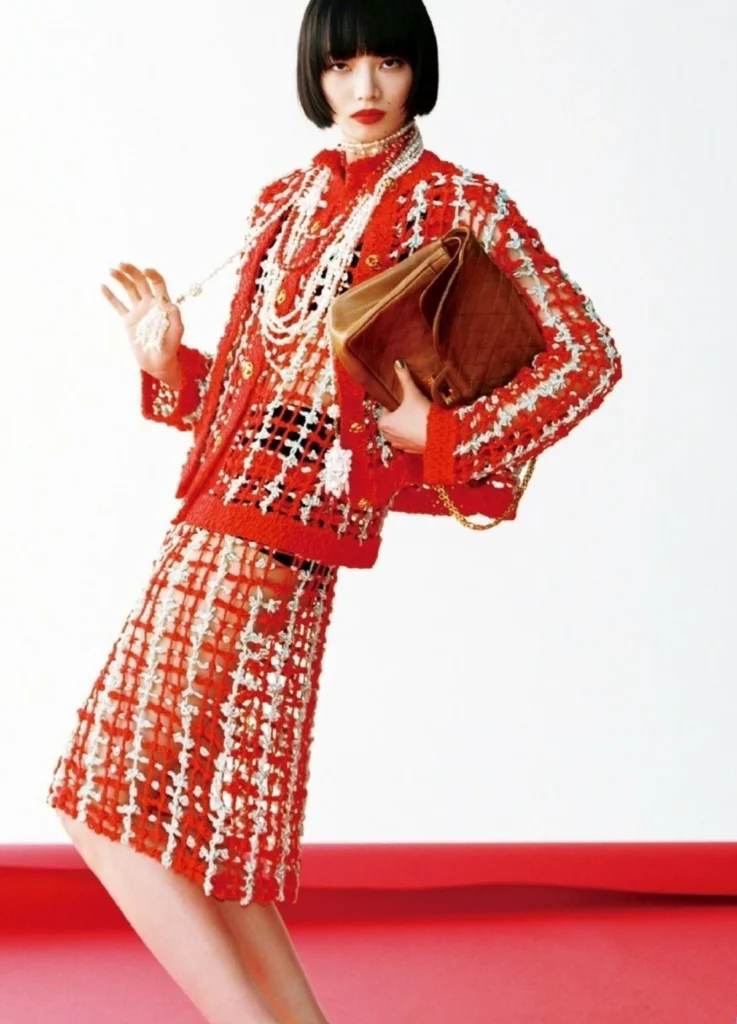
2.55 Handbag (Maxi)
Lambskin & Gold-Tone Metal, Brown
@konichan7 / Instagram
From structure to state
The classic 2.55 was an argument for structure. Even when softening entered through wear, the design remained committed to order. Completion, certainty, and control as values.
Blazy’s version keeps enough of the icon intact that the lineage remains visible, yet transfers meaning from structure to state. The bag is still recognizably a 2.55. But recognition now arrives through a surface already altered, through a form that appears already handled, through a body that can move and crease and fold without losing authorship.
The bag is no longer asking to be admired as a perfect object. It is asking to be read as an object already in relation to time.
A well-made bag, certainly. But more than that, a carefully made piece of time.
Some bags must be carried for years before they reach their fullest expression. This one arrives carrying that proposition inside itself. It folds, settles, resists, and reforms. It holds the image of wear without surrendering to collapse. It lets the outside drift while the inside keeps faith with structure.
And in that narrow interval between softness and control, Chanel’s 2.55 becomes something it has rarely been before: not a preserved icon, but a designed condition.
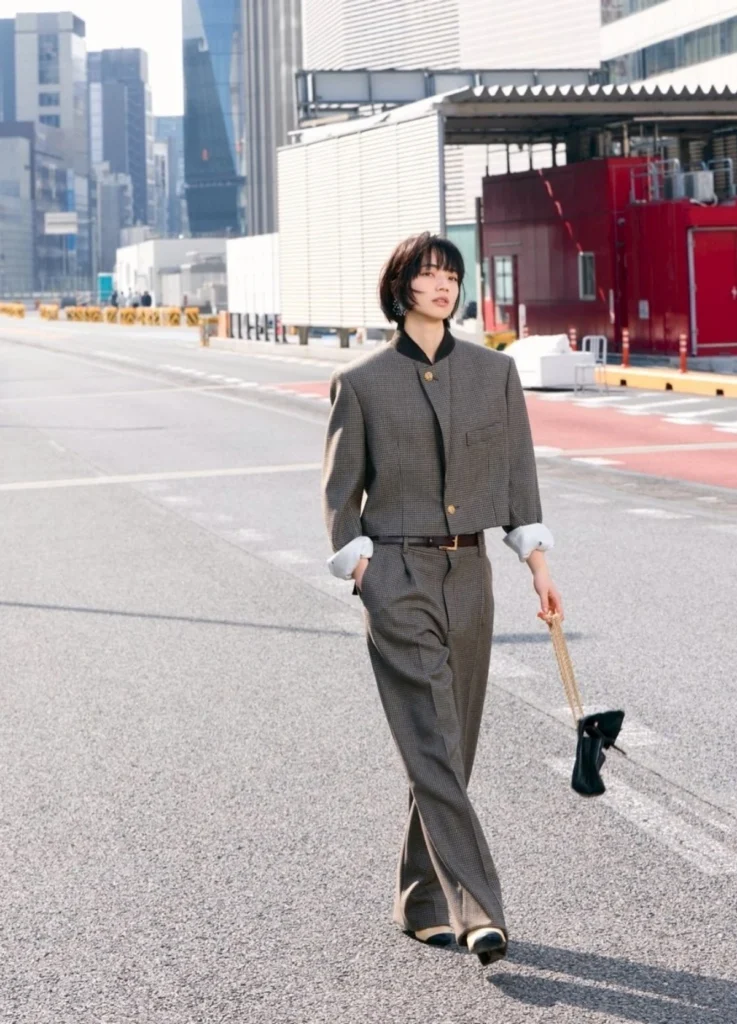
2.55 Handbag
Lambskin & Gold-Tone Metal, Black
@konichan7 / Instagram
All images unless otherwise credited: © Lumie Story
[ Related Editorials ]