Matthieu Blazy’s Structural Reset at Chanel
A strange sensation stays after seeing — and more importantly, trying on — Chanel Spring 2026.
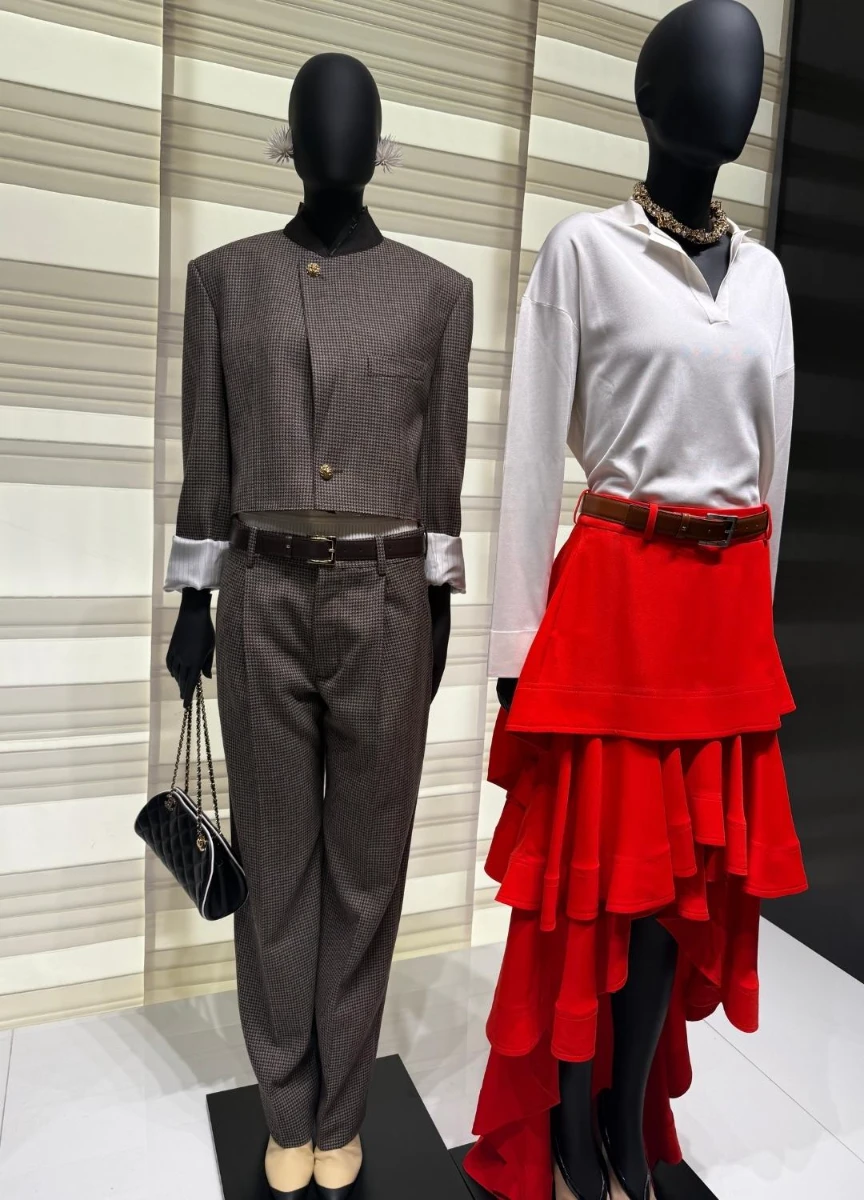
The collection sits within the visual grammar of spring. Lines are cleaner. Tweeds are shorter. Silhouettes are often boxier. Some of the bags appear deliberately pressed into softness, as if their surfaces had been smoothed down by hand.
But the reaction from those who actually wear the garments converges elsewhere. The image reads light. The material does not follow. The surface looks relaxed — almost loose — but the structure underneath holds firm.
That gap is Matthieu Blazy’s first real language at Chanel.
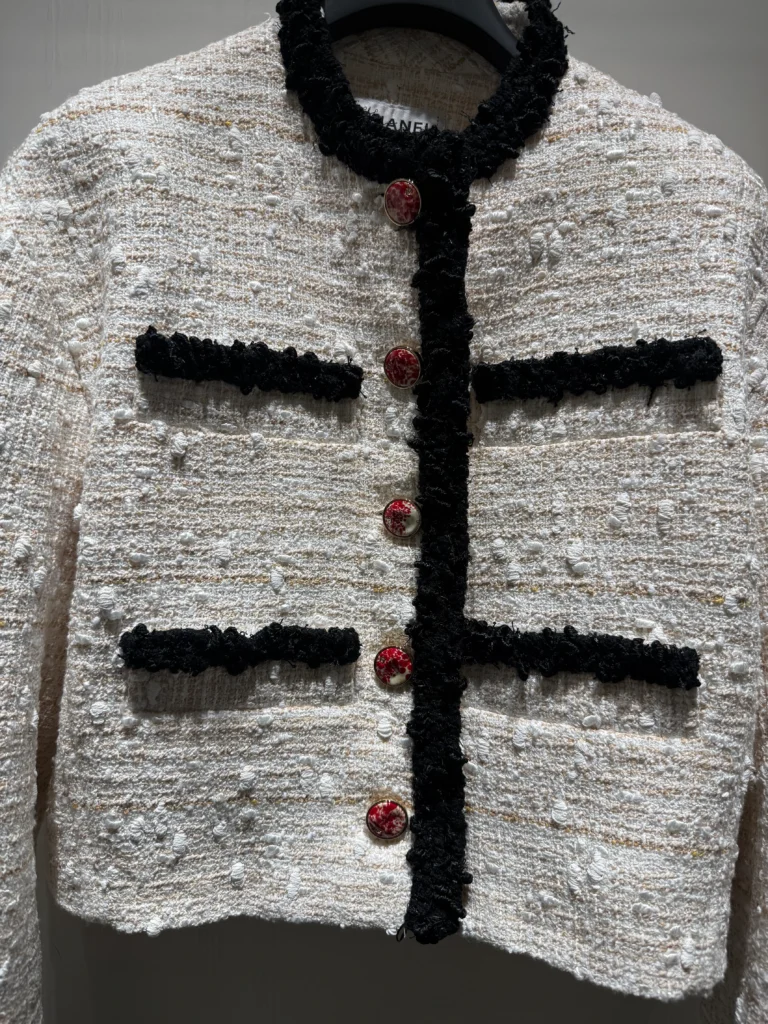
(Tweed / Black)
$15,600
When I say “weight,” I do not mean only physical heaviness. What matters more is the separation between visual lightness and structural density. At a moment when most houses pursue garments that dissolve into the body, Blazy moves Chanel in the opposite direction. He lets the surface appear fragile while fixing the interior more firmly.
The collection invites a question before anything else: why does it feel deliberately out of step with the dominant preference for fluidity?
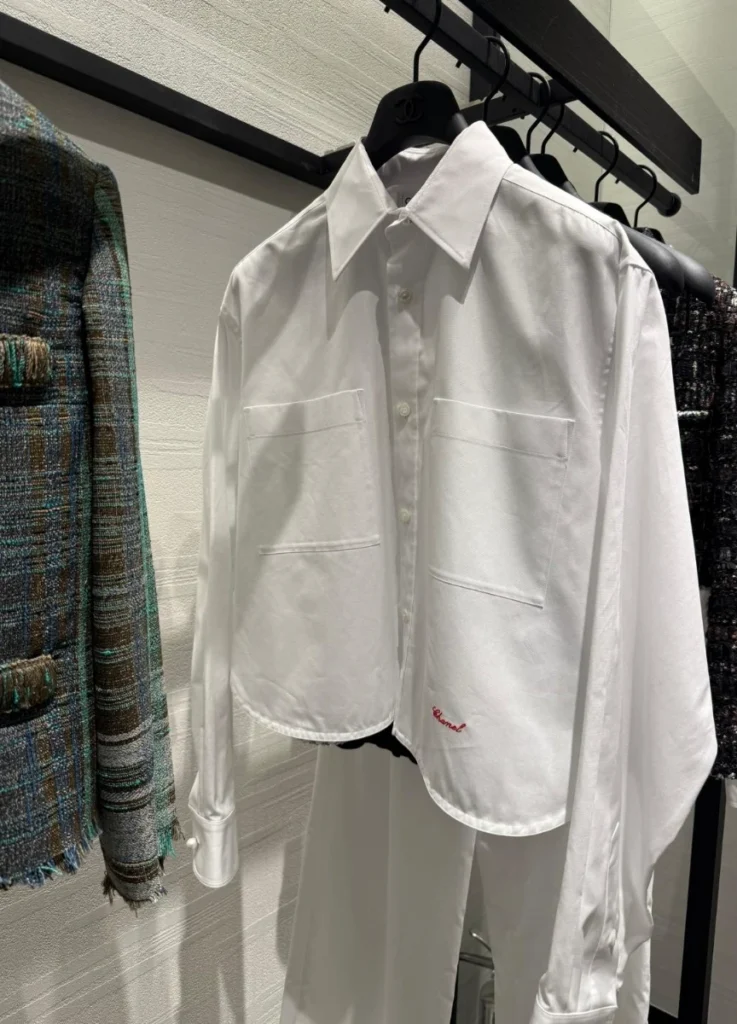
its high-density cotton and refined detailing stood out.
Chanel Spring 2026 Long-sleeved Shirt
(Cotton , White)
$4,150
Where the Weight Comes From — Structure, Not Fabric
Chanel Spring 2026 is easily misread. Thinner-looking tweed must mean lighter garments.
It does not.
This season’s weight comes not from visible thickness but from structural strategy — compressed weave density, the placement of internal support, and the reassignment of detail as load-bearing elements.
Blazy has always prioritized internal order over surface softness. He is not drawn to garments that flow. He is drawn to garments that hold.
The weight emerges from three zones.
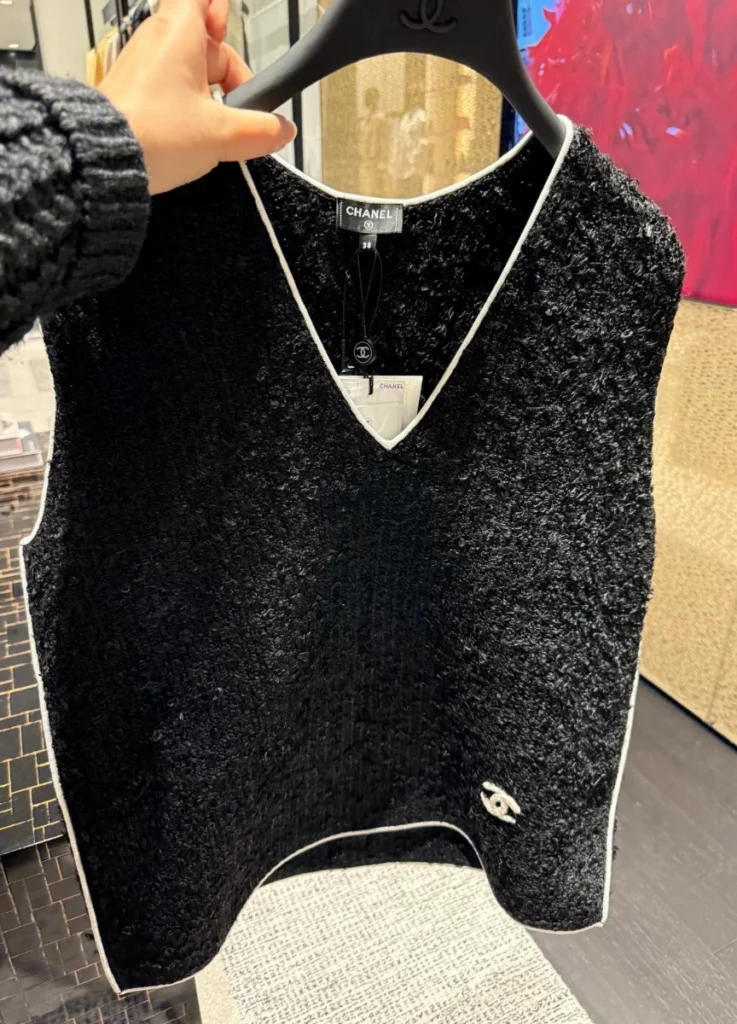
Certain knit constructions in this collection show a marked increase in weight.
Compressed weave density. Open, airy tweeds with visible yarn spacing respond lightly. They move with the body. Compressed tweeds — where fibers are pressed together and surfaces flatten — produce weight quickly. The black and gold pieces this season demonstrate this clearly. They do not appear visually heavy, but in hand they offer resistance rather than elasticity. These are not buoyant tweeds. They are compressed ones.
Internal structure. Chanel jackets have never been defined by outer fabric alone. The wearing experience depends on how structural force travels — from shoulder to center line, from center to hem. In Spring 2026, even when the lining appears reduced, the structural core often remains intact. Removing visible layers does not automatically produce softness when the internal system continues to stabilize the garment. Blazy is not softening construction. He is editing it.

(Cotton Tweed / Black)
$10,400
Detail as structure. This may be the most important shift. Fringe, trimming, buttons, and pocket lines increasingly function as structural components. In several jackets, trimming along the neckline and front acts almost like a reinforcing cord, stabilizing the central axis. Buttons contribute not just ornament but physical weight. Pocket lines segment volume and direct gravity downward. These garments are not heavier because they carry more detail. They are heavier because detail now performs a structural role.

(Tweed / White & Black )
$10,400
What Trying On Reveals
The runway shows this collection. Fitting explains it.
The black cropped jacket illustrates the season’s core logic most directly. On the hanger, it reads as a familiar, reduced Chanel silhouette — round neckline, shortened length, restrained decoration. On the body, it behaves differently.
It does not wrap. It settles into place.
Weight concentrates in the upper torso. The garment completes its own shape before accommodating the wearer’s. The surface is compressed flat, and the structural definition along the front and neckline is unmistakable. A jacket that appears light but does not yield.
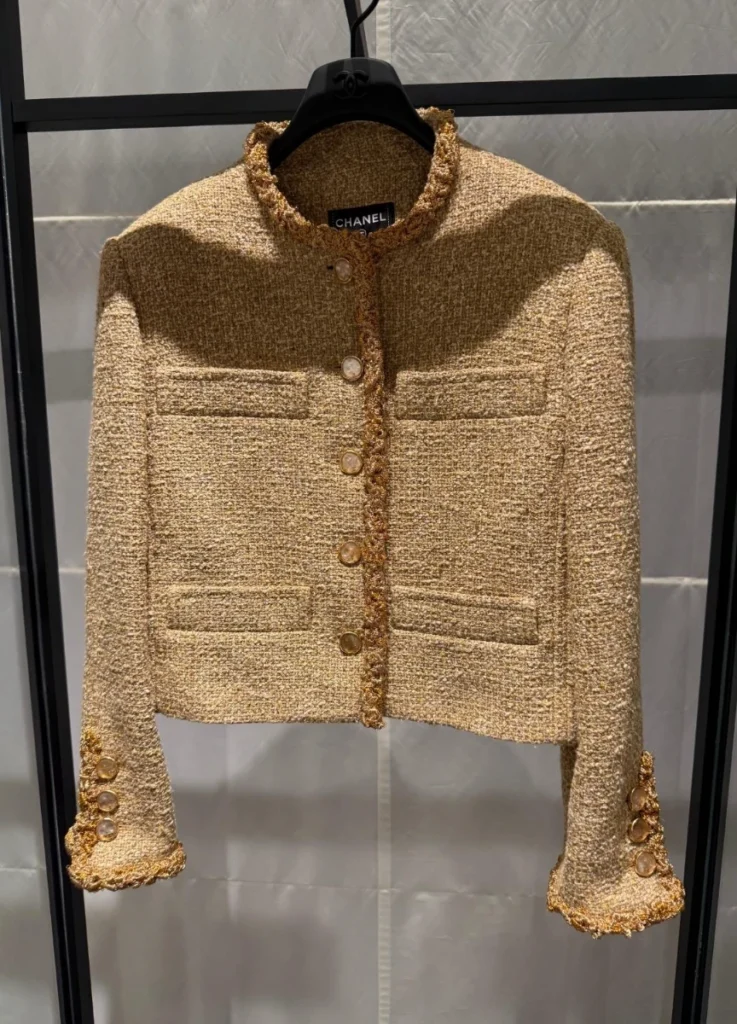
(Cotton Tweed / Craft Beige)
$10,400
The gold variations push this logic further. Metallic yarn, heavier trimming, and denser fabric layered together produce a physical presence that overtakes visual brightness. Authority arrives. Clarity arrives. Fatigue arrives alongside them.
And yet — despite the weight, despite the density — the refinement was palpable. The black tweed carried a precision that Virginie-era tweeds rarely achieved. It was the first Chanel black tweed I had purchased in a long time.
But the season does not move in one direction.

The Exception — Reconstructed Lightness
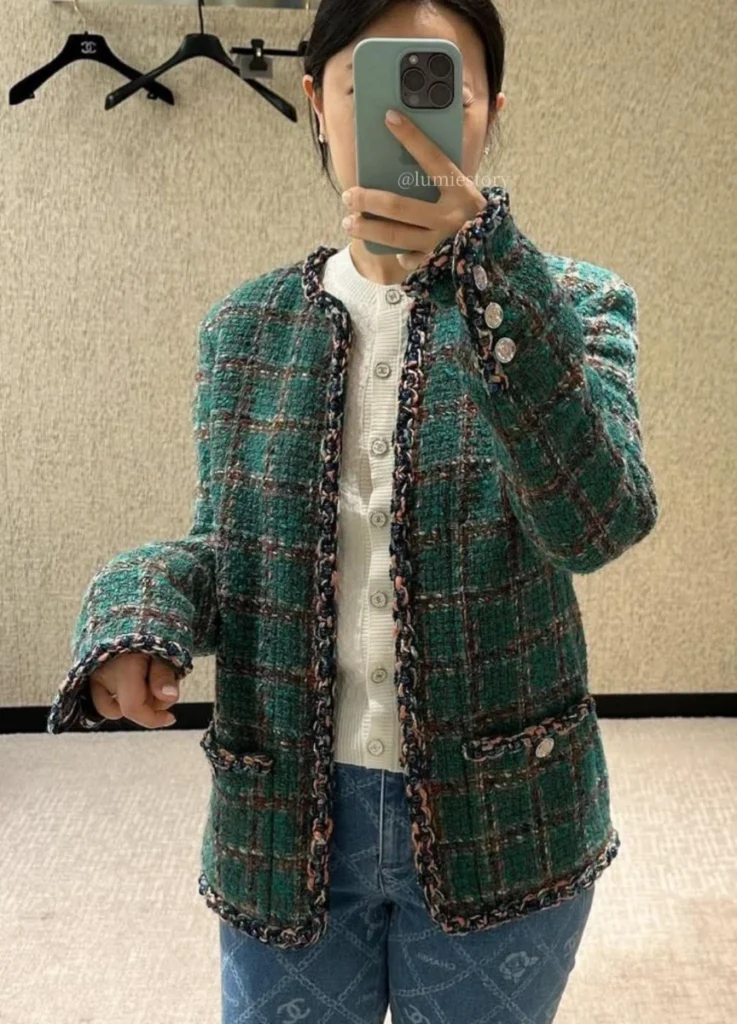
The green fringe tweed felt entirely different in hand and in wear. Noticeably lighter. Thinner outer layer. Reduced lining. Lower total mass.
The immediate conclusion is tempting: this must be a return to the softer Chanel of Virginie Viard.
It is not.
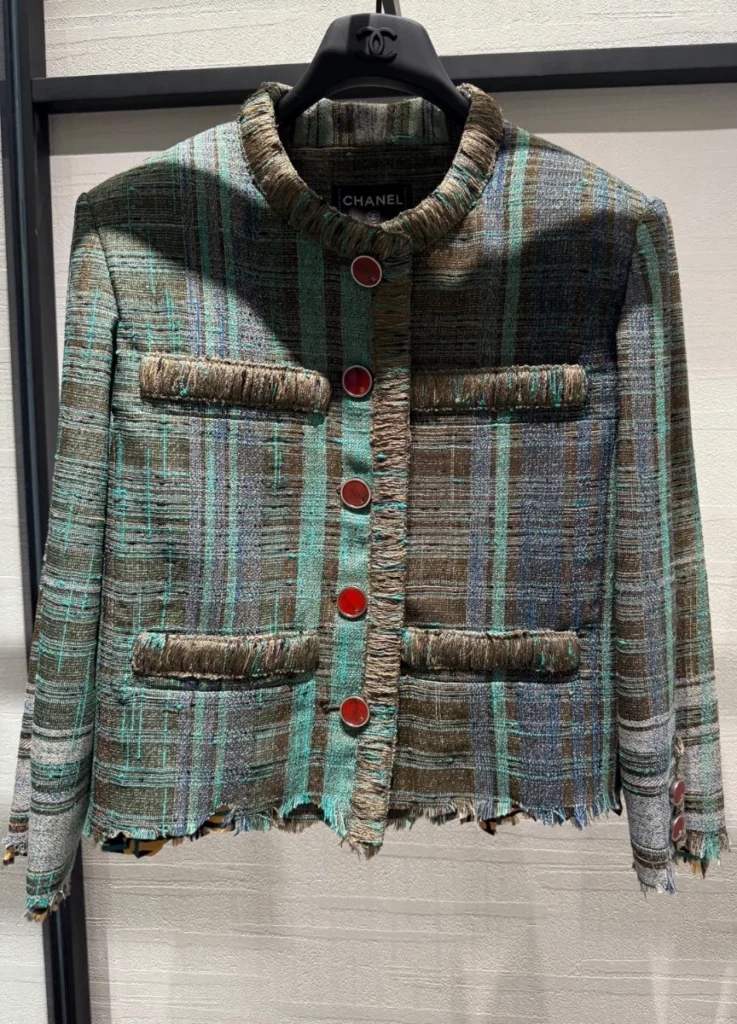
(Tweed / Brown, Aqua Green & Blue)
$10,900
The weave still retains structural order. The yarns are not loosening — the grid reads clearly. The fringe reinforces boundaries rather than softening them. Buttons hold as central anchors. The garment is not designed to flow. It is designed to hold, with less weight.
Virginie Viard’s Chanel achieved lightness through flexibility. The weave allowed movement. The jacket followed the body rather than asserting itself over it. Her Chanel was sometimes criticized as too safe — but the wearing fatigue was low, and the clothes entered real life easily. The strength of that era was clear: wearable Chanel.

Blazy’s lighter pieces work differently. They are not fluid garments. They are garments with layers deliberately removed. The green tweed is lighter not because the structure dissolved, but because certain layers were subtracted while the structural core remained.
This distinction defines the collection.
Chanel Spring 2026 should not be divided into “heavy” and “light.” The accurate distinction is structural: fully reinforced garments on one side, structurally intact garments with selective reduction on the other. The exception does not sit outside Blazy’s system. It exists within it.
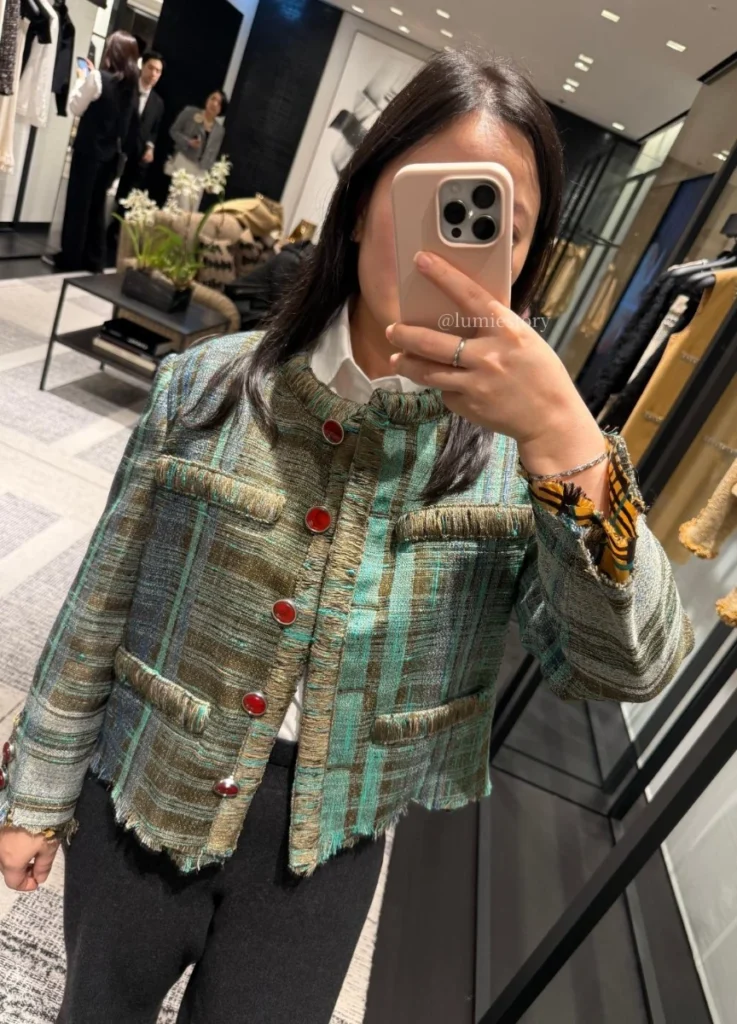
(Tweed / Brown, Aqua Green & Blue)
$10,900
Why the Same Season Felt Different on the Body
The green tweed did not press the upper body the way the black jacket did. Shoulders stayed natural. The center-line weight was lighter. Putting it on, the first reaction was immediate: this feels almost weightless.
But it was not a docile garment. The neckline still stood cleanly. The front fringe maintained its line. The buttons gathered attention to the center. Light, but still ordered.
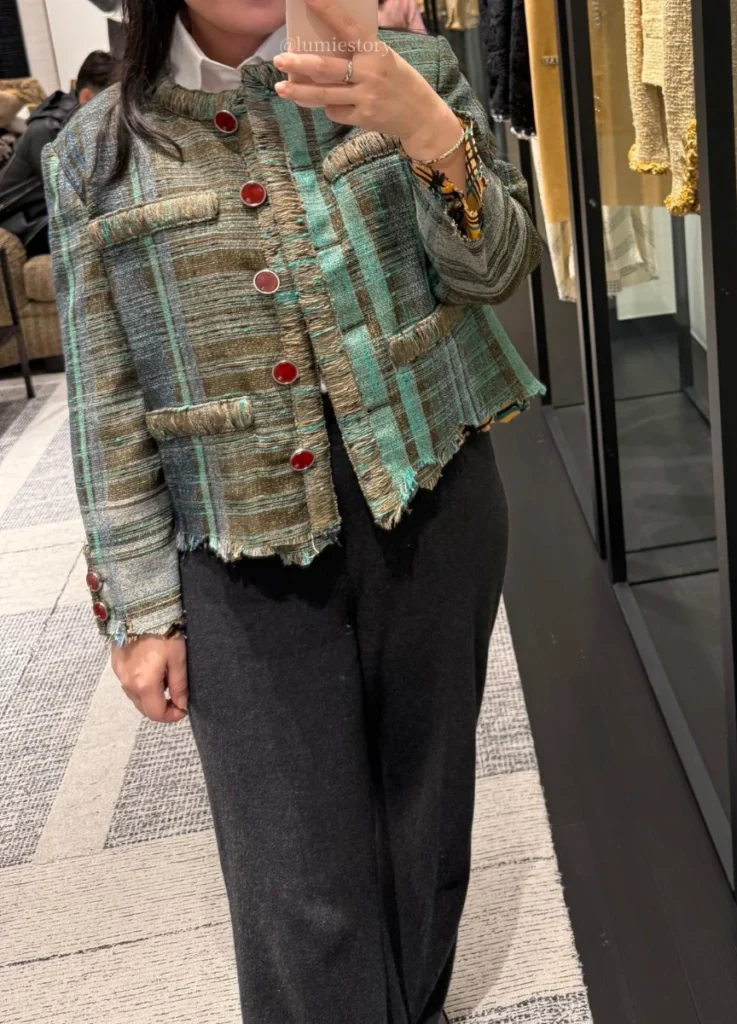
(Tweed / Brown, Aqua Green & Blue)
$10,900
The black and gold jackets, by contrast, completed their own structure on the body before yielding to the wearer’s shape. The silhouette sharpened. The impression refined. Comfort moved to the back of the line.
This connects directly to body proportion. A tall, linear frame can absorb a heavily structured Chanel without being overtaken. But on a body where balance and length ratios are more specific, where weight falls matters much more visibly.
The same Chanel jacket produces two different outcomes: “refined, but heavy over time” or “precise, and still wearable.” The difference is not taste. It is engineering.
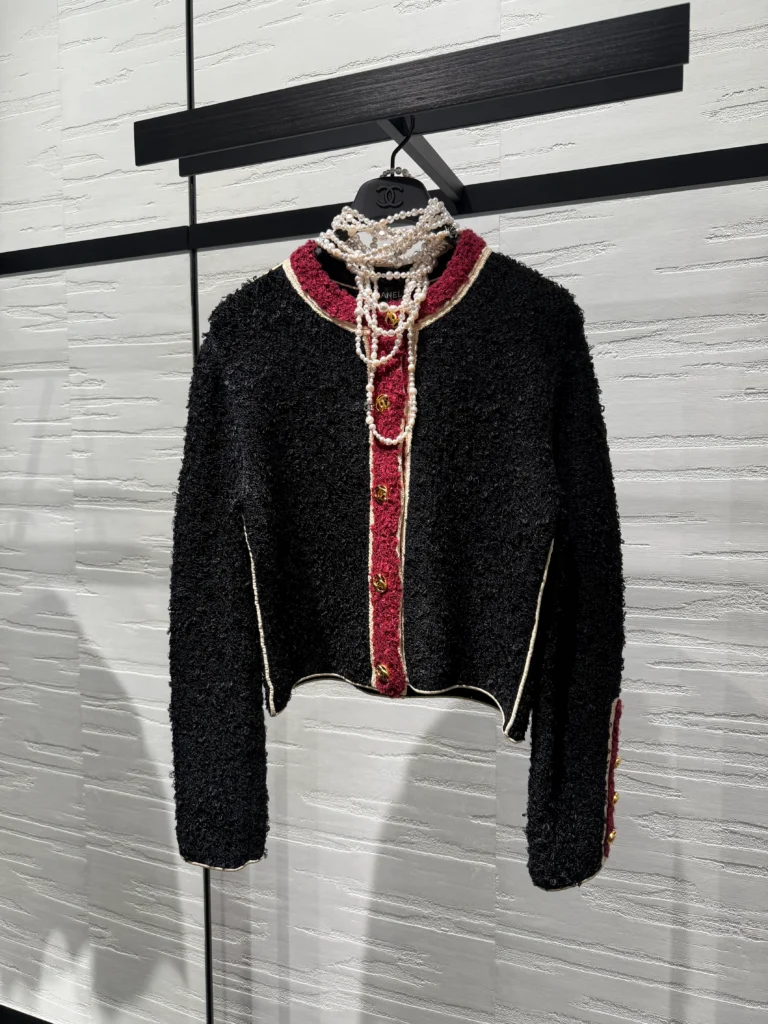
Mixed Fibers & Silk
(Black, Ecru & Burgundy)
$8,300
Trim and Fringe — From Decoration to Framework
One of the most visible shifts this season is what happened to trimming.
Traditional Chanel trim functioned as a finish — a thin braid, a border, a signature detail that marked the edge of the garment. In Spring 2026, trimming thickens, gains volume, and begins to frame rather than finish. In some jackets, it behaves almost like an external skeleton, defining the outer boundary of the piece.
This is consistent with Blazy’s broader approach. What used to live inside — lining, interfacing, internal reinforcement — is now pulled to the surface. Structure is no longer hidden. It is externalized.
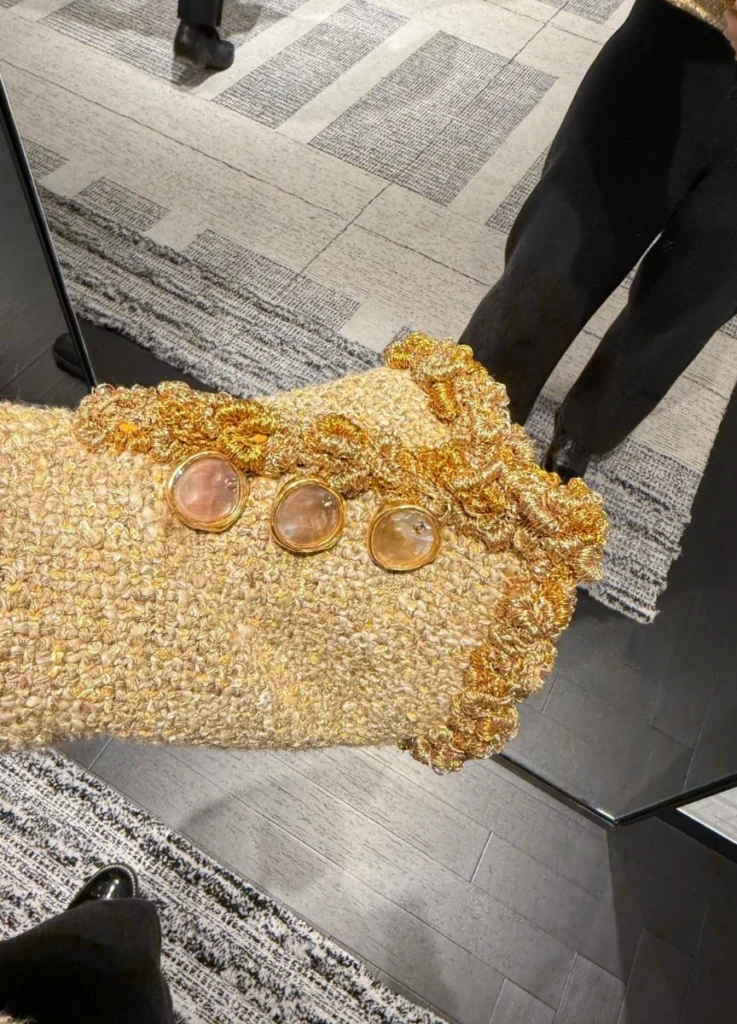
(Cotton Tweed / Craft Beige)
The consequences are direct. Weight increases at the neckline. Load concentrates at the front closure. Resistance builds along cuffs and edges. The upper body becomes more defined — and more heavily loaded.
At the same time, the visual result is sharper. Lines become more graphic. Contrast intensifies. The silhouette reads almost like a drawing. The trimming paradoxically makes the garments look more Chanel while simultaneously making them more modern.
But the risks are equally clear. Wearing fatigue rises with the added structural weight at the neck and shoulders. Styling freedom narrows — the garment already carries strong visual points. And because the trim emphasizes boundaries, body structure is revealed rather than softened.
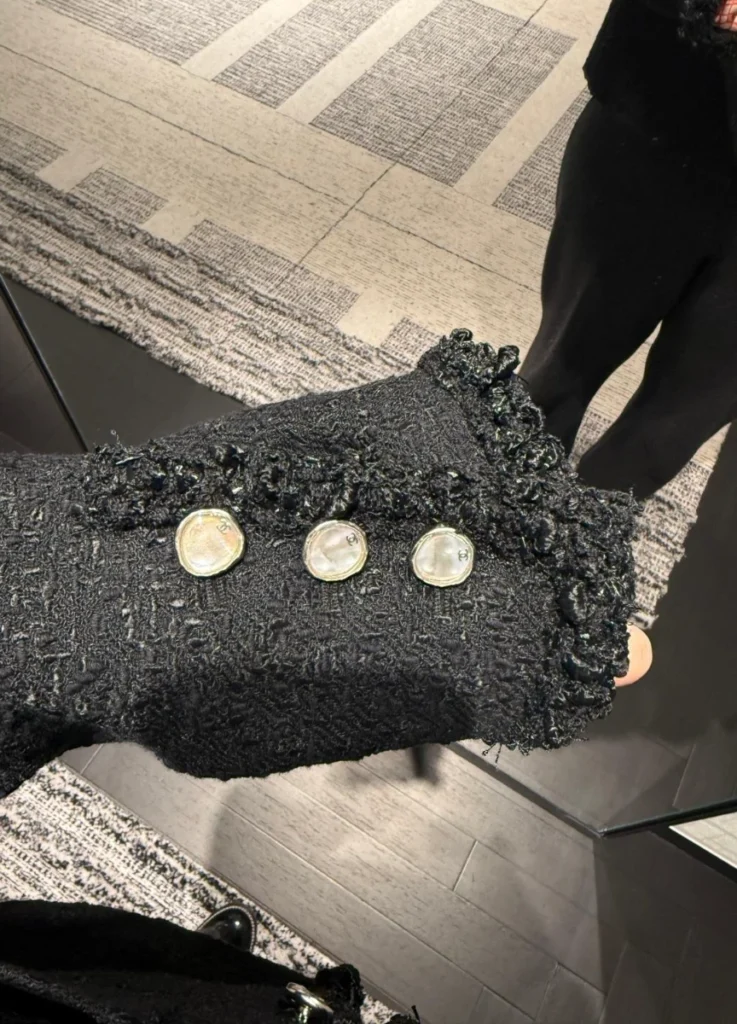
(Cotton Tweed / Black)
Body Type — Who This Works For
These jackets do not accommodate universally.
Structure is emphasized rather than smoothed. The garments reveal the body instead of reshaping it.
Where the structure holds: Upper bodies with defined presence — visible shoulders, some density or volume, a face and collarbone line that carry attention upward. The trimming reinforces the upper frame. The neckline elevates the eye. The center line creates stability. On straighter silhouettes with a clean drop, the structure substitutes for curves — the trimming builds the line that the body does not provide.
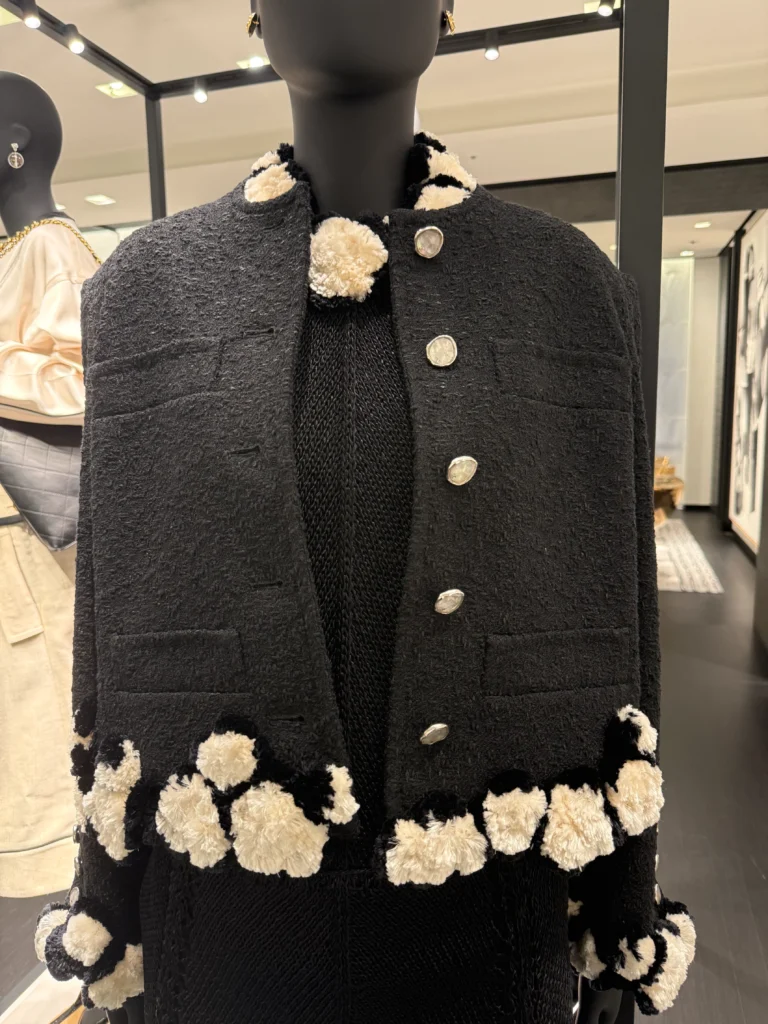
(Cotton Tweed / Black)
Where the structure challenges: Soft, highly curved body lines. Short torsos combined with cropped length — the crop plus upper-body weight concentration creates compression rather than proportion. Bodies that rely on garments to create shape rather than frame existing shape.
Torso ratio relative to height is critical this season. The cropped jackets sit above the waist with weight concentrated in the upper body. If the torso is too short, the jacket overwhelms. If too long, the structure reads as constricting rather than defining.
These garments do not create proportion. They require it.

(Cotton Tweed / Black)
New Jacket Structures — The Cropped Box and the High Neck
Two jacket types stand out as structurally new within Chanel’s vocabulary.
The cropped box jacket cuts decisively above the waist. Lapels are eliminated or minimized. Button count is restricted. The silhouette simplifies into verticals and horizontals. The jacket reads less as a tweed piece and more as a tailored crop with tweed applied.
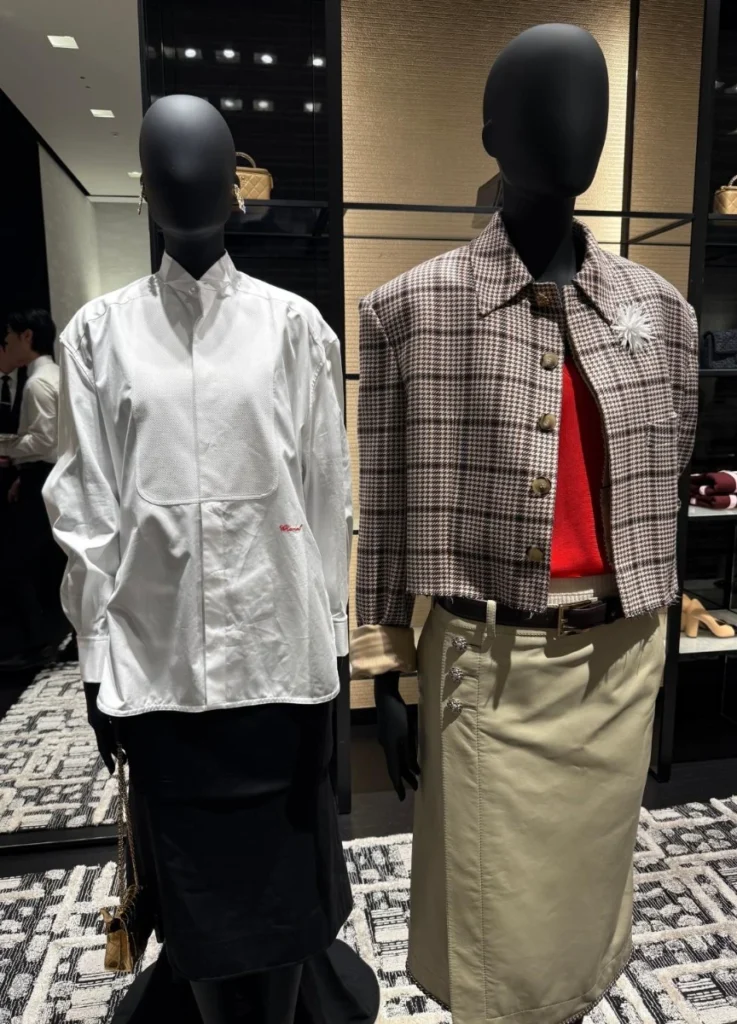
(Wool / Beige, Brown & Black)
Paired with trousers, it creates a gender-neutral suit proportion that Chanel has rarely explored — an expansion away from the skirt-centered feminine ratio. The visual result is sharp and modern, but body-proportion correction is nearly absent. Completion depends heavily on the wearer’s frame.
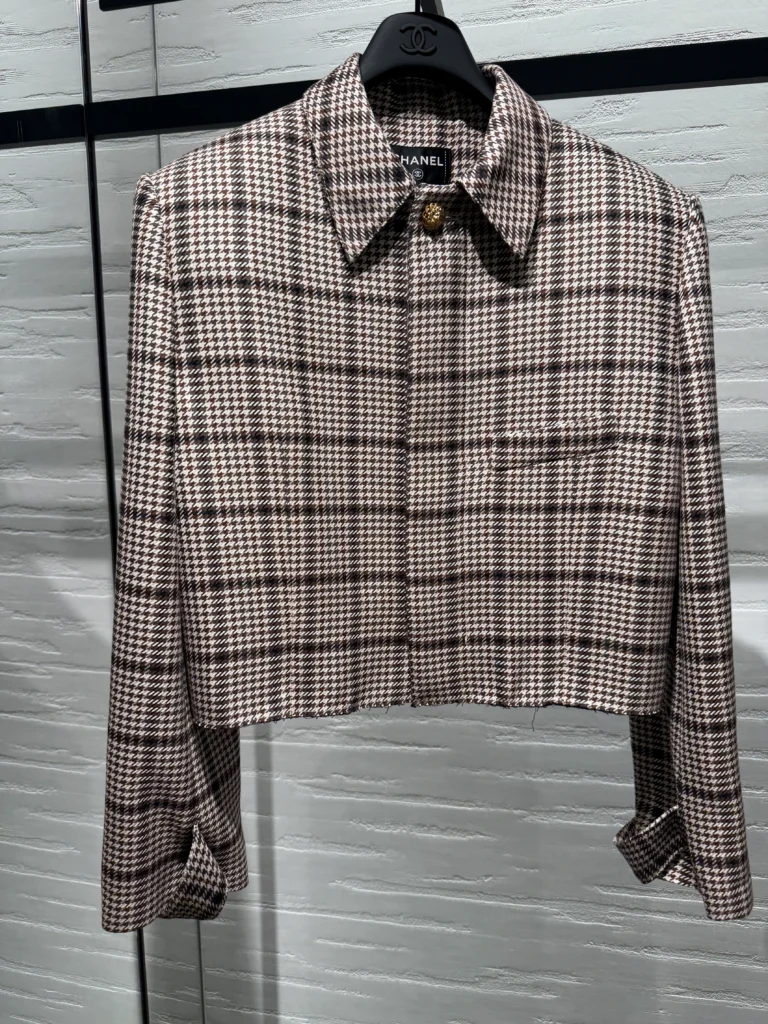
(Wool / Beige, Brown & Black)
$7,100
The high-neck structured jacket replaces the traditional round neckline with a stand collar that wraps the neck and draws the upper body’s center of gravity upward. Buttons are minimal. Decoration is nearly eliminated. Shoulder lines are held firm. The effect is disciplined, authoritative — a presence built through structure rather than embellishment. On a neck-and-jawline that carries definition, the result is precise and sophisticated. On a shorter neck or a denser upper body, the enclosure can feel restrictive.
What connects these two types is a shared logic. Both reduce reliance on decorative language and build identity through form, proportion, and tension. Both move away from garments that create beauty through softness toward garments that define shape through structure.
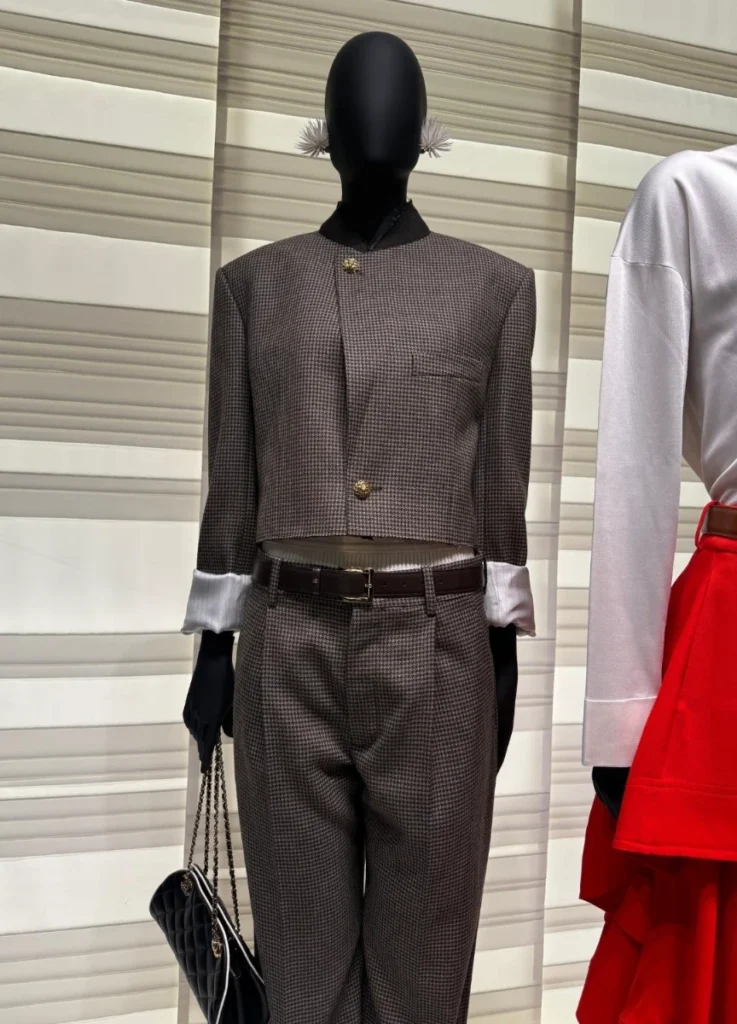
(Wool Cloth / Brown & Ecru)
$6,700
Open-Weave Tweeds — Lightness Through Subtraction
If compressed tweeds represent one direction, reconstructed open-weave tweeds represent the opposite.
These fabrics rely on spacing rather than density. Warp and weft do not fully consolidate. Portions of the structure are intentionally left open, creating a network rather than a solid surface. The yarns appear to rest on top of the structure rather than being locked into it.
Despite high prices, these pieces sold out quickly at the start of the season. The appeal is immediate.
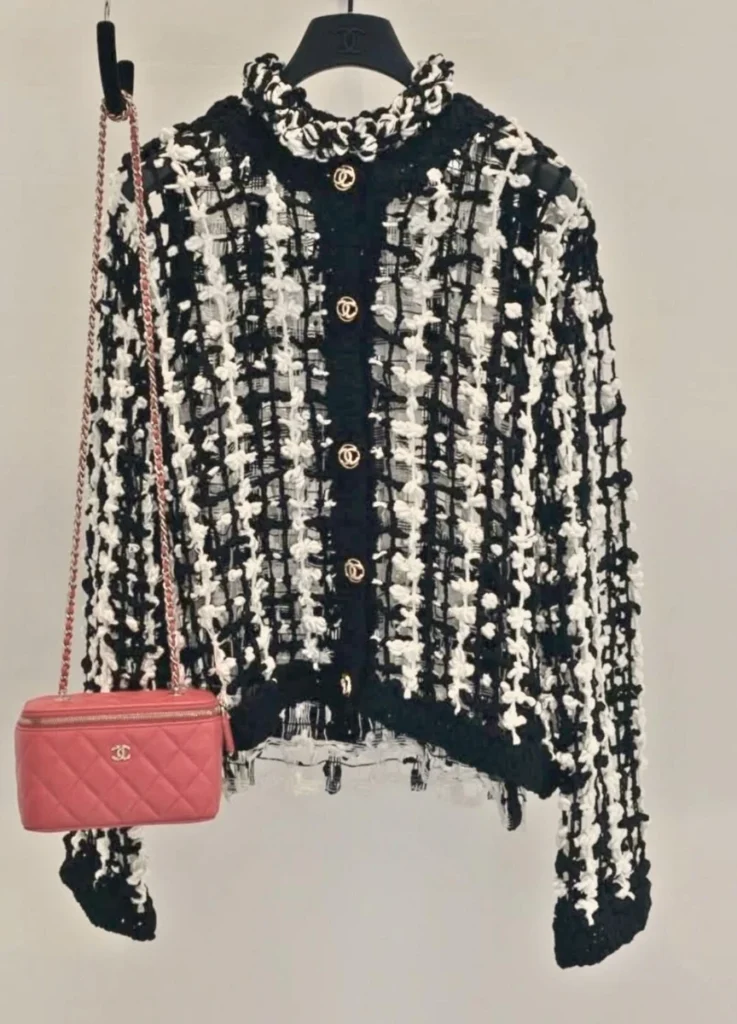
(Silk & Mixed Fibres / Black & White)
$13,500
The advantages are clear. Physical weight drops significantly. Airflow increases, extending wearability into warmer months. The texture is deeply photogenic — light penetrates through the gaps, creating dimensionality that photographs exceptionally well. Layering becomes visible, turning the jacket into a styling tool rather than a single garment.
But the trade-offs are equally real, and they are structural.
Durability is the core risk. Open weave means reduced structural cohesion — yarns support each other less firmly. External friction from bag chains, arm movement, or outerwear contact can cause snagging and deformation. Over time, the weave stretches. Specific areas may sag. Initial fit does not hold indefinitely. Maintenance sensitivity is high — these are closer to “care-intensive garments” than to everyday wear.
This tweed sits between two systems: traditional Chanel density and contemporary lightweight minimalism. It is an attempt to reduce density while preserving Chanel’s identity — a transitional design, not a final destination.
For wearers willing to accept the maintenance trade-off in exchange for Blazy’s new aesthetic and a genuinely photogenic surface, these pieces are worth considering. They are not durable investments. They are experiences.
Chanel in Context — Against The Row and Dior
The Row minimizes visible structure. Its luxury sits in material precision and fluid response. The garments are often genuinely light — not just visually. The brand’s authority comes from precision, not weight.
Dior maintains structure but negotiates with the body. Waistline, length, center axis, and tailoring proportions are carefully calibrated. Wearing fatigue is managed. Structure exists but does not assert itself.
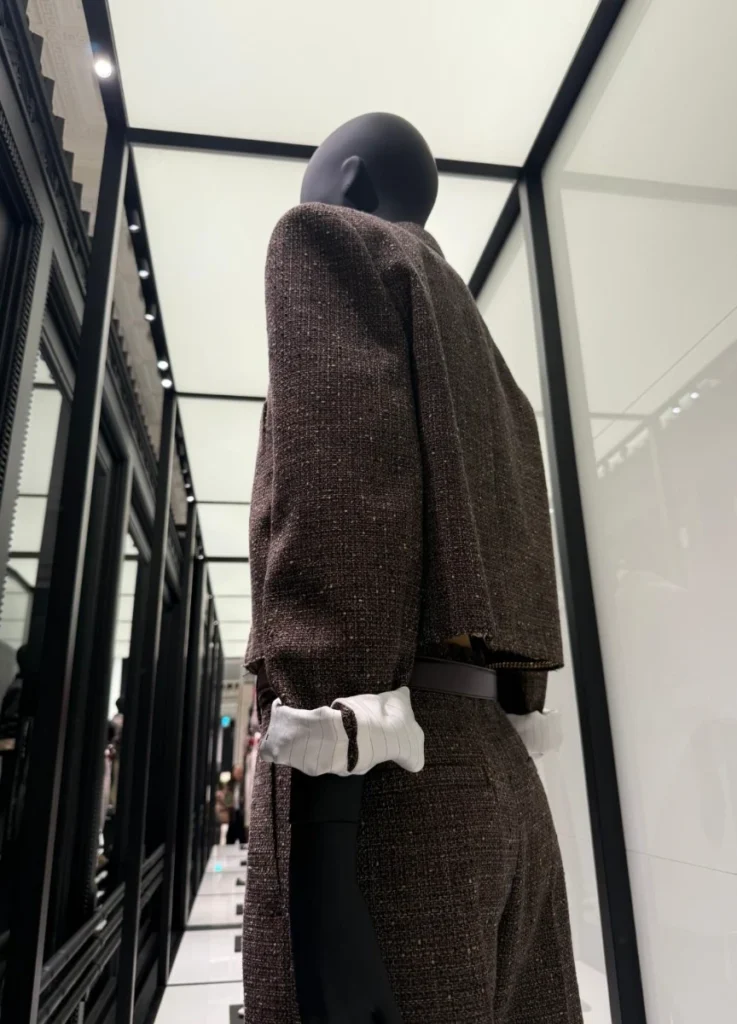
(Wool Cloth / Brown & Ecru)
$7,100
Blazy’s Chanel externalizes structure. In RTW, the garments do not hide how they stand. Some pieces move visibly against the current aesthetic of lightness, flow, and invisible construction. That counter-direction appears deliberate — Chanel is choosing to restore the tactile sensation of weighted luxury rather than following the market toward dissolution.
The same strategy extends to the bags. The 26SS bags share this structural density. They may resemble The Row visually, but the physical weight is substantially heavier. This is not accidental. It is the same design philosophy applied across categories.
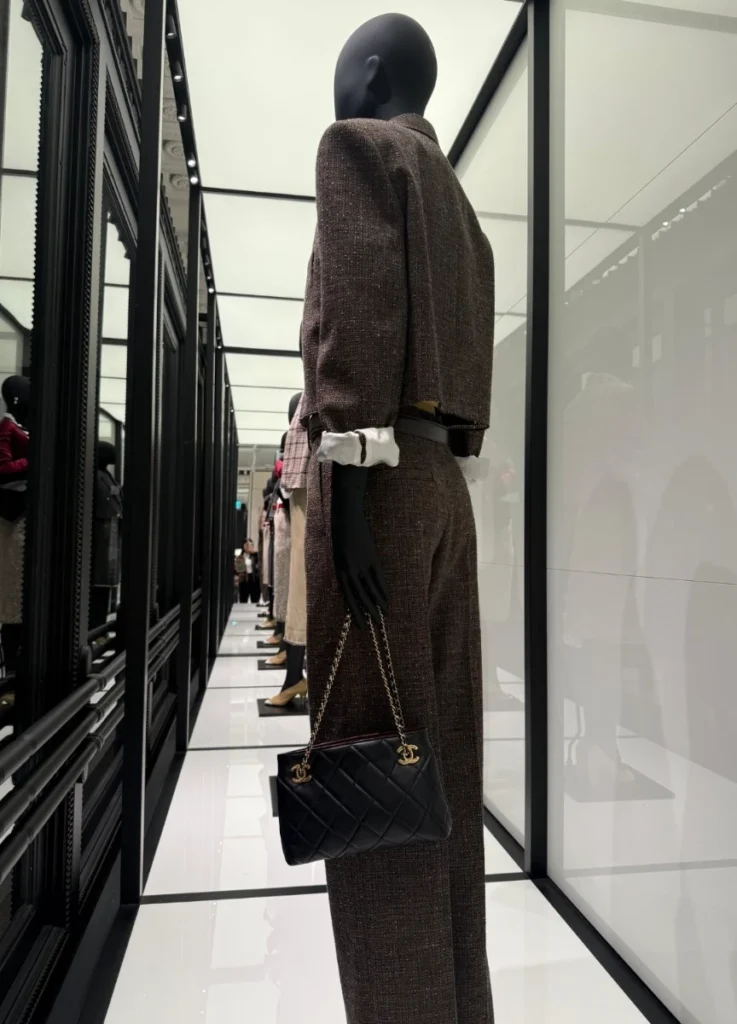
(Wool Cloth / Brown & Ecru)
$7,100
The Distance from Virginie Viard
Those who loved Virginie Viard’s Chanel remember it as Chanel you could actually wear. The fashion message may have been quieter, but the clothes were soft, low-fatigue, and entered real life without resistance. Tweed remained Chanel’s signature without overwhelming the wearer.
Blazy stands on the opposite side. He is less interested in making Chanel easier to wear and more interested in reasserting the materiality and structure of the house. The garments often look more beautiful and more authoritative than before — but they can also feel heavier and more tiring.
Rather than jackets you throw on and leave, these are jackets that announce themselves as structures the moment they touch the body.
But the season is not uniform. Exceptions exist. And those exceptions may be the clearest signal of where Chanel goes next. Blazy will not build every garment the same way. But through this first season, his default setting is structure, not flexibility.
| Category | Chanel Spring 2026 (Blazy) | The Row | Dior | Chanel (Virginie Viard) |
|---|---|---|---|---|
| Design Logic | Structure-led | Material-led | Proportion-led | Wearability-led |
| Fabric Behavior | Compressed, resistant | Fluid, responsive | Balanced | Soft, airy |
| Internal Construction | Selective reduction + core structure | Minimal | Balanced | Light |
| Role of Detail | Structural | Minimal | Supportive | Decorative |
| Silhouette | Maintains its own form | Follows the body | Negotiates | Adapts to body |
| Weight Sensation | Concentrated | Distributed | Balanced | Light |
| Type of Lightness | Structural subtraction | Inherent | Controlled | Flexibility-based |
| Impression | Form remains | Feeling remains | Proportion remains | Comfort remains |
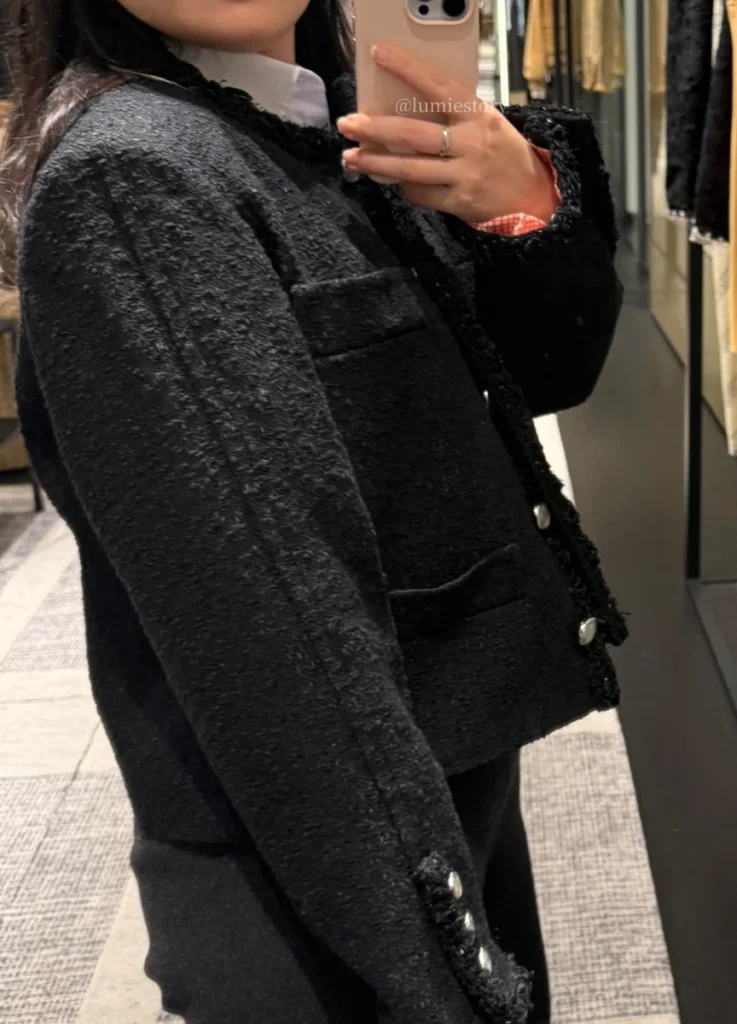
(Cotton Tweed / Black)
Final Reflection
Matthieu Blazy’s Chanel has become heavier.
Not because garments are thicker, but because structure is no longer hidden. Compression, framing, and structural detailing make the clothes more materially present.
The lighter pieces do not contradict this direction. They confirm it. They are lighter because structure has been selectively reduced — not because it has disappeared.
The weight is not uniform. When Blazy permits lightness, it arrives not through flexibility but through the controlled subtraction of layers — structure adjusted, not abandoned.
In an era where garments aim to dissolve into air, these insist on holding their form.
Comfort yields to presence. Ease yields to architecture.
And between the weight of that commitment and the rare moments where lightness is permitted, the direction of Chanel becomes a little clearer.
These are clothes that choose to be remembered after they are removed — not for how they felt on the body, but for the structure they left behind.
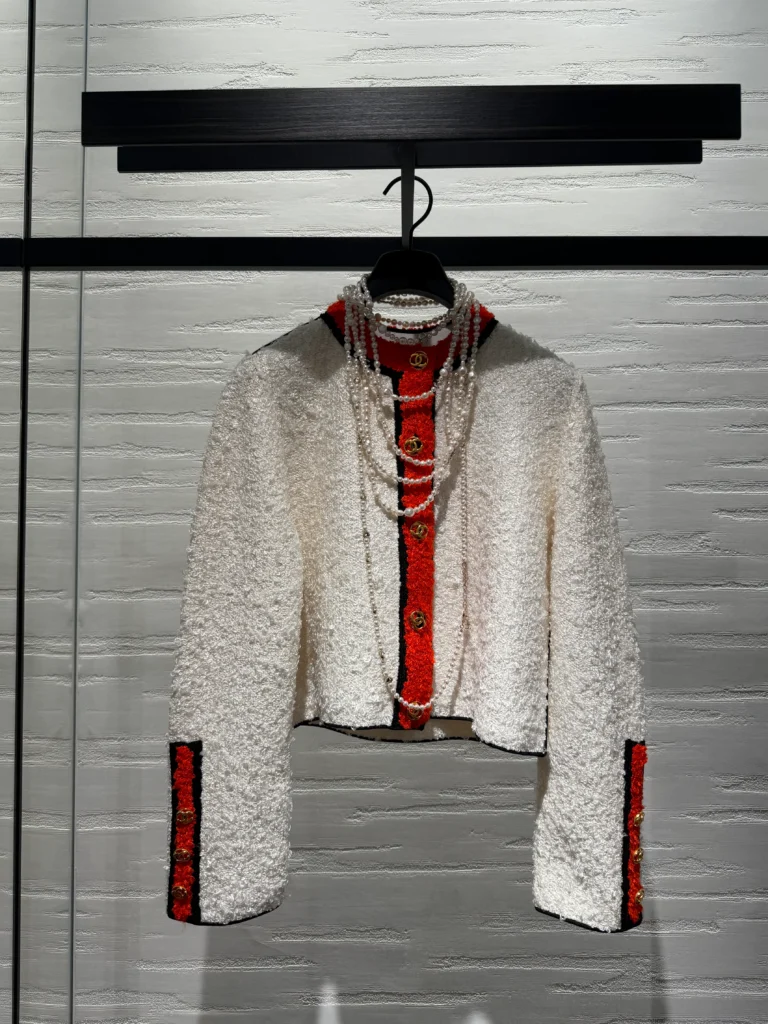
Mixed Fibers & Silk
(White, Black & Red)
$8,300
All photographs by Lumie
[ Related Editorials ]